Good blue-throated macaw news from Bolivia

petrel41's avatarDear Kitty. Some blog

This video is called Blue-throated Macaw, Bolivia. It says about itself:

26 Jan 2008

One of the last few nesting pairs of Blue-throated Macaws in the wild, Bolivia. Ara glaucogularis. More info and photos here.

From Wildlife Extra:

Conservation success in Bolivia

Blue-throated Macaw Reserve doubles in size with purchase of adjoining ranch

December 2013: The Barba Azul Reserve, which is located in the Bolivian Beni and protects the world’s remaining population of blue-throated macaws, has secured the purchase of 14,827 acres of natural savanna and forest habitat to more than double the size of the reserve to 27,180 acres.

The extension by Asociación Armonía is significant because it will protect a mosaic of tropical grasslands, as well as two large palm forest islands, a small central river, water-edge short-grass habitat, and more than 20 small isolated palm islands.

An extension of this size means that…

View original post 296 more words

Nelson Mandela

sharonstjoan's avatarEchoes in the Mist


Nelson_Mandela,_2000_(4)


Without the leadership of Nelson Mandela, there is no doubt that South Africa would have descended into chaos. He turned the looming prospect of turmoil and upheaval into a beacon of light for the nations.


The amazing courage he exemplified in his lifetime, together with his great spirit, which enabled him to embrace his enemies — made him one of the greatest men in history — leading the way forward to peace and justice.


He was born into a tribal royal family, but spent his early years tending sheep in the hills. He became a boxer, then a lawyer.


He started the armed wing of the ANC, launching a course of armed struggle. He spent 27 years in brutal prisonment.


Upon his release from prison, he set South Africa not on a course of vengeance, but instead on a course of reconciliation. The Truth…

View original post 203 more words

Good African black rhino news

petrel41's avatarDear Kitty. Some blog

This video is called Saving the Black Rhino.

From Fauna & Flora International:

East Africa’s largest black rhino population hits 100

Posted on: 28.11.13 (Last edited) 28th November 2013

The birth of Ol Pejeta Conservancy’s 100th black rhino offers new hope for a species on the brink.

On a continent where rhino populations have been plagued for decades by illegal wildlife trade, and where poaching is just as much a threat today as it was three decades ago, the birth of a new black rhino shows there is still hope for this Critically Endangered species.

October saw the arrival of Ol Pejeta Conservancy’s 100th black rhino, making the Kenyan sanctuary’s black rhino population the most important in East Africa for conservation.

The conservancy, located in Kenya’s Laikipia County, has steadily built up its black rhino population from 20 individuals in the 1990s to the 100…

View original post 651 more words

INDIA: APOWA reaches remote flooded areas

sharonstjoan's avatarEchoes in the Mist


By Rashmi Ranjan,  


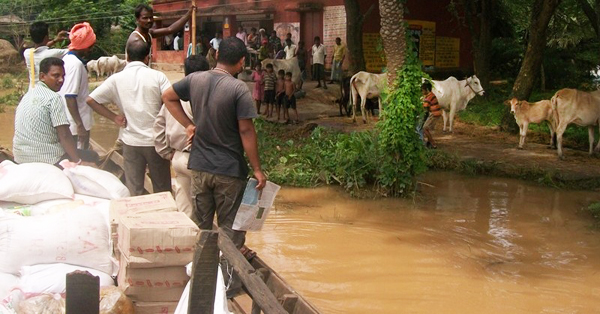
Conditions are improving gradually in cyclone- and flood-affected districts of coastal Odisha. But the situation in many places of Ganjam district remains grim. The catastrophe has been called the worst in living memory for Odisha. Our disaster response team is still on the scene and, as the roads are being cleared, is now able to reach remote areas to care for the animals.


As well as direct feeding of animals, we have also handed over food to village authorities and community groups so they can continue to feed stray hungry animals in their villages until the situation returns to normal.  We are making good progress, but there is still so much to do.


October 29, 2013:


We conducted relief work in the worst affected villages of Niakanthapur, giving relief to 55 animals. We are thankful to the…

View original post 711 more words

Aftermath of Cyclone Phailin: Groups struggle to feed and care for evacuated animals

sharonstjoan's avatarEchoes in the Mist

DSC00030 cows

Many groups have been very hard at work, in the midst of ongoing floods, rescuing, feeding and providing vet care to animals following cyclone Phailin.  Among them is The Maitri Club.

Due to the cyclone and power cuts, Kailash Ch Maharana, Chairman of the Maitri Club, writes that it has been impossible for him, until now, to receive or send emails.

They are located in the District of Ganjam, 30 kilometers (18 miles) away from Gopalpur, where cyclone Phailin stuck the sea coast of Orissa, India.

He writes, “Here the situation is horrible.”

On October 12, just before the storm struck, they safely evacuated all the cattle from 13 villages. The cattle are still feeling unsettled and greatly stressed.

Immediately after the cyclone, they were unable to move for two days due to fallen trees.  After the 14th,  they rounded up ten volunteers and set about helping the…

View original post 438 more words

Odisha, India: APOWA’S flood relief team is helping animals, following cyclone Phaillin

2011floodDSC03079
APOWA’s flood relief work in 2011


2011flood100_5618
Providing food to stranded cattle in 2011


flood 2011untitled30
Giving food to a hungry bull – 2011


The fierce winds of cyclone Phaillin blew away the outside extension roof of APOWA’s animal shelter, though the rest of the shelter is okay.


Cyclone Phaillin was the strongest cyclone to hit India in 14 years, and it caused widespread damage. Nearly a million people were evacuated before the storm hit, which saved a great many lives, and the human death toll was low.


However, many homes were lost; there are many displaced pets, and farm animals are left without a source of food, since pastures are covered in water and food supplies were drenched by the storm.


At APOWA’s shelter, they are coping with an influx of new animals, brought to them when people in the nearby villages, Poipat and Ghigidia, rushed to take cover from the storm in their shelter.  There are now 48 animals, both large and small, being cared for at the shelter.


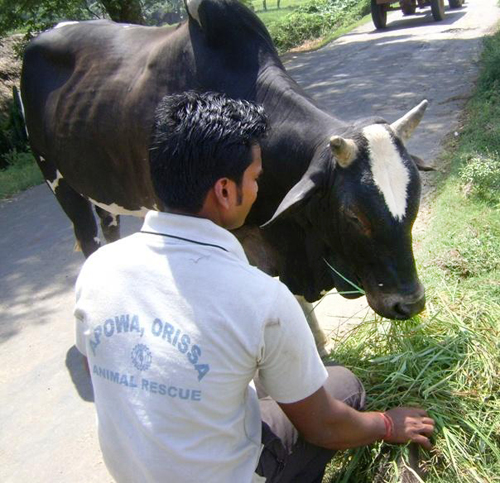
APOWA has sent a team of rescuers to the worst-hit areas nearby in the Kendrapara district.  The team is providing vet care, food and medicine to animals stranded in the floods.


The electricity is still out most of the time, and the flood relief team has not yet been able to send back reports or photos.  The images above are of the work that APOWA did in 2011, following another cyclone, in which they provided much-needed food and vet care to thousands of cows whose pastures were covered in floodwaters and rescued many pets who were left homeless.


For more information or to help APOWA’s flood relief work with a donation, visit the website of Help Animals India.


Photos: Courtesy of APOWA


Pod of rare Indus River Dolphins Spotted in Punjab


500px-Beasriverhp

By Rohit Daniel,

For India’s Endangered

Re-posted with permission

To read this in the original, click here.


RARE SPECIES SIGHTING: In exciting news for dolphin lovers and wildlife enthusiasts, the officials of Harike Wildlife Sanctuary in Punjab reported spotting 12 Indus dolphins (Platanista gangetica minor) in a single sighting. This is the first time that a complete pod of the endangered dolphin species has been sighted near the sanctuary, which lies about 60 km from Amritsar.


The rare freshwater dolphins were found in the 75 km stretch of the Beas River, which includes the 3 km stretch of the Harike Wildlife Sanctuary. A joint team of officials from World Wide Fund for Nature and Harike Wildlife Sanctuary conduct monthly monitoring operations to study the movements of these endangered freshwater dolphin species.


Speaking to the press about the incident, divisional forest officer, M. Sudhagar, informed that the officials spotted a dozen Indus freshwater dolphins in three groups.


“With this single sighting, we can estimate that the number of dolphins could be around two dozen in and around the sanctuary,” he added.


Indus Dolphins Amongst Most Endangered Species


The Indus dolphin is one of the world’s rarest mammals, and is listed as the most endangered cetacean. With the construction of dams on the Indus, the population of these endangered species have drastically declined, with only 1,100 of them in existence today. These dolphins are found only in the Indus River in Pakistan, with a few rare sightings in the Sutlej and Beas tributaries in India.


The first official sighting of these dolphins in India occurred about six years ago, when officials of the Harike Wildlife Sanctuary spotted a pair of the freshwater Indus dolphins at the confluence of Sutlej and Beas Rivers in the country. Following widespread news of these rare sightings, government announced the launch of a dolphin conservation project and promised to develop the area as a major tourist hotspot. However, none of these promises have materialized till date.


A plan had been chalked out to acquire some rented accommodation in order to develop Karmowal village as a tourist destination, but the project was never taken up.


Survival Problems


River dolphins are found in some of the world’s mightiest rivers, including the Indus, Ganges, Yangtse, and the Amazon. However, according to research conducted by Mohd. Shahnawaz Khan, and published in June 2013 issue of Current Science, being found in the world’s most densely populated human environments makes river dolphins among the most threatened mammals. Further, their ecological requirements link them to food and water security issues in South Asia.


Main causes for decline in Asian species of dolphins are human perturbations and anthropogenic disturbances.


Indus River dolphin, locally called ‘bhulan’, is endemic to the Indus River system and considered as the second most threatened river dolphin after Baiji Dolphin (Baiji Lipotes vexillifer) of China which was last sighted in 2002 and is believed to be ‘functionally extinct’.

The problems the Indus river dolphins faces according to Khan include,

  • Extensive fishing throughout their range of distribution which consequently reduces the availability of their prey.
  • Degradation of their habitat through increased sedimentation, which is usually caused due to the deforestation of river basin
  • Industrial and human waste
  • Agricultural run-off with high concentration of chemical fertilizers and poisonous pesticides
  • Accidental entanglement in fishing nets resulting in the death of dolphins
  • Construction of large, cross-river structures like dams and barrages, which cause the isolation of small fragmented sub-populations

These river basins are home to over 15 percent of global population, and comprise some of the most densely populated and poorest areas on the planet. In order to save the dolphins and their habitat, the dependency of the locals for the water, fisheries etc. has to be reduced. It is also important to understand the ecology and distribution of the animals, which up to some extent is ongoing due to efforts of conservation organisations.


The sighting of 12 dolphins in Punjab though is a good sign indicating that the river dolphins still find Indian waters safe enough to call it home.


Rohit Daniel is freelance writer, photographer and an educator. He is an avid nature lover and enjoys travelling. He believes that animals have an equal right to our planet, and without wildlife this world would be an empty and meaningless piece of dirt floating in space.


Photo:  Wikimedia Commons / This file is licensed under the Creative Commons Attribution-Share Alike 3.0 Unported license. Attribution: Achiwiki356 at the English language Wikipedia / the Beas River


Animals Lebanon lends a hand to the animals of Syrian refugees

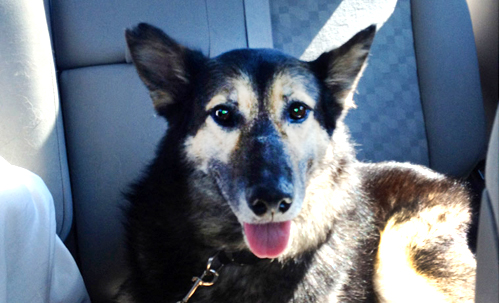
This is a different dog, Chippers, also rescued by Animals Lebanon.


Animals Lebanon in Beirut is helping many Syrian refugees with their animals.


In the September 9, 2013 issue of the Lebanon Daily Star, Brooke Anderson, in her article,  “Animals Lebanon marks five years of awareness,” writes about the dedicated work that Animals Lebanon is doing in circumstances made challenging by the nearby war in Syria.


Now around one quarter of the population of Lebanon is made up of refugees who have fled from Syria.


In November 2012, Jason Mier, Executive Director of Animals Lebanon,  received an email from a man in Damascus.  An accompanying photo showed the man, wearing a hardhat, sitting with his dog, who he’d had for fourteen years.  The man, whose name is Maan, wrote that he’d been more or less confined to his small apartment for the past year with his dog, Juicy.  The neighborhood was being bombed every day.


He wrote that he was planning to go to Switzerland to live with his daughter, but that he wouldn’t leave without Juicy.  Because of the Swiss quarantine regulations, his dog wouldn’t be able to enter Switzerland for two months.  He’d prepared nine pages of information and travel documents for Juicy, and he asked that Animals Lebanon please help by finding her a safe place to stay for two months until she could enter Switzerland to be with him.


Of course, Jason Mier immediately replied that they would help, and he found a foster home in Beirut where Juicy stayed for two months, before joining Maan in Switzerland.


Animals Lebanon is receiving about five similar requests each day from Syians for help with their animals, as well as the sixty or so requests they normally respond to.


Jason Mier says there are four small zoos in the Damascus area, and it’s difficult to get information about how the animals are doing.


In areas of Syria where there’s been a lot of shelling or where there are food shortages, life is very hard for the animals.  Animals Lebanon is doing everything they can to help the people and their animals.


To read the original article in the Lebanon Daily Star, click here.


To visit the website of Animals Lebanon or to donate, click here.


Photo: Courtesy of Animals Lebanon / This is a different dog, Chippers, who was rescued in Lebanon and now has a happy home in the U.S.


Lawsuit Launched to Protect Endangered Species From Fracking in Michigan

Earth First! Journal Sonoran Office's avatarEarth First! Newswire

Risky Oil and Gas Production Threatens Rare Butterflies, Bats in Allegan State Game Area

by the Center for Biological Diversity

fracking-in-michiganGRAND RAPIDS, Mich.— The Center for Biological Diversity launched federal litigation today challenging the Bureau of Land Management for failing to protect endangered species like the Karner blue butterfly and Indiana bat by properly assessing the risks posed to them by fracking on public land being leased for oil and gas production in a game reserve in southwestern Michigan.

On Sept. 12 the federal government plans to auction off more than 27,000 acres of publicly owned mineral rights in the Allegan State Game Reserve but has not analyzed the harm fracking and drilling could do to all the area’s rare and protected species.  

View original post 458 more words