Native tribe fights to save Boreal forest in Quebec

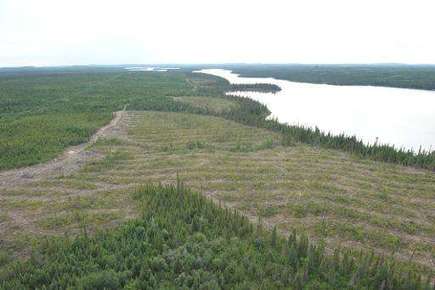
Mandy Gull holds back tears as she steps off the helicopter in northern Quebec. “I’ve never seen anything so sad,” says the young woman whose aboriginal tribe is seeing its ancestral lands eroded by logging.
“If my grandfather knew,” says the deputy leader of the Cree tribe, one of 11 indigenous ethnic groups present in Quebec.
The flyover of the Boreal forest, pockmarked by clear-cuts, both saddens her and toughens her resolve to end deforestation in the region.
“We don’t own this land… as Cree, we know that we’re stewards of the land, (and) we’re here to protect the land,” she said. Sourced through Scoop.it from: phys.org
GR: Faced by rapacious loggers and their government representatives, defenders of the forests have many roadblocks to success, not the smallest being personal danger of injury and incarceration.
Why Invasive Species Will Save Nature
A different perspective…

 The New Wild: Why Invasive Species Will be Nature’s Salvation / Beacon Press
Conservationists are becoming enemies of nature, according to a new book The New Wild: Why Invasive Species Will Be Nature’s Salvation by environmental journalist Fred Pearce. Drawing primarily on examples from the United Kingdom and remote islands across the world, the book challenges the long-held belief that keeping out non-native species and returning ecosystems to a pre-human state are the only ways to save nature as we know it. Calling this line of thinking unproductive at best, Pearce states that seeking only to conserve and protect endangered and weak species becomes a brake on evolution, a douser of adaptation. “If we want to assist nature to regenerate, we need to promote change, rather than hold it back,” he writes.
Though his criticism of traditional conservation perspectives that advocate for restoring ecosystems may appear controversial, Pearce isn’t pushing…
View original post 739 more words
A New Film ‘Fable of the Wolf’ by Earthjustice, Sneak Preview


Here is a sneak peak at a new film by Earthjustice that is scheduled for release Wednesday September 9, 2015. This hauntingly beautiful film explores wolves relationship with humans and is called ‘Fable of the Wolf’
THIS YEAR MARKS THE 20TH ANNIVERSARY OF THE WOLF’S RETURN TO YELLOWSTONE NATIONAL PARK.
Wolves once roamed the United States before decades of unregulated slaughter wiped them out. It wasn’t until they were missing that people began to recognize the crucial role wolves play in maintaining the health of the natural world.
The gray wolf was one of the first to be protected by the Endangered Species Act. Its re-introduction in the northern Rockies restored a balance in the ecosystem.
BUT NOW, CONGRESS IS THREATENING THE FUTURE OF WOLVES.
Some politicians are seeking to prematurely remove their protections—subverting one of the most effective laws of the land.We must not allow Congress to undermine the Endangered Species Act:
Ending the sacrifice at Gadhimai, part two


By Sharon St Joan
To read part one first, click here.
Meanwhile, Gauri Maulekhi, of HSI and PFA, appealed to the Supreme Court of India, which then issued a directive to close the India-Nepal border to any transport of animals into Nepal during the weeks preceding the festival.
Since most of the animals to be sacrificed came from India, closing the border had a momentous effect.
Large numbers of volunteers from Indian animal welfare groups arrived to assist the Border Patrol in spotting people trying to take animals to Nepal. They spoke with farmers and other animal transporters and, if they did not turn back, the volunteers followed up with the Border Patrol to make sure they were sent back.
Dawn Williams and his team from Blue Cross of India played a leading role in tracking down those attempting to smuggle animals into Nepal. A former commando, Dawn Williams…
View original post 843 more words
Ending the sacrifice at Gadhimai, part one

By Sharon St Joan
Nearly 300 years ago, Bhagwan Chowdhary, a Nepalese man who’d been thrown into prison, prayed to the goddess Gadhimai for help, promising to sacrifice animals to her if she would get him out of jail. He was freed and, in return, he sacrificed five animals to the goddess, and he founded the temple dedicated to her. Today, in the twenty-first century, his great-great-great grandson serves as the head priest. Over the years the animal sacrifices grew and grew until the Gadhimai Temple became known as the world’s most ghastly scene of bloodshed.
On July 28, 2015, at a New Delhi press conference organized by the Animal Welfare Network Nepal, Humane Society International, and People for Animals, the temple authorities of Gadhimai Temple made the announcement that the sacrifice of hundreds of thousands of animals, held every five years, would be permanently canceled. The world’s largest animal…
View original post 771 more words
Letter to Utah Wildlife Board – about cougar plan
Bird of the Day: Peacock (Bandipur National Park, Karnataka)


Study says some forests may not recover from mega-disturbances in the global warming era

Giant fires, insect outbreaks could be ?game-changer? for some forests
Staff Report
FRISCO ?Forest Service researchers say ?mega-disturbances? like giant wildfires and insect outbreaks are likely to hasten the slow demise of temperate forest ecosystems in the coming decades.
Even without those large-scale events, some forests appear to be transitioning to shrublands and steppe, and big disturbances could speed that process, according to a new study published this month in Science.?While we have been trying to manage for resilience of 20th century conditions, we realize now that we must prepare for transformations and attempt to ease these conversions,? said Constance Millar, lead author and forest ecologist with the USFS Pacific Southwest Research Station.
Many forests are remarkably resilient, re-growing after years of logging. But after reviewing numerous forest studies, they concluded that rising global temperatures are resulting in hotter droughts ? droughts that exhibit a level of severity beyond that…
View original post 26 more words
 Art, animals, and the earth