INDIA: A few weeks ago, jallikattu was banned and a long battle won

sharonstjoan's avatarEchoes in the Mist

This bull, and those below are not jallikattu bulls; they were rescued by Blue Cross of India from illegal transport. This bull, and those below, are not jallikattu bulls; they were rescued by Blue Cross of India from illegal transport.

In a milestone victory in the fight for animal protection, jallikattu is now permanently banned.

Jallikattu, or the “sport” of bull-baiting, took place mostly in the Indian state of Tamil Nadu. The events were cruel and subjected the bulls to being tormented by crowds of young men attempting to tackle them. Behind the scenes, bulls were tortured in order to get them to run, since bulls do not naturally run the way horses do. Many Indian animal groups worked hard against jallikattu, notably Blue Cross of India, which fought an uphill battle for more than five decades to have jallikattu banned.

On May 7, 2014, jallikattu, was banned by the Supreme Court of India.

A May 13, 2014, editorial in The Hindu states that the Supreme Court ban of jallikattu…

View original post 580 more words

Great spotted woodpecker, video

Costa Rican mountain hummingbirds

petrel41's avatarDear Kitty. Some blog

Green violet-ear, 28 March 2014

Still 28 March 2014 in San Gerardo de Dota in Costa Rica. After the earlier birds of that day, hummingbirds: like this green violetear.

Green violet-ear flying, 28 March 2014

Nectar feeders and flowers attract hummingbirds; and a slaty flowerpiercer as well.

Volcano hummingbird female flying, 28 March 2014

The hummingbird species include volcano hummingbird.

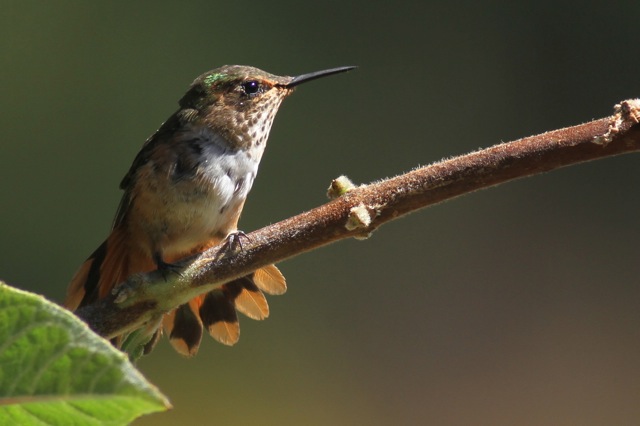
Volcano hummingbird female on branch, 28 March 2014

Sometimes, a female volcano hummingbird rested on a branch.

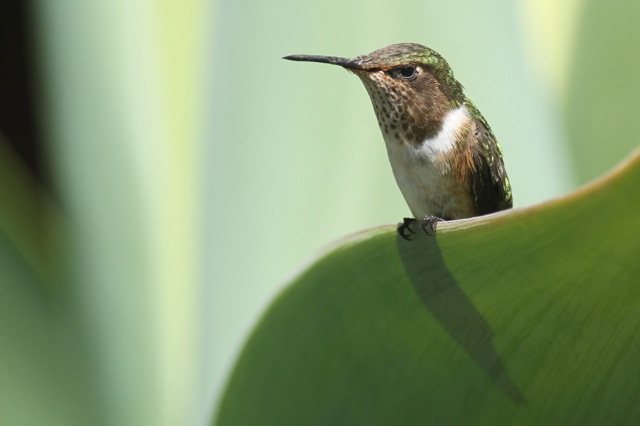
Volcano hummingbird female on leaf, 28 March 2014

Or on a leaf.

White-throated mountaingems were present as well.

And a relatively big species: magnificent hummingbird.

Yellowish flycatcher, 28 March 2014

Another Central American cool mountain forest species: yellowish flycatcher.

At 10:20, a swallow-tailed kite flies overhead.

We have to leave, to the Central Valley of Costa Rica.

View original post 17 more words

Welsh birds news

How Earth Avoided Global Warming Last Time

Rashid Faridi's avatarRashid's Blog: A Place for Inquisitive Souls

Geochemists have opined that  a huge rise in atmospheric CO2 was only avoided by the formation of a vast mountain range in the middle of the ancient supercontinent, Pangea.

300 million years ago, plate tectonics  aggregated land masses into a giant supercontinent, known as “Pangea.” The sheer size of the continent meant that much of the land surface was far from the sea, and so the continent became increasingly arid due to lack of humidity. This aridity meant that rock weathering was reduced; normally, a reduction in rock weathering means that CO2 levels rise, yet in spite of this CO2 levels — which had been falling prior to the mountain formation- continued to drop, eventually undergoing the most significant drop in atmospheric CO2 of the last 500 million years. …

A group of French scientists have now produced a model which seems to explain this contradiction.

According to the research…

View original post 41 more words

Biologist uses Spinoza Prize for godwits, spoonbills, red knots

petrel41's avatarDear Kitty. Some blog

This is a black-tailed godwit video from Sweden.

Dutch migratory birds biologist Theunis Piersma recently won the Spinoza Prize, the highest prize for science in the Netherlands.

He said this morning to Vroege Vogels radio that he intended to use the money especially to study black-tailed godwits, spoonbills and red knots; helping with conservation of these three bird species.

View original post

Maneka Gandhi condemns river-linking project – PTI

VOI's avatarBHARATA BHARATI

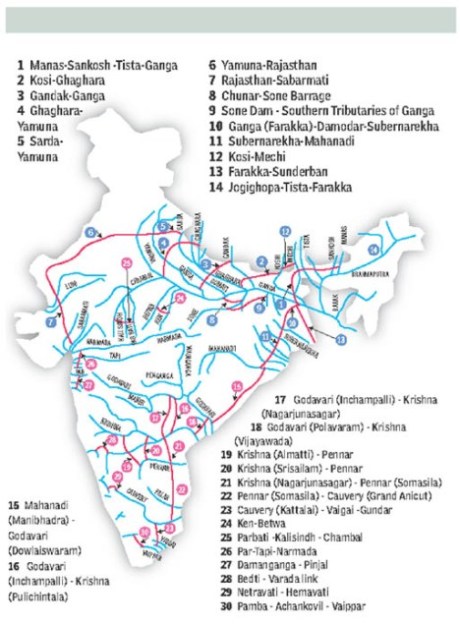
India's river interlinking plan

Maneka Gandhi“There is no question of (linking rivers). There can be no scheme in the world as bad as this. Every river has its own eco-system, own fish, own PH value. If you connect one river with another, it will kill both of them. Don’t be in any misconception.” – Maneka Gandhi

Terming the ambitious river-linking plans of BJP’s prime ministerial candidate Narendra Modi as ‘extremely dangerous’, party MP Maneka Gandhi has said it was she who had stopped former PM Atal Bihari Vajpayee from going ahead with it.

The idea of inter-linking of rivers was floated during the NDA government headed by Vajpayee.

Replying to a question on linking river Gomti with Sharda at an event here last night, Gandhi, who is sitting MP from Aonla, said “I had stopped Atalji from this rubbish (Maine hi Atalji ko roka tha is bakwaas se). Such plans are…

View original post 159 more words