India: A grim reality — and a big victory in the fight to free animals from laboratories, part one

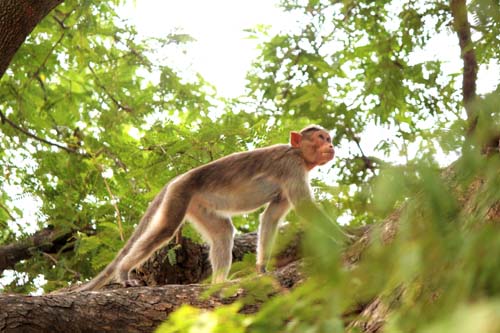
A macaque at Pavapatthu  sacred grove, not one of the Blue Cross monkeys.
A macaque at Pavapatthu sacred grove, not one of the Blue Cross monkeys.


Seven monkeys run and play together in the sun, in a large, open grass-covered area. They come and go freely indoors and out, where they’ve been for several years, at the Kunnam Center of Blue Cross of India, in the Kanchipuram district, Tamil Nadu.

Their lives weren’t always so happy.

The monkeys at Blue Cross came from laboratories, where they were used for experiments.

Companies that do testing on animals gloss over the reality of the life and death of the animals.  Usually they avoid mentioning animal testing altogether. Occasionally, on a TV show, an apparently happy animal may be shown, in lovely, sanitized surroundings, with seemingly caring people who are neatly dressed in white coats.  Who could object, when a well-fed mouse is shown obviously enjoying life in his clear plastic cage? The reality though is radically different, and, should you be in any doubt about this, you can read about the use of animals in laboratories on any number of websites which will give you the graphic details.

The circumstances in which lab animals live and die are terrible. In the end, they are, with rare exceptions, killed, so that the test results can be compiled into statistics.

The principle of laboratory testing on animals is to cause injury or sickness to the animal, so that possible cures or drugs can be tested.  When the testing is done for product safety, to prove that a product is “safe” for humans, the animal is given enough of the product to cause harm and injury to the animal – this is meant to indicate the level of safety of the product.  Suffering for the animals is inherent in the basic principles and practice of animal testing. The only way around causing suffering to lab animals is not to use animals in laboratories.

Five of the Blue Cross monkeys arrived, in a group with seven others who have since died, from the Christian Medical College and Hospital at Vellore, a city west of Chennai. There they had been used to study spinal injuries. First they were injured, then they were studied.

Two of the monkeys there are survivors of a group of five that came from A.L. Institute of Medical Sciences at the University of Madras, where they had been used to study chemical burns. Again, the burns were first inflicted on the animals, then they were studied.

In all lab experiments, suffering and injury are first inflicted on the animals, to cause the condition that is to be researched, then they are studied.

Three guinea pigs in captivity.

Even if no injuries were ever caused to them, the use of animals in laboratories would still be cruel. In the case of these monkeys, they were captured as youngsters in the wild; the mere fact of removing an animal from the wild and putting him or her into a small cage causes intense suffering to any wild creature.  As for those who are bred in captivity, they have never even known a life of freedom in nature.

Cosmetics testing

The monkeys at Blue Cross were not used in cosmetics testing; however, many animals are, and it’s important to be aware that testing for cosmetics is no kinder than any other form of animal testing. No, the animals do not simply put on a bit of lipstick or some mascara, and then gaze at themselves in the mirror. Because the tests are meant to measure toxicity, they cause painful injury and death.

That is the grim reality.
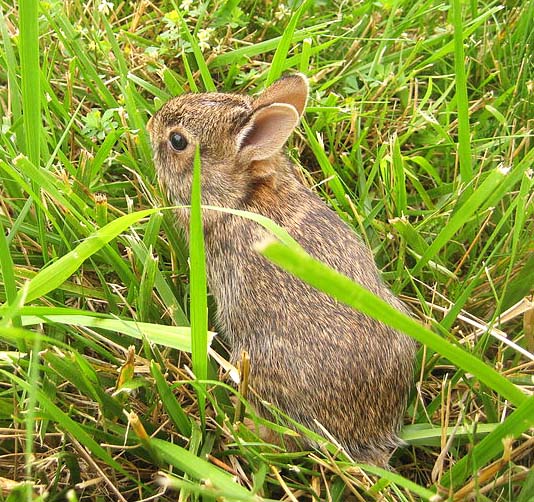
A baby rabbit.
A baby rabbit in the wild.

A landmark victory


In June, 2013, a major victory was won in India, with the banning of the use of lab animals for cosmetics testing.  No more animals can be used in labs in India to test cosmetics or the ingredients in cosmetics. The ban will save many thousands of animals from suffering.

On April 20, 2012,  Humane Society International launched its Be-Cruelty Free campaign with the aim of bringing a worldwide halt to the testing of cosmetics on animals. The banning of animal cosmetics testing in India a year later is a resounding victory for the animals.

The tireless work that led up to this victory goes back fifty years. In 1965, Blue Cross held a seminar, Animals in Research, in which they called for a ban to be imposed on all use of animals for cosmetics testing.

In 1996, the Committee for the Purpose of Control and Supervision on Experiments on Animals (CPCSEA), with parliamentarian and animal advocate Maneka Gandhi as the chairperson, adopted two resolutions related to animal experimentation. The first called for a ban on all experimentation on animals in secondary schools.

The second resolution called for the banning of all use of animals for cosmetics testing.

The decades long struggle to bring about this ban is based on the fact that while medical experimentation, which is equally cruel, may be believed to save human lives (a point that is contested by animal advocates), no such argument can be made on behalf of cosmetics. Cosmetics are not a life or death issue for humans, and not wearing cosmetics will not kill any of us. So a ban on cosmetics testing is a good place to start, and offers a toehold in the fight against all testing on animals.

To be continued…

To read part two, click here.


Top photo: Sharon St Joan / A wild macaque at Pavupatthu sacred grove.


Second photo: Author Mikerussell at en.wikipedia /http://en.wikipedia.org/wiki/User:Mikerussell

/ Wikimedia Commons / Three guinea pigs in captivity.


Third photo: Ksd5 / “This file is made available under the Creative Commons CC0 1.0 Universal Public Domain Dedication.” / Wikimedia commons. / A baby rabbit.

Appeal to Egyptian government to protect animals in Giza Zoo

These are wild zebras in Tanzania, not zebras in the Giza Zoo.


Note: The email address given below does not work, though it was given on an official site. If you can provide an email address for the Prime Minister’s office, or any relevant minister, that would be helpful.

Below is an email sent to the office of the Prime Minister of Egypt primemin@idsc.gov.eg This has no political intent whatsoever, and is purely humanitarian in nature. You might like to send an email too. It has been reported in the Egyptian news that the use of tear gas and other more forceful measures, in the area of the Giza Zoo, could be imminent and may happen at any moment. For more information, go to http://www.facebook.com/dina.zulfikar.5/posts/10153074293610611?comment_id=42159871

Dear Sir,

If tear gas and other violent measures are used near the Giza Zoo, they will result in suffering and death to the animals there.

Two years ago the use of tear gas near the Giza Zoo resulted in the deaths of zebras and some other animals.  More recently, when helicopters and F-16’s were flown in the airspace over the zoo, this caused the panic of all the Giza Zoo animals and the death of one of the chimps and extreme suffering to the giraffes and other animals.

Please take every possible measure to ensure that no tear gas or any other violent crowd control measures are used anywhere in the vicinity of the Giza Zoo.

Human beings are responsible for their whereabouts and can move to other locations, but the animals of the Giza Zoo cannot escape. Causing death and suffering to them is inhumane.  The Egyptian Government is under an obligation to protect the well being of the animals.

Thank you.

Photo: Sajjad Fazel / Wikimedia Commons / Creative Commons Attribution-Share Alike 3.0 Unported / two Zebras in Mikumi National Park, Tanzania. 

Chennai, India: Flamingo in the wrong spot, rescued

954757_10151762323922170_846169221_n

By Blue Cross of India, cross-posted from Blue Cross’s Facebook page

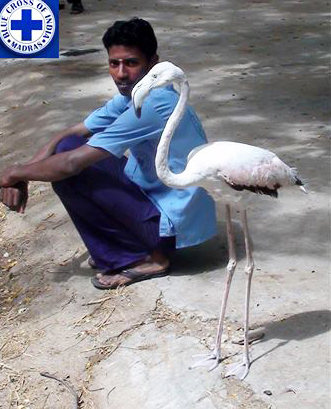
One of Blue Cross’s volunteers, Mr. Selva Kumaran, a student in AVIT College of Engineering, Mamallapuram, rescued a Greater Flamingo near a vacant plot at Ekkaduthangal and carried the bird, that had minor injuries, to the Velachery shelter.

The Flamingo weighed more than three kilograms (7 pounds) and was 3 feet 5 inches tall. After receiving first aid, the bird was transferred to the Zoological park. She is doing well with access to fish in a pond and is being given the best medical care.

Blue Cross and its volunteers rescue many animals every day.

Photo: Courtesy of Blue Cross of India.


To visit Blue Cross’s Facebook page, click here.


To visit the website of Blue Cross of India, click here

India: Delhi and Guwahati: Cows get sore feet too

Cow_1edited

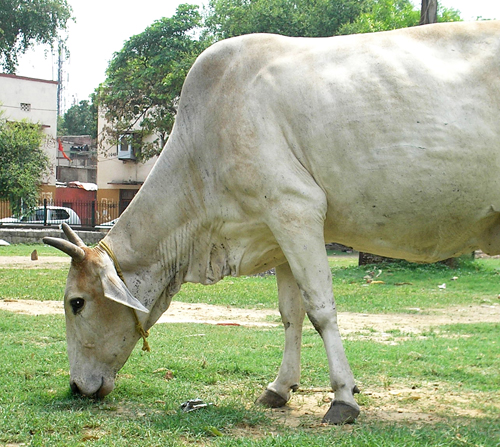
This cow was treated by Dr. Sashanka of JBF (Just Be Friendly) and his team for a very serious hoof problem, from which she recovered well. While her foot was healing, she enjoyed munching on grass and being with other cows. Kotla Mubarakpur, south of Delhi, is a residential and shopping area and is JBF’s main area of operation.

JBF operates mobile clinics, which provide on the spot treatment for cattle, in both Delhi and also in Guwahati, in Assam, in North East India.

In 2012, JBF’s Delhi Mobile Clinic provided vet treatment to 3,000 cattle, mostly those with hoof or horn problems, and some with injuries from traffic accidents.

If a cow being treated needs hospitalization, then with the help of others, they transport the cattle for treatment to a hospital that has a shelter for cattle.

JBF also runs a very active spay/neuter program for community dogs in Assam and conducts nature camps for Assamese children. Their disaster response teams saved the lives of hundreds of cattle during last summer’s devastating floods.

To visit the website of Just Be Friendly, click here.

To give a U.S. tax-deductible donation to JBF through Help Animals India, click here.


Photo: Courtesy of Help Animals India

EGYPT: ESAF and SPANA come to the aid of Pyramids horses


pyramids projectP1060654


On July 10 and 11, 2013, ESAF (Egyptian Society of Animal Friends), in a joint project with the UK organization SPANA (Society for the Protection of Animals Abroad), which helps working animals, has resumed their aid to the Pyramids animals, in a program that will continue for two months.


These animals, mostly horses, donkeys, and camels, are used to carry tourists visiting the Pyramids.  During times of unrest, when there are no tourists, the animals suffer greatly from lack of food and care, since their owners lack income with which to care for them.


ESAF has been providing aid to these animals for a number of years and intensified their efforts after the Egyptian revolution in 2011. The feeding and vet care program has been a great help to the horses, since most of the animal owners are poor and suffer hardship whenever the tourist trade grinds to a halt. ESAF continues their work with the Pyramids animals whenever they can, depending on the generosity of supporters.


On Wednesday July 10, 159 animals were fed and given vet care. Some were quite thin. The food included barley, corn, hay, and greens. 150 were horses, along with two donkeys and seven camels. The next day 194 were fed and treated – mostly horses, along with four donkeys and seven camels.


SPANA provided the food.  Medication, nosebands, and flymasks were covered by other donations.  They replace nose bands made of metal wire with soft cloth nosebands.


The groups also gave out booklets on the proper care of equines.


As well as thanking SPANA, Ahmed El Sherbiny, Chairperson of ESAF, also expressed his gratitude “to Janet Thomas of AAA and to Sue Evans and her UK group” for making the program possible.


To visit the website of SPANA or to donate, click here.


To visit the Facebook page of ESAF and to see more photos, click here


Photo: Courtesy of ESAF

Writing tips: Focus on an individual animal

?????????????????????????????????????????????????????????????

Tips for writing engaging stories about animals your organization has helped.

Whatever point you wish to make, start with a real individual animal.  This will catch and hold your reader’s attention.

Basic facts needed:

The name of the animal:  Except for wildlife to be released back to the wild, give the name of the animal.  If you do not know the name, you can say, “we’re calling the little kitten ‘Bobsy.’ “

The kind of animal it is:  A fledgling white-winged dove, a young community dog, a working horse. For wildlife, give the correct species name.

When: Date, year, season, time of day. Including the weather as well helps bring the story to life.

Where: Country, what region of the country, town or village, nearest large city, area of the city, characterize the area. Example:  A hill in the forest leading up to Name of Town  — or a rundown area on the south side of  Name of City  — or a wealthy seaside resort on Name of Beach.  Include names of rivers, forests, streets.

Why and what:  What were the circumstances in which the animal needed help.  Touch lightly on the problems (no graphic or disturbing details).  Include incidental descriptions to add color to the story.  Describe people, places, the weather, actions, what the animal was doing, what people said, did.  How the action unfolded and how the animal was rescued or treated.  Be specific.

How: In what way did you help the animal?

Who:  Name the individuals who helped the animal.  Names of people, like names of places, add specificity to the story; they make it more real, more tangible and more readable.  If confidentiality is required, you may wish to use only first names.

Outcome: The story needs a happy, uplifting outcome. If there is an unhappy ending, write a different story instead. The point of the story is to leave the reader feeling inspired, uplifted, and encouraged by the story and by the work your organization is doing.

What is the point you wish to make?  Examples:  “We saved this donkey, Jimmy, from the floods; we plan to go back on Wednesday to rescue as many more stranded animals as we can.” Or “Fluffy was just one little puppy on the streets, but, sadly, there are many more homeless puppies. Our spay/neuter program helps ensure that there fewer puppies born out on the streets.  Last year we spayed/neutered 430 community dogs and cats.”  Or “ ‘Heidi’ is a beautiful cow, Dr. Raj’s expert surgery has saved her life after she ate a lot of plastic bags while she was living on the streets.  Now she has a home where she is safe and much loved. Our campaign to ban plastic bags in Name of city or state will save the lives of many innocent cows, like Heidi.”

How can people find your website or Facebook page?

Summary:  You don’t need every bit of the information listed above: just make good use of the information you have and do your best to get good information. It is essential that every detail be true and accurate.  If you make up or exaggerate details, your story will have a different flavor, and people will not believe it.  Remember to include descriptive details that set the scene and make the story and the people and animals real to your reader.


Use the example of one happy story of one animal to convey the point you wish to make.  Do not succumb to the temptation of including gruesome, unpleasant details in the final paragraph.  Keep the tone hopeful, positive, upbeat, and uplifting – otherwise you’ll have undone all your good positive writing in the rest of the story.

The more encouraging and upbeat you are (while remaining true to the facts, of course), the more responsive and helpful your readers and supporters will be.  Positivity engages people and achieves results.  Even in disaster rescue, you can be realistic without being distressing. You can be straightforward and clear, without being disturbing. Avoid upsetting details – find a gentle way to convey the terrible aspects of the story, and leave your reader feeling confident in your good work.

Focus on the animal you’ve saved and on the excellent work you are doing. Mention grim facts in a brief, gentle way at the beginning, not the end. You must end on an up note!

Photo: © Evgenya Schcipanskaya / Dreamstime.com / Orange cat.

WildEarth Guardians: Another victory for clean air, defeat for coal

cleanairZion'sIMG_5291

By Jeremy Nichols, Climate and Energy Program Director,
 WildEarth Guardians

It’s another victory for clean energy and our communities scored by WildEarth Guardians’ legal efforts.

This time, it’s a big one: a coal-fired power plant shut down.

That’s according to the terms of an agreement we reached with a utility in southeast Colorado, which in 2009 converted a natural gas-fired power plant to coal.

As the Denver weekly, Westword, put it, it’s a “stunning defeat for the beleaguered coal industry.”
The settlement resolves nearly four years of litigation over clean air violations at a troublesome coal-fired power plant in the eastern Colorado town of Lamar.

It also puts at ease the minds of residents and WildEarth Guardians’ members, Shirley and Charles Warren, who have had to deal with the coal-fired power plant threatening the air they breathe and the sanctity of their community.

Fortunately, we were able to strike a deal with the utility that both resolved the issues at the coal-fired power plant and gave them a chance to find a better way to power southeastern Colorado.

This is a major victory and a clear sign of the effectiveness of our tactics.  Most importantly, it’s a testament to the power of your support.  Thank you so much.

For our climate and our communities, here’s hoping for more success to come.

For Clean Skies,

Staff_Photo_Jeremy_Nichols_r.1

Jeremy Nichols

Climate and Energy Program Director

WildEarth Guardians

jnichols@wildearthguardians.org

To visit the website of WildEarth Guardians, click here

Top photo: © Sharon St Joan / Clean air, rocks and trees at Zion’s National Park, 2012.

Second photo: Courtesy of WildEarth Guardians / Jeremy Nichols.

India: More on requesting review of India’s Meat Export Policy

bullthreeIMG_3725

This is a follow up to the earlier posting “India: Last day for comments on India’s Meat Export Policy.” 

Below is the email I’ve sent to Mr. Tiwari, (Shri R.P. Tiwari, Deputy Director, Rajya Sabha Secretariat) requesting a review of India’s Meat Export Policy:

Dear Mr. Tiwari,

I have visited India many times and profoundly admire India, her culture and her people.

Please ensure that there will be a review of India’s Meat Export Policy, which is harmful to both animals and people and which runs counter to the most ancient traditions of the Indian people.

Having an optimistic outlook for the future of the human race becomes more difficult when even India, the kindest of all nations, cannot maintain her age-old traditions of compassion and reverence for life.

It is painful to watch India give up her noble spiritual traditions, to which she has remained true for thousands of years, in exchange for the short-sighted “modern” view of animals as dispensable — and profit (the profit of just a few) as all-important.

The export of meat leads to immense suffering for the animals being transported and then slaughtered. It deprives the Indian people of much-needed water, grains, and vegetables, all of which could be available in abundance if they were not being misused to raise beef and other meat products.

Meat raised for local consumption only and not for export, would involve far fewer animals and would allow for a far greater voice for the Indian people, many of whom have been and remain vegetarian, to seek the humane treatment of animals, the abolishing of animal slaughter, and the doing away with factory farming, which is exceptionally cruel and unnatural.

Thank you for considering these viewpoints and for supporting a return to the compassionate principles enshrined in India’s Constitution, laws, and traditions, so that India may once again set an example for the world to follow.

Sincerely,

Sharon St Joan

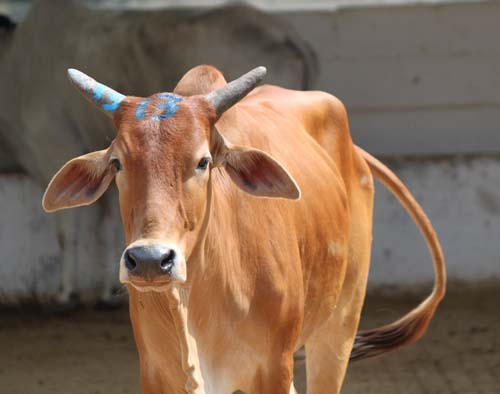
Photo: Sharon St Joan / Some of over one hundred bulls rescued in 2012 by Blue Cross of India, from illegal transport on the way to slaughterhouses.

INDIA: Last day for comments on India’s Meat Export Policy

bulloneIMG_3744

Today is the last day to sign a petition to the Indian government requesting a review of the Meat Export Policy.

Information on how to do this is below.

India has a tradition going back thousands of years of reverence for all animals, especially cows and bulls.  That these animals are now being slaughtered and their meat being exported abroad is a radical departure from Indian tradition, and the policy of meat export from India must be reconsidered.

Many thousands of animals are being bred and slaughtered for the sole purpose of their meat being exported.

As well as legal slaughterhouses, there are thousands of illegal slaughterhouses being run in India.  These illegal slaughterhouses abide by no rules and no humane standards, so the level of cruelty is enormous.  There is also immense cruelty involved in the illegal transport of the animals on their way to being slaughtered.  These slaughterhouses and the cruel transport to them exist only because there is such a huge market for beef, much of it exported.

It takes ten times more water to raise one kilograms (2 ¼ pounds) of beef than it does to raise one kilogram of rice.  Parts of India are now suffering from a drought.  Raising beef is a waste of water that harms the Indian people.  Only a few individuals who are producing and selling beef benefit from meat export. Meat export is harmful, not only to the animals, but to the Indian people as well, who suffer from shortages of food and water.

To sign the petition:

Go to   http://www.ratnaworld.com/petition

Please also send a brief, polite email today to

rsc2pet@sansad.nic.in

Shri R.P. Tiwari,

Deputy Director

Rajya Sabha Secretariat.

Thank you!

To have a more in-depth understanding of this issue, below is the communication sent to Mr. Tiwari, the Deputy Director of Rajya Sabha Secretariat, by Blue Cross of India.  It explains with great clarity and logic the reasons why the Meat Export Policy needs to be reviewed.

bulltwoIMG_3786

Communication from Blue Cross of India asking for a review of India’s Meat Export Policy

Sent by M. Shantilal Pandya, Chairman,Blue Cross of India 

The petitioner is sending in this plea in his capacity as  the Chairman of BLUE CROSS OF INDIA,  Chennai – one of India’s most active and largest animal welfare organisations which is in its Golden Jubilee Year and begs leave to file this petition praying for a revision of the “Meat Export Policy” of the Government of India urging an urgent change in the current policy.

While we are an animal welfare organisation, all of us on the Governing Body of the Blue Cross of India work for organisations doing work for human beings and to us it is not a question of animals or people; it is animals and people.

The petition is based on several valid grounds including environmental; economic; constitutional; legal;  and opposition by several statutory bodies including the National Commission on Cattle, Law Commission of India, and the Animal Welfare Board of India. It is also based on the inherently cruel nature of the business and how abhorrent it is to our millennia old culture of ahimsa. 

In a case presently being heard by the Hon’ble Supreme Court, Hansraj Bharadwaj vs Union of India and others, the Hon’ble Court directed the Animal Welfare Board of India to collect and present data regarding the number of licensed and unlicensed slaughter houses in the states of India. A reading of the list is most depressing: the number of unlicensed slaughter houses in India far outweighs the number of licensed ones! And we are acutely aware that this list is incomplete – in Chennai, according to the Tamil Nadu government’s answer, there are two unlicensed slaughter houses in Chennai as against one licensed slaughter house. The petitioner avers that there are over a dozen unlicensed slaughter houses in Adyar (one postal division of Chennai)  alone!

In Orissa, there are 51 licensed slaughter houses versus 2073 unlicensed ones as per reports received from the Orissa government. In other words, the unlicensed ones outnumber the licensed ones by a factor of more than forty to one!

Arunachal Pradesh and  Andaman and Nicobar have reported that there are no licensed or unlicensed slaughter houses in both the areas – starnge that non-vegetarian items are freely available in both places!!

In all states which have responded, there is good reason to believe that the number of licensed slaughter houses is accurately reported – the number of unlicensed ones reported by the states is only a small fraction of those that exist.

It is further stated by the petitioner that virtually every rule in the Slaughter House Rules of 2001 under the Prevention of Cruelty to Animal Act of 1960 is broken by virtually every one of the licensed slaughter houses in India. Every rule in the Transportation of Animals Rules is also routinely flouted and authorities concerned turn a blind eye to this. 

  The attention of the Hon’ble Members of the Petitions Committee is drawn to the FAO report, Livestock’s Long Shadow; The World Water Development Report of 2003; Brahma Chellaney’s Water – Asia’s New Battleground; Vrinda Narain’s Water as a Fundamental Right – A Perpespective from India; Sharad K. Jain’s Sustainable Water Management in India Considering Likely Climate and Other Changes; Vandana Shiva’s The Transcript,  her Stolen Harvest; and her other writings;   Praveen Sharma’s Water – The Hidden Export and other sources which will be referred to in this petition.

 Environmental reasons for stopping the export of meat from India:


It is an indisputable fact that the conversion of animal feed to meat in any form is a very low efficiency process with a conversion factor of between 6:1 and 12:1. In other words, between 6 and 12 kilograms of corn or soy beans are required to produce one kilogram of meat.

In addition, it takes ten times more water to raise a kilogram of beef than it does to raise one kilogram of a water-intensive crop like rice.

The country’s natural resources are being rapidly depleted because of the meat export business and it is estimated that 16,000 cubic meters of water is required for every tonne of beef exported. India is one of the leading exporters of “virtual water” in the world! And this, when millions of our countrymen have limited access to potable water!

 Water is a public and material resource, fundamental to life and meant for the common good as mandated by the Public Trust Doctrine, which is part of the law of our land and as directed by Articles 21 and 39(b) of our Constitution.

Economic reasons for stopping the export of meat from India:

Agriculture or Agricide? This is a question that must be answered by this Hon’ble Committee.

No indigenous culture – not China and not India – has ever fed grain to animals. Animal have eaten what humans could not eat.

The economic viability of intensive animal agriculture in India given the grain and water requirements is non-existent. The business goes on only because no economic price is placed on the vast quantities of water required and the subsidies on the animal feeds. Land that can profitably be used for growing food for humans is used to grow feed for animals at great expense to the unknowing and un-informed public.

In many places, fertile rice fields are being destroyed to put up sheds housing upwards of 50,000 chickens each, destroying agricultural land and causing pollution to such an extent that the lands will be rendered unproductive for crops for years to come even after the factory farms are stopped.

The public health costs of the meat industry are astronomical. New and lethal diseases being born from factory farms including zoonotic ones like bird flu and swine flu have been an added burden on our public health system.

The financial gains of the meat export industry are centered in the hands of an “elite” few. In addition, these people are given subsidies to set up slaughter houses and tax-benefits for exporting the country’s cattle wealth. The nation’s food security is threatened because renewable energy and renewable sources of fertilizer from rural farm animals are being destroyed.

Animals are a primary source of fertilizer and draught power, especially in rural areas. According to Dr. Vandana Shiva, in the case of one export-oriented slaughter house alone, meat exports earned $45 million, whereas the estimated contribution of the slaughtered animals to the economy if they had been allowed to live was $230 million.

Constitutional grounds for stopping the export of meat from India:

The petitioner submits that the State is duty bound to follow the Directive Principles and the Fundamental Duty as enunciated in Article 51-A of our Constitution.

We are, therefore, constitutionally bound to show compassion to living creatures. It is reprehensible to most of us that cattle are condemned as “old and useless” to enable them to be slaughtered when the ruling by the Hon’ble Supreme Court in State of Gujarat Vs Mirzapur (October 26, 2005) stated that bovine cattle remain ‘milch and draught’ even if they are so-called ‘old and useless’.

The above ruling also emphasised the fact that the State is also a citizen and it is therefore required to honour the Constitutional mandate of Article 51-A.

Cattle that have served us for milch and draught for their entire “useful” life cannot be slaughtered under horrendous conditions to be exported just for the sake of what is rightly called “filthy lucre”.


National Commissions and Statutory bodies opposing the export of meat from India:

The National Cattle Commission under the Chairmanship of Justice Lodha and  the Animal Welfare Board of India – a statutory body set up by an Act of Parliament – both have recommended that the export of meat from India should be stopped.

The inherently cruel nature of the meat export industry:

The father of our Nation, Mahatma Gandhi, stated: “The greatness of a nation and its social progress can be judged by the way its animals are treated.”

That each and every animal that is slaughtered dies with a great deal of pain and suffering cannot be disputed.

The cruelty is inherent in the raising, transportation and in the actual slaughter process.

Virtually every rule under the Prevention of Cruelty to Animals Act (59 of 1960) is violated in the process.

Should the country that was the birth place of Ahimsa continue to kill and export animals knowing that they are subject to the most heinous of atrocities?

Photos: Sharon St Joan / Bulls rescued by Blue Cross of India in 2012, from being illegally transported to slaughter.