Banning jallikattu – and new visions for animal welfare, part one

rescued calf IMG_6333


The recent Supreme Court of India ruling banning the cruel “sports” of bull fighting (jallikattu) and bull racing is one of the most remarkable documents ever issued, by any country, in setting out a fundamental legal basis in support of animal welfare.


Here is a brief summary of the ruling, with some quotes from the court’s judgment:
 

?????????????????????????????????????????????????????????????????????


“All living creatures have inherent dignity and a right to live peacefully and the right to protect their well-being…”


“Human life, we often say, is not like animal existence, a view having anthropocentric bias, forgetting the fact that animals have also got intrinsic worth and value.”


In its 103 page judgment, the Court considers both the arguments of the State of Tamil Nadu, presenting the case for continuing to hold jallikattu events – and also the case for banning jallikattu on the grounds of cruelty, brought by the Animal Welfare Board of India (AWBI).


Animals in Indian tradition


Justice K.S. Radhakrishnan who wrote the Supreme Court ruling countered Tamil Nadu’s assertion that jallikattu is a part of Tamil Nadu culture and tradition by referring to much older tradition, extant for thousands of years, “the well-being of the bull is Tamil culture and tradition, they do not approve of infliction of any pain or suffering on the bulls … Tamil tradition and culture are to worship the bull and the bull is always considered as the vehicle of Lord Shiva…Jallikattu or the bullock cart race, as practiced now, has never been the tradition or culture of Tamil Nadu.”


He goes on quote ancient sacred writings, in the Isha Upanishad, to illustrate the true tradition and culture of India, “As early as 1500-1600 BC in the Isha Upanishad, it is professed as follows: “The universe along with its creatures belongs to the land. No creature is superior to any other. Human beings should not be above nature. Let no one species encroach over the rights and privileges of other species.”


This is the view against speciesism that is subscribed to by most of today’s animal rights advocates, and it was written down in India over 3,500 years ago.


Animals in international law


There follows, in the court document, a discussion of international views of animals and animal law. Justice Radhakrisnan points out that , in general, the United Nations “has safeguarded the rights of human beings,” but not those of animals.


The World Charter for Nature, however, was passed by the UN General Assembly on October 28, 1982. It states, “that every form of life is unique, warranting respect regardless of its worth to man.”


Many countries guarantee extensive protection to animals:


“German Animal Welfare Law, especially Article 3, provides far-reaching protections to animals… Countries like Switzerland, Austria, and Slovenia have enacted legislation to include animal welfare” in their national Constitutions, and the U.K and Austria protect animals in their animal welfare acts. India accords protection to animals in its Constitution. The Animal Welfare Act, 2010 (Norway) states “animals have an intrinsic value which is irrespective of the usable value they may have for man. Animals shall be treated well and be protected from the danger of unnecessary stress and strain.”


The World Health Organization has recognized the five freedoms of animals:

(i) freedom from hunger, thirst and malnutrition;

(ii) freedom from fear and distress;

(iii) freedom from physical and thermal discomfort;

(iv) freedom from pain, injury and disease; and

(v) freedom to express normal patterns of behavior.


Animals in the Indian Constitution


Justice Radhakrishnan explains that when Article 19 (1) (f) was deleted from the Indian Constitution, this meant that the right to property, while still recognized as a right, is no longer a fundamental right. Animals are universally recognized as property; however, this “is now only a legal right, not a fundamental right.” This distinction means that animals do have intrinsic rights, and human property rights do not take precedence over the fundamental rights of animals. This allows Parliament to pass animal protection laws.


Article 51A (g) of the Indian Constitution states that it is a fundamental duty of every citizen “to have compassion for living creatures,” which means having concern for their suffering, and extending sympathy and kindliness towards them. India’s was the first Constitution in the world to require of citizens that they be kind to animals.


Nandibull


Justice Radhakrishnan then states that jallikattu and bullock cart racing “inherently involve pain and suffering.” This is because it is not part of the nature of bulls to enjoy running. They are not like horses, and they do not run unless they are forced to try to flee by being mistreated. For them, running is a flight response.


There is presented in detail the cruel and inhumane treatment of the bulls, in numerous incidents that were witnessed and documented by PETA India and the AWBI, at jallikattu events.


The Supreme Court declares that the “right to dignity and fair treatment is, therefore, not confined to human beings alone, but to animals as well.”


To be continued in part two.  


To visit the Facebook page of the Animal Welfare Board of India, click here.  


Top photo: Sharon St Joan / A rescued calf at Blue Cross of India


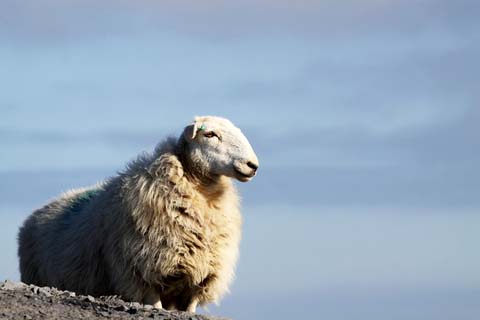
Second photo: © Christian Bridgwater / Dreamstime.com / A sheep on a mountain.


Third photo: Sharon St Joan / Painting of Nandi, the vahana of Shiva, south India.


Chennai, India: A mother finds another son


Amazing


By Rudra Krishna,

Volunteer,

Blue Cross of India


Dear animal lovers, we always hear stories about dogs sitting at their master’s graves or pining away for their lost human companion; tales that, because we know the wonderful nature of dogs, we have no trouble believing. However, the narration of such a story always brings tears to one’s eyes and a lump to one’s throat, and is always worth sharing.


Dawn Williams, our General Manager, is always rushing around the city on rescues. He is, in fact, our unofficial extra rescue driver and paramedic rolled into one at all times, attending to as many emergencies as possible once all our other ambulances have started their daily rounds.


Consequently, he rarely gets time to stop and look around, but, being a former commando in the Indian Army, he’s extremely sharp and observant.


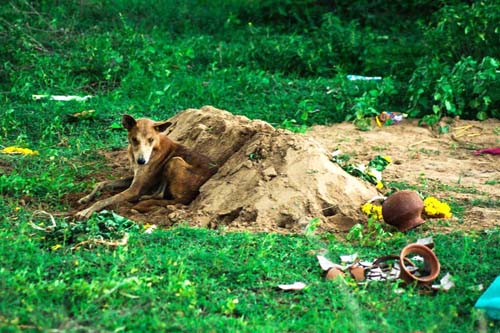
Sometime during the 1st week of August, while on a rescue mission in Avadi along with our volunteer Mukund from Caterpillar, they were going through a police check post where traffic is necessarily slow. As they passed an open graveyard, they noticed a dog sitting on a fresh grave. Considering that neither the presence of a graveyard nor the fact that dogs sit around them is momentous, they passed through.


On the 13th of August, when on another rescue mission along with Capt. Avinandan Mithra of the Indian Coastguard and, coincidentally, Mukund again, they were driving past that check post when, lo and behold, the same dog was on the same grave. They took a picture from a distance and hurried on, as they were attending to a cow in distress.


After the rescue, they drove back to the graveyard and tried to coax the dog away with biscuits and water, but he would just whimper and put his head down, refusing to budge. There was a liquor shop near the graveyard so the three gentlemen went over to ask about the dog. From the owner of the liquor shop and the adjacent cigarette shop, they learned that the dog had been the constant companion of an 18-year old boy from the same locality who had been hit by a speeding motorcycle and died, on the 2nd of August.


Dawn went over to the house everyone said was the deceased boy’s and located the youth’s mother. The mother informed our team that she had assumed that Tommy, the dog, had run away when her son died. The mother of the young man accompanied Dawn back to the grave. When he saw her, Tommy got up and went slowly to her. It was obvious that he hadn’t eaten much (if anything at all) in days. Tommy rested his head on her feet and cried some more, as the mother bent down and, lifting his head up, kissed him, before burying her face against his neck and crying.


Dawn told me that he and the team were sobbing like little girls as they watched the two bereaved souls comfort and find solace in each other. The mother picked up Tommy and carried him back to her house, telling our team, as she left, that she had wrongfully thought, because her only child had died, that she had nothing to live for.

With the words that she still had one son in Tommy, she thanked our team and the two went back home.


This is only the tip of the iceberg, as far as the loyalty and love an Indian dog can provide is concerned. Visit our shelter and adopt a dog in need. Remember, they will never forget that you saved their lives, and they will never stop looking for a way to pay you back.


Photo: Courtesy of Blue Cross of India


To visit the website of Blue Cross of India, click here.


Nestlé Announces Groundbreaking Global Animal Welfare Reforms

???????????????????????????????????????????????????????????????????????????


Thank you to N.G. Jayasimha, H.S.I., for this information.


World’s Largest Food Company Aims to Overhaul Chicken, Pig and Cow Treatment throughout Supply Chain


MUMBAI, India (21 Aug. 2014)–Nestlé–the world’s largest food company and makers of iconic brands–such as Nestlé Milkmaid and MAGGI–announced<http://www.nestle.com/asset-library/documents/creating%20shared%20value/rural_development/nestle-commitment-farm-animal-welfare.pdf> an industry-leading animal welfare program that will eliminate several controversial yet standard practices within its global supply system.

Particularly, Nestlé’s new policy states that it will eliminate practices like confining pigs in gestation crates, calves in veal crates and egg-laying hens in cages; the forced rapid growth of chickens used for meat products; and cutting the horns, tails and genitals off farm animals without painkiller.

Humane Society International applauded the announcement.

“We thank Nestle for taking a stand against inhumane factory farming practices,” said N.G. Jayasimha, director of HSI India. “Cruelly confining animals in cages for their entire lives, castrating or removing their tails or horns without painkiller and breeding them in a way that compromises their welfare is simply unacceptable.”

Nestlé is also encouraging food sustainability by promoting the global Meatless Monday movement via on-package messaging for some of its products.

Nestlé’s policy follows dialogue with animal protection organizations including The Humane Society of the United States (HSI’s sister organization), Mercy For Animals and World Animal Protection.

Photo: © Ulrich Mueller | Dreamstime.com


Chennai Court halts Eid camel slaughter

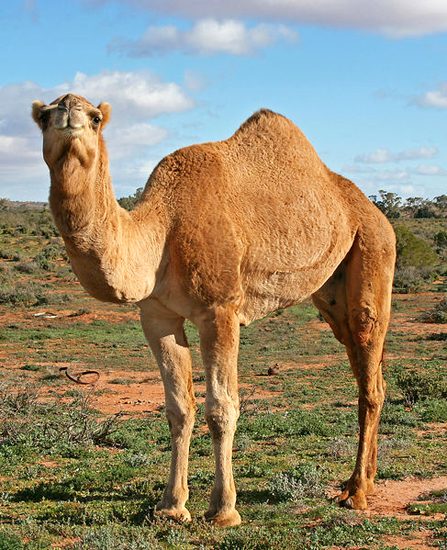
487px-07._Camel_Profile,_near_Silverton,_NSW,_07.07.2007


Every year during the celebration of Eid, one of the most important Islamic holy days, a vast number of animals, in India and many other countries throughout the world are slaughtered. Sheep, camels, and goats are killed in the streets in a way that causes drawn-out suffering for the animals. Often camels slaughtered in south India have been forced to walk on foot from all the way from Rajasthan in the northwest; many others have been transported by truck in terrible conditions.


The slaughter at the Eid celebration has continued despite the statements by many Moslem animal advocates that this practice is not required by their faith and that animal abuse is contrary to the tenets of Islam.


Dr. Chinny Krishna, Founder and Chairman Emeritus of Blue Cross of India, has been engaged for a number of years in combating this slaughter of camels, which most people in India find cruel and barbaric.


In November 2011, Dawn Williams, general manager of Blue Cross of India, witnessed the unloading of a van filled with camels that had been transported from Rajasthan in deplorable conditions.


Mr. Williams filed a report at the police station in Saidapet, a Chennai neighborhood, alleging the inhumane transport of camels to slaughter, over a five-day trip, to three separate locations.


The police responded that they were powerless to stop the slaughter of the camels in the streets, saying that it was not illegal, but they did promise to investigate the transport conditions.


In 2011, Blue Cross filed a case with the court to ban the practice of slaughtering animals in public places, which is done at the time of Eid.


Now two years later, the Chennai Court has ruled that the slaughter of animals in public places is against the law in Tamil Nadu. Animal slaughter may only take place in licensed and regulated slaughter houses, and slaughterhouse rules must be strictly followed with respect to slaughtering camels.


This, in practice, makes the slaughter of camels for Eid illegal in Tamil Nadu.


However, there is a loophole; it would still be possible for the City of Chennai to designate any area as a temporary slaughterhouse. Dr. Chinny Krishna says that they will need to go back to the court to clarify this point.


??????????????????????????????????????????????????????????????


People in India have been alarmed for some time by the scenes of suffering camels being slaughtered in public places, during the annual Eid celebrations, and a number of other efforts have been brought to bear against this practice.


On the same day as the court ruling, the National Food Safety Authority of the Central Government – which has authority for food over all states except Jammu and Kashmir – said that dogs, rabbits, and camels are not fit for human consumption and cannot be slaughtered for food.


This decision also makes it illegal to slaughter camels for Eid.


Giving camel meat as food for the poor, also an Eid tradition, is now illegal anywhere in India. Of course, it is kind to feed the poor, but feeding the poor at the cost of great suffering on the part of innocent animals does not honor either the poor or the Islamic faith.


In another protective measure — in Rajasthan, the camel has been declared a “heritage animal,” which means it is protected by law. This declaration was due to the dedicated work of Daulat Jain, former Vice Chairman of the Animal Welfare Board of India. Dr. Chinny Krishna also wrote a letter stating that the camel population was being depleted. The Rajasthan Bovine Act, which includes camels, signed by Chief Minister Vasundra Raje, has declared that camels cannot be slaughtered in Rajasthan. Kerala and Karnataka have also banned the slaughter of camels.


Camel slaughter still occurs in Andhra Pradesh, but this will now be stopped since camels can no longer be legally transported out of Rajasthan.


All these significant steps taken to protect Indian camels mean that many thousands of these animals can now live free from the danger of these cruel abuses.


To visit the website of Blue Cross of India, click here.


Top photo: John O’Neill / “This file is licensed under the Creative Commons Attribution-Share Alike 3.0 Unported license.” – Wikimedia Commons / A camel near Silverton, Australia


Second photo:  © Boaz Yunior Wibowo | Dreamstime.com /  A camel in Indonesia.


© 2014, Art, Animals, and the Earth 

Odisha, India: Flooding threatens cattle and other animals


800px-1_Mahanadi_River_near_Satkosia_Tiger_Reserve_Tikarpara_India_2012


In Odisha, in east central India, following heavy rains, a huge volume of water has been released from the Hirakud Dam, to try to manage the danger of severe flooding in the area.


Swollen rivers have so far claimed 34 lives, and are affecting one million people, many of whom have been evacuated.


Floodwaters threaten cattle, buffaloes, and other animals. When people are evacuated, their herds of animals are left behind. Cattle are short on food since grazing pastures are covered in water, and there is no shelter for them.


Kailash Ch Maharana, Chairman of the Maitri Club, which sent relief teams to rescue animals in the 2011 floods, has written,


“The flood situation in Odisha could be worse than that of 2011. The release of water from the Hirakud Dam and incessant rain in the catchment areas caused the rivers Mahandi, Bramahani, Baitarani, and their tributaries to swell, further inundating the riverside villages and the adjoining areas.


“The Maitri Club is preparing to dispatch a team of seven experienced personnel with fodder and tarpaulins to help the needy animals. Your support, in any way, will be gratefully received.”


Mahanadi means “great river.” It flows through the Indian states of Chhattisgarh and Odisha. Before entering Odisha, it is joined by the Hasdeo and the Jonk rivers.


The Hirakud Dam, on the Mahanadi, is the largest earthen dam in the world. It spans 15 miles, from one hill to another, and creates the largest artificial lake in Asia.


Before the dam was built in 1953, the Mahanadi, at its widest, was one mile wide. Now it is narrower and, at certain spots, winds it way through dense forests. It travels over 900 kilometers (560 miles), depositing more silt than any other river in India, creating rich agricultural land.


The river is subject to flooding caused by heavy downpours of rain. In 2011, severe flooding caused great damage to mud huts in 25 villages above the dam.


To contact Kailash Maharana at the Maitri Club, click here to go to their website.


Photo: Soumyadeep Chatterjee / Wikimidia Commons /  “This file is licensed under the Creative Commons Attribution-Share Alike 2.0 Generic license.” / Mahanadi River, Tikarpara, Satkosia Tiger Reserve.

EGYPT: Animal welfare leaders call on government for change

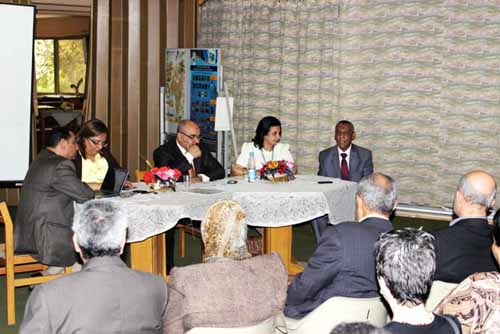
IMG_6569


Thanks to Ahmed El Sherbiny for his report on the May 15, 2014 workshop held to propose changes to Egypt’s animal welfare law.


On Thursday, May 15, 2014, EFAW, the Egyptian Federation for Animal Welfare, in association with GOVS, the Egyptian Organization of Veterinary Services, held a workshop on proposed animal welfare legislation, based on Article 45 of the new Egyptian Constitution.


The workshop, held at the Environment Culture Centre at the Giza Zoo was attended by many with an interest in Egyptian animals, including Dr. Nadia Zakhari, the ex-Minister of Academic Research, and representatives from GOVS, the Water and Environment Police, the Giza Zoo, The Egyptian Bar Association, and EFAW, as well as judges, law professors, other university professors, and individual animal advocates.


A lively discussion took place related to the existing legislation, and ministerial decrees related to animals.


Agreement was reached to call on the Prime Minister to


One) Immediately stop the use of the poison strychnine as a form of animal control and to implement TNR programs instead.


Two) To organize a dialogue among animal groups and animal advocates with regard to proposed veterinary legislation.


Three) Establish a specific District Attorney Department to handle any cruelty cases related to animal welfare.


Four) Enact specified animal welfare legislation, based on article 45 of the Egyptian Constitution.


Five) Amend article 357 of the Penal Law in include jail time only, and delete the option of a fine.


Six) Apply the existing agriculture law No 53/1966 to include pet shops.


The workshop participants expressed their thanks to the Water and Environment Police and the Giza Zoo for their prompt response in wildlife cruelty issues.


A committee was formed to follow up the resolutions with government officials, consisting of

Judge Hany A Halim, Cairo Criminal Court

Professor Samir Shehata, Faculty of Law Ain Shams University

Mr. Tharwat Atallah, board member of the Egyptian Bar Association

Mr. Ahmed El Sherbiny ESAF and EFAW chairperson.


Photo: Courtesy of EFAW


Costa Rica: Dona Sandra, community hero for animals

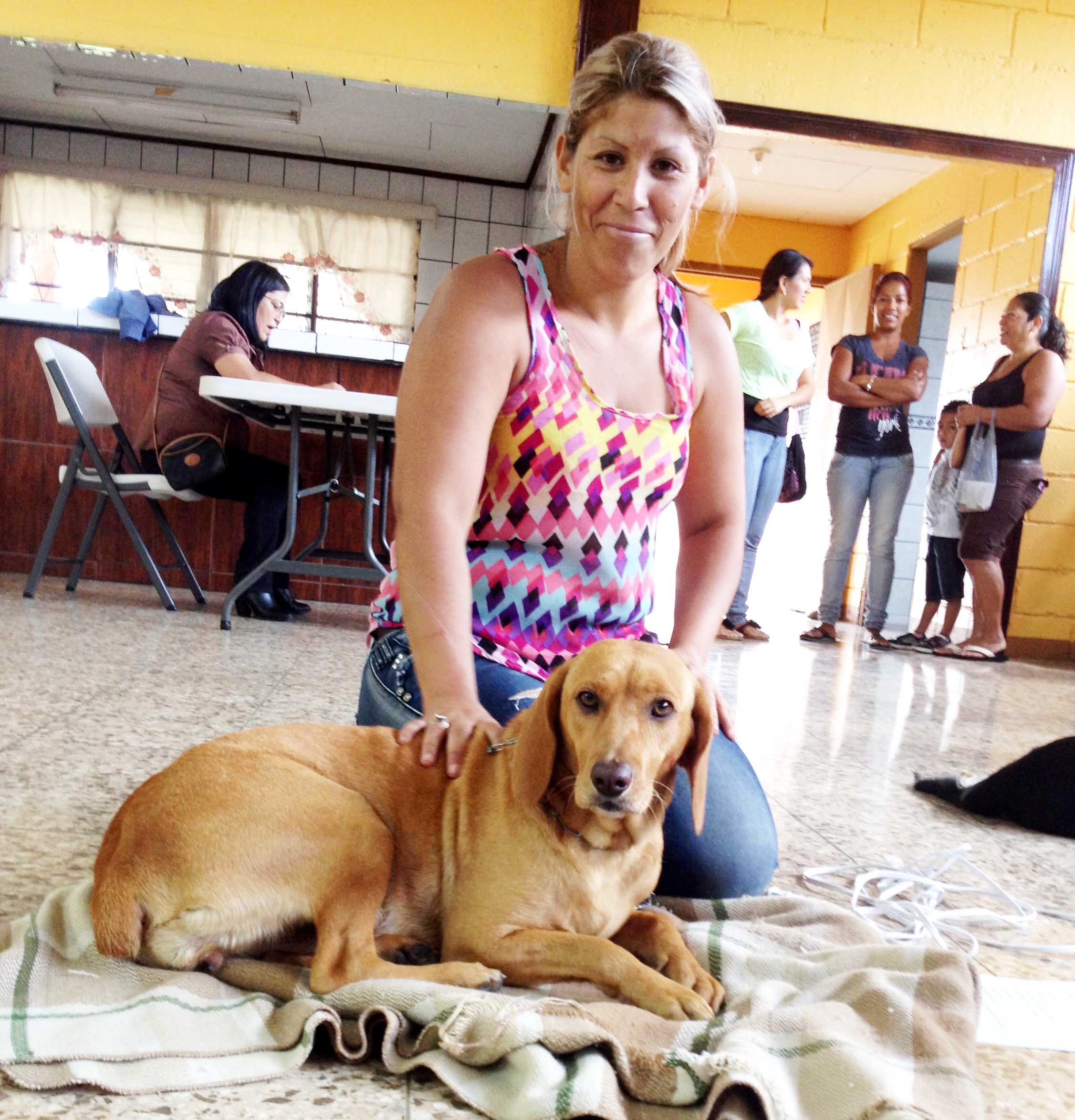
IMG_0187davidestory-june192014

By Davide Ulivieri, Cycle 4 Strays

On September 15th, 1821 Costa Rica proclaimed its independence from Spain. This is a date that Ticos (as Costa Ricans like to refer to themselves) celebrate with passion every year. September 15 is also the name of a small housing project in the south side of the capital city of San Josè. This is where Doña Sandra Rojas resides and this is her story.

Doña Sandra always had a soft spot for animals. As a child, she noticed the strays in her community, scruffy dogs huddling under an overhanging roof to stay dry during rainy season or skinny ones roaming in constant search for food. She remembers befriending many, checking on them and offering a kind word and a little comfort.

Over the years, as the problem of homeless animals in her neighborhood became more severe, Sandra started to take a more proactive approach to trying to at least manage the situation. She started a sort of homemade triage system, quickly assessing the conditions of the strays she encountered and helping first the ones who needed help the most. Soon, the neighbors noticed her efforts and started to call on her whenever a sad case needed immediate attention.

“At first I was trying to save them all, but the magnitude of the problem was such that I was exhausting what little resources I had without even putting a dent in the problem,” tells Sandra while gently petting her latest rescued best friend. “Eventually, I learned to prioritize things and started working towards addressing the long term solution of the issue. This was hard because my instinct was to run out and rescue, but I had to steel myself and will myself to plan and stay the course…” she adds with a sad smile.

Today Sandra is a recognized community leader in Barrio 15 de Setiembre, spearheading the effort to organize and promote the low-cost spay & neuter clinics that are held there on a regular basis, distributing flyers and educational material about responsible pet ownership, looking for places suitable for hosting the clinics and, generally, counseling her fellow citizens on building a community free of animal suffering.

Thanks to a small grant from the SNIP Foundation (Spay Neuter International Project) Sandra was able to snip, vaccinate and de-worm 5 recently rescued dogs who are now being put up for adoption. As soon as a few go to good homes, a few more come in from the street and are brought back to health by her loving efforts.

Together with the volunteers of ANPA (Asociación Nacional Protectora de los Animales) and the dedicated veterinarians who believe in offering low-cost community clinics, Sandra is turning the tide on animal welfare in her neck of the woods.

It is community heroes like Sandra that make the SNIP/ANPA model so successful. The recipe is simple: take a few dedicated animal lovers, add a sprinkle of committed veterinarians, mix in a municipality that understand the importance of humanely controlling pet population and very quickly you notice less strays roaming the streets and more well taken care pets being walked by their owners.

To learn more about the work of SNIP Foundation in Costa Rica and other Central American countries, click here.

http://www.snipfoundation.org/

Photo: Courtesy of SNIP Foundation

Egypt: Feeding the Pyramids animals

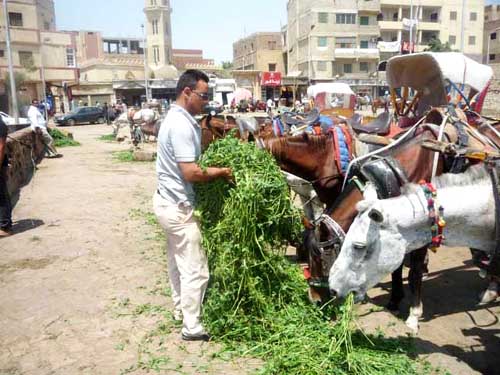
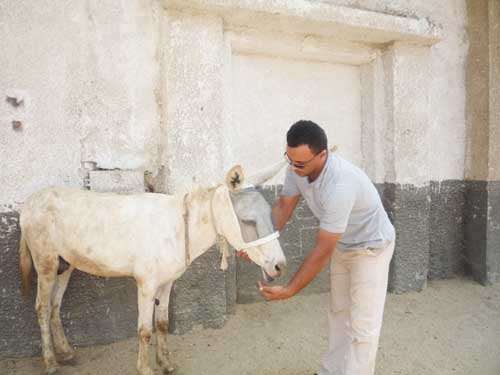
Feeding horses near the Pyramids.


ESAF (the Egyptian Society of Animal Friends) continues their program of feeding and treating the Pyramids animals. These are horses, camels, and donkeys who would normally be giving rides to tourists – perhaps not a great life for the animals at the best of times. But during the times of unrest in Egypt, since 2011, when there have been almost no tourists, life has been tough for the owners, who often have no income and no way to care for their animals.


ESAF and other Egyptian animal groups have been stepping in to provide food and veterinary assistance to the animals.


A donkey gets a fly mask and a treat.


The camels, donkeys, and horses all need help. The camels tend to fare a bit better in difficult times since they are hardy desert animals, as are the donkeys; so it is especially the horses who need extra feeding and care.


ESAF has expanded their work to more areas to reach more animals. The total number of animals fed and treated from February 1 through April 30 was 8,311.


A horse being fitted with a fly mask.


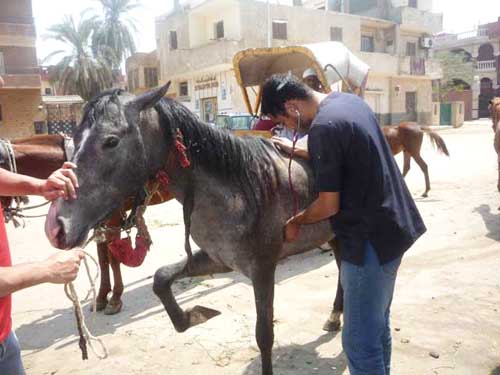
The working animals need on-going vet care – attention to their hooves and teeth, and care for wounds caused by saddles and by wire nose bands. The ESAF vets care for the horses and donkeys, fitting them with fly masks to keep the flies away and with soft nose bands to replace the wire ones.


Beginning May 1, they added carrots and clover to give the animals more nutrition – which is a tasty treat too, welcomed by the animals.


A vet examining a horse.


Ahmed El Sherbiny, Chairperson of ESAF, EFAW, and MENAW writes, “The tourism business is still almost nonexistent, but we hope it will be improved after the presidential election, May 26-27, and the parliament election too by the end of August… Many thanks to SPANA, Animal Aid Abroad, Sue Evans and her UK group, and Mr. Richard Gabriel for their generous contributions to support this important project.”


Thanks to ESAF for faithfully feeding and giving vet care to the Pyramids animals.


Photos: Courtesy of ESAF


To visit ESAF’s facebook page, click here


Central American dogs and cats getting some help from SNIP

1488021_680723751971496_2082939336_n


By Sharon St Joan


When an elderly Guatamalan man brought his young pup to be spayed, both looked hopeful, though a little apprehensive, but all went well. She sailed through the surgery with flying colors, and he was grateful that he won’t have to worry anytime in the future about having too many puppies to care for.


SNIP works with many other animal organizations throughout Central America to get community dogs and cats spayed/neutered – or “snipped.” Carla Ferraro, SNIP’s Founder and Executive Director, has developed an amazing, highly successful program.


Veterinarians are trained in the Small Incision Field Surgery Program, then they conduct low-cost spay/neuter clinics. The clinics benefit the vets too, since they gain new clients when the dogs and cats are brought back to them for vaccinations and any vet care that’s needed.


One of the unique features of SNIP’S program is that their first step is to identify a few community leaders in every new city they go to. It only takes a few, very committed local people – then these leaders organize events and act as a bridge to the rest of the community – explaining what spay/neuter is and why it’s a great idea. With the help of volunteers, these community leaders set up spay/neuter clinics, raise funds, and make sure everything is running well for the benefit of the dogs and cats and their people.


SNIP’s emphasis is on community animals living in low-income neighborhoods, where they often roam the streets. Dogs and cats may have one person who cares for them – or they may rely on several families to feed them and keep an eye on them. People want to do what’s best for their animals, but sometimes they’re not familiar with spay/neuter and its benefits in preventing a situation where there are too many animals to feed and care for – so explaining why it’s such a good idea is essential.


Now, 30% of the community dogs and cats in Costa Rica have been spayed and neutered – and SNIP’s goal is to bring it up to 70%. 30% is already a huge leap forward – from a time not so long ago when spay/neuter was almost unheard of in many rural communities. And Costa Rica is already a no-kill nation!


SNIP, working with local animal groups, conducts many clinics in Costa Rica and Panama. The recent clinic in Guatamala was a wonderful success, with many people bringing their animals.


To visit SNIP’s website, click here.

To visit SNIP’S Facebook page, click here.


Photo: Courtesy of SNIP


India: Tamil Nadu: Madurai: Free skies for Meenakshi’s Parrots

sharonstjoan's avatarEchoes in the Mist

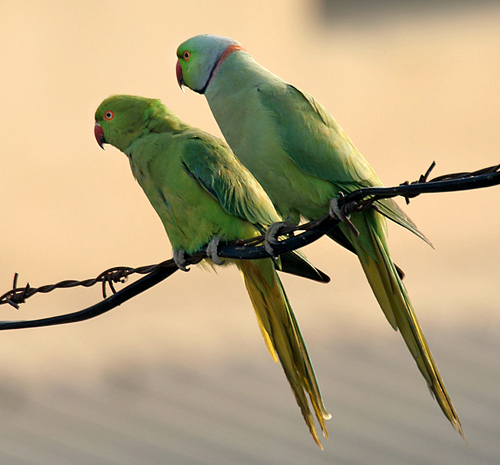
Rose-ringed_Parakeets_(Male_&amp;_Female) : Wikipedia Commons

The Meenakshi Temple at Madurai, in southern India, is one of the largest temples in the world.  It is dedicated to the Goddess Meenakshi, a form of Parvati, who is the wife of Shiva. Her vahana, or symbol, is the parrot, and she is depicted holding a parrot on her finger.

The species of parrot she holds is the Indian Ring-necked Parakeet or Rose-ringed Parakeet, which is native to India.

In an online article from September 19, 2005, attributed to Mike Schindlinger, entitled “Free Sky for Meenakshi Temple Parrots,” it was reported that the temple birds were being freed, and in the future only one pair of parrots would be kept in the temple.

According to P. Bhaskaran, Executive Officer of the Temple, the birds were being freed in response to requests from animal welfare organizations like Blue Cross of India. Similar requests had been lodged by the Tamil Nadu…

View original post 452 more words