The Rufous-throated Solitaire

Seth Inman's avatarOrganikos

Back when I wrote about our ascent of Blue Mountain Peak, I mentioned that the Rufous-throated Solitaire is a bird that can be pretty tough to spot.

In that prior post, I had a picture of the same individual featured in the video above. If you turn the volume up, you can hear all the shrill details of the bird’s call, and imagine sounds like those echoing through the misty hills — the guidebook to Jamaican birds actually describes the vocalizations as “ventriloquial,” which we found to be accurate. 

View original post 82 more words

New lizard species discovery in India

petrel41's avatarDear Kitty. Some blog

Hyderabad-based herpetologist Aditya Srinivasulu found called Cnemaspis adii, a new species of gecko, in the ruins of Hampi in Karnataka in India

From Wildlife Extra:

New species of gecko lizard found at Indian World Heritage Site

A new type of gecko, a lizard found in warm climates, has been identified having been found in the ruins of Hampi, the World Heritage Site in Karnataka, India, reports The Hindu.

The lizard has been named Cnemaspis adii after Aditya Srinivasulu, a young herpetology researcher from Hyderabad who was involved in the discovery.

The animal belongs to the family of day geckos which are distinguished by the round pupils in their eyes which differ from the vertical pupils found in more common geckos.

Zoologists have identified the area around Hampi as having great potential for a rich biodiversity and more new species of smaller vertebrate and invertebrates.

“The discovery is significant because other species of day geckos have been, so far, reported only from the Western Ghats and southern

View original post 231 more words

Eco-Modernist Strategy

Organikos's avatarOrganikos

A dam in Guanacaste Province, Costa Rica, drives a hydroelectric plant. Developing nations will require large amounts of new energy to achieve American and European living standards. Credit Joe Raedle/Getty Images A dam in Guanacaste Province, Costa Rica, drives a hydroelectric plant. Developing nations will require large amounts of new energy to achieve American and European living standards. Credit Joe Raedle/Getty Images

We are in the sustainable development camp through and through, but Mr. Porter’s point is well taken:

A Call to Look Past Sustainable Development

Eduardo Porter

The average citizen of Nepal consumes about 100 kilowatt-hours of electricity in a year. Cambodians make do with 160. Bangladeshis are better off, consuming, on average, 260.

Then there is the fridge in your kitchen. A typical 20-cubic-foot refrigerator — Energy Star-certified, to fit our environmentally conscious times — runs through 300 to 600 kilowatt-hours a year.

View original post 458 more words

Why invasive plants are second biggest threat to biodiversity after habitat loss

GarryRogers's avatarGarryRogers Nature Conservation

As experts gather in London for a major conference addressing the often overlooked threat of invasive species to biodiversity, Carrie Madren gets a briefing from those on the frontline in the battle against ‘pest plants’…Source: www.theecologist.org

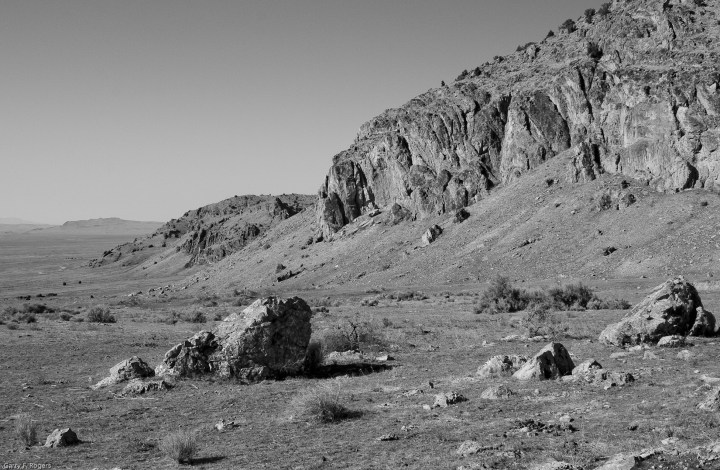
GR:  I reached the same conclusion about invasive plants, but as the symptoms of global warming grow stronger, I am shifting my central focus to another lost cause–leaving fossil fuels in the ground. The photo shows a barren area carpeted by invasive plants.  Ninety percent of the native shrubs are gone.

View original post

Court Rules BC First Nations Can Sue Over Territorial Claims

Court Rules BC First Nations Can Sue Over Territorial Claims

Red Power Media, Staff's avatarRED POWER MEDIA

Two northwestern First Nations expressed vindication on Wednesday after a panel of three judges overturned a lower court ruling that denied them opportunity to sue the aluminum producer Rio Tinto Alcan.

The Saik’uz and Stellat’en First Nations, based downstream of the company’s Kenney hydroelectric dam and reservoir, were refused a trial on the premise that aboriginals must first establish their title. Their initial suit was mounted in September 2011.

View original post 361 more words

Bull Point Pt., Pt. Reyes Flowers, Birds and Photos 4/16/15

Sandy Steinman's avatarNatural History Wanderings

Updated with many spelling corrections on the plant list

Yesterday we went on a Marin CNPS walk at Bull Point, Point Reyes National Seashore led by Doreen Smith. The weather was sunny, temperature 65 F and breezy. In true botanizing style we covered about one and half miles cross-country in about two and quarter hours.The habitat was mainly grasslands with some marshy areas. It is also an area where cows graze and they were present today.

The focus of trip was seeing plants including a number of rare ones. Not much bird activity. Many plants found and identified due to knowledge of leader. Not any significant wildflower displays; trip was truly for the plant lover. I didn’t take time to really do serious photography but here are some quick photos from the day.

 Click read more to see detailed plant and bird list

View original post 397 more words

Old-Growth Forest with Astonishing Biodiversity

GarryRogers's avatarGarryRogers Nature Conservation

Astonishing biodiversity exists in Congaree National Park, the largest intact expanse of old growth bottomland hardwood forest remaining in the southeastern United States.  Source: www.pinterest.com

GR:  This is a region that has received little protection from development and has survived simply by chance.  Small bits are protected, and we can add to those.  But rather than saving a specimen of this beautiful place, wildlife survival requires that we connect the bits and save a large portion of the surrounding region.

View original post