Nestlé Announces Groundbreaking Global Animal Welfare Reforms

???????????????????????????????????????????????????????????????????????????


Thank you to N.G. Jayasimha, H.S.I., for this information.


World’s Largest Food Company Aims to Overhaul Chicken, Pig and Cow Treatment throughout Supply Chain


MUMBAI, India (21 Aug. 2014)–Nestlé–the world’s largest food company and makers of iconic brands–such as Nestlé Milkmaid and MAGGI–announced<http://www.nestle.com/asset-library/documents/creating%20shared%20value/rural_development/nestle-commitment-farm-animal-welfare.pdf> an industry-leading animal welfare program that will eliminate several controversial yet standard practices within its global supply system.

Particularly, Nestlé’s new policy states that it will eliminate practices like confining pigs in gestation crates, calves in veal crates and egg-laying hens in cages; the forced rapid growth of chickens used for meat products; and cutting the horns, tails and genitals off farm animals without painkiller.

Humane Society International applauded the announcement.

“We thank Nestle for taking a stand against inhumane factory farming practices,” said N.G. Jayasimha, director of HSI India. “Cruelly confining animals in cages for their entire lives, castrating or removing their tails or horns without painkiller and breeding them in a way that compromises their welfare is simply unacceptable.”

Nestlé is also encouraging food sustainability by promoting the global Meatless Monday movement via on-package messaging for some of its products.

Nestlé’s policy follows dialogue with animal protection organizations including The Humane Society of the United States (HSI’s sister organization), Mercy For Animals and World Animal Protection.

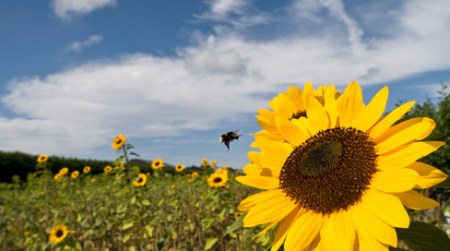
Photo: © Ulrich Mueller | Dreamstime.com


Chennai Court halts Eid camel slaughter

487px-07._Camel_Profile,_near_Silverton,_NSW,_07.07.2007


Every year during the celebration of Eid, one of the most important Islamic holy days, a vast number of animals, in India and many other countries throughout the world are slaughtered. Sheep, camels, and goats are killed in the streets in a way that causes drawn-out suffering for the animals. Often camels slaughtered in south India have been forced to walk on foot from all the way from Rajasthan in the northwest; many others have been transported by truck in terrible conditions.


The slaughter at the Eid celebration has continued despite the statements by many Moslem animal advocates that this practice is not required by their faith and that animal abuse is contrary to the tenets of Islam.


Dr. Chinny Krishna, Founder and Chairman Emeritus of Blue Cross of India, has been engaged for a number of years in combating this slaughter of camels, which most people in India find cruel and barbaric.


In November 2011, Dawn Williams, general manager of Blue Cross of India, witnessed the unloading of a van filled with camels that had been transported from Rajasthan in deplorable conditions.


Mr. Williams filed a report at the police station in Saidapet, a Chennai neighborhood, alleging the inhumane transport of camels to slaughter, over a five-day trip, to three separate locations.


The police responded that they were powerless to stop the slaughter of the camels in the streets, saying that it was not illegal, but they did promise to investigate the transport conditions.


In 2011, Blue Cross filed a case with the court to ban the practice of slaughtering animals in public places, which is done at the time of Eid.


Now two years later, the Chennai Court has ruled that the slaughter of animals in public places is against the law in Tamil Nadu. Animal slaughter may only take place in licensed and regulated slaughter houses, and slaughterhouse rules must be strictly followed with respect to slaughtering camels.


This, in practice, makes the slaughter of camels for Eid illegal in Tamil Nadu.


However, there is a loophole; it would still be possible for the City of Chennai to designate any area as a temporary slaughterhouse. Dr. Chinny Krishna says that they will need to go back to the court to clarify this point.
 

??????????????????????????????????????????????????????????????


People in India have been alarmed for some time by the scenes of suffering camels being slaughtered in public places, during the annual Eid celebrations, and a number of other efforts have been brought to bear against this practice.


On the same day as the court ruling, the National Food Safety Authority of the Central Government – which has authority for food over all states except Jammu and Kashmir – said that dogs, rabbits, and camels are not fit for human consumption and cannot be slaughtered for food.


This decision also makes it illegal to slaughter camels for Eid.


Giving camel meat as food for the poor, also an Eid tradition, is now illegal anywhere in India. Of course, it is kind to feed the poor, but feeding the poor at the cost of great suffering on the part of innocent animals does not honor either the poor or the Islamic faith.


In another protective measure — in Rajasthan, the camel has been declared a “heritage animal,” which means it is protected by law. This declaration was due to the dedicated work of Daulat Jain, former Vice Chairman of the Animal Welfare Board of India. Dr. Chinny Krishna also wrote a letter stating that the camel population was being depleted. The Rajasthan Bovine Act, which includes camels, signed by Chief Minister Vasundra Raje, has declared that camels cannot be slaughtered in Rajasthan. Kerala and Karnataka have also banned the slaughter of camels.


Camel slaughter still occurs in Andhra Pradesh, but this will now be stopped since camels can no longer be legally transported out of Rajasthan.


All these significant steps taken to protect Indian camels mean that many thousands of these animals can now live free from the danger of these cruel abuses.


To visit the website of Blue Cross of India, click here.


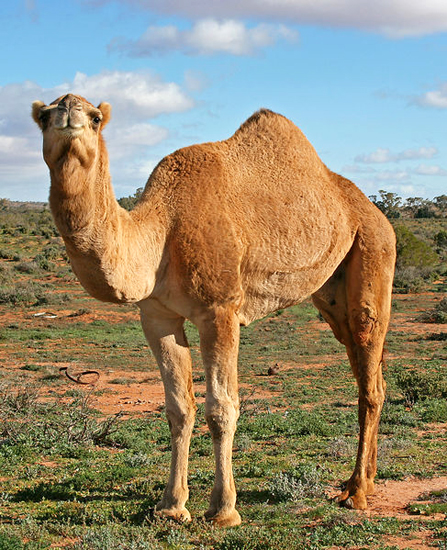
Top photo: John O’Neill / “This file is licensed under the Creative Commons Attribution-Share Alike 3.0 Unported license.” – Wikimedia Commons / A camel near Silverton, Australia


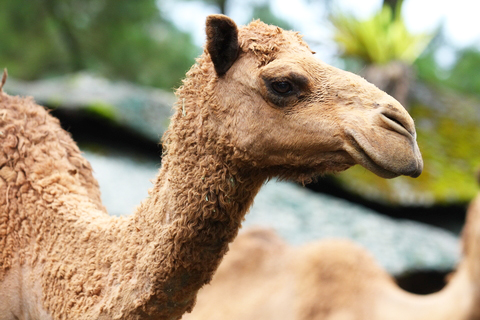
Second photo:  © Boaz Yunior Wibowo | Dreamstime.com /  A camel in Indonesia.


© 2014, Art, Animals, and the Earth 

Let’s Start Caring About Kelp and Seagrass Like We Care About Rainforest

GarryRogers's avatarGarryRogers Nature Conservation

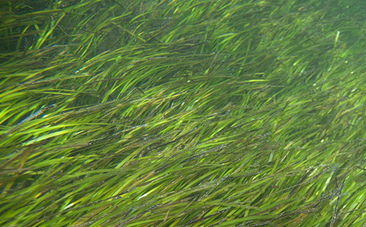
GR:  Kelp and seagrass form critical habitats within marine ecosystems.  Both grow in shallow water where they serve as essential habitat for animals, and important nutrient recyclers.  Compared to terrestrial vegetation, we know little about these vegetation types.  Biogeographers have mapped general distributions, but they have not made detailed maps of species associations. Kelp Forest Distribution (Woodward, Radford.edu) Kelp Forest Distribution (Woodward, Radford.edu) Seagrass vegetation/number of species

The seagrass vegetation map accompanies a report on the decline of seagrass due to pesticides washing from the land into the ocean.  The infographic below shows the distribution of seagrass genera in various habitats.  The authors point out that there have been few attempts to restore destroyed seagrass meadows.  Most attempts have failed.

Anna Brones reports on seagrass, and notes that it is disappearing at the same rate as the rainforest and coral reefs. The loss equals serious environmental and economic effects  (www.care2.com).

As in the…

View original post 53 more words

Odisha, India: Flooding threatens cattle and other animals


800px-1_Mahanadi_River_near_Satkosia_Tiger_Reserve_Tikarpara_India_2012


In Odisha, in east central India, following heavy rains, a huge volume of water has been released from the Hirakud Dam, to try to manage the danger of severe flooding in the area.


Swollen rivers have so far claimed 34 lives, and are affecting one million people, many of whom have been evacuated.


Floodwaters threaten cattle, buffaloes, and other animals. When people are evacuated, their herds of animals are left behind. Cattle are short on food since grazing pastures are covered in water, and there is no shelter for them.


Kailash Ch Maharana, Chairman of the Maitri Club, which sent relief teams to rescue animals in the 2011 floods, has written,


“The flood situation in Odisha could be worse than that of 2011. The release of water from the Hirakud Dam and incessant rain in the catchment areas caused the rivers Mahandi, Bramahani, Baitarani, and their tributaries to swell, further inundating the riverside villages and the adjoining areas.


“The Maitri Club is preparing to dispatch a team of seven experienced personnel with fodder and tarpaulins to help the needy animals. Your support, in any way, will be gratefully received.”


Mahanadi means “great river.” It flows through the Indian states of Chhattisgarh and Odisha. Before entering Odisha, it is joined by the Hasdeo and the Jonk rivers.


The Hirakud Dam, on the Mahanadi, is the largest earthen dam in the world. It spans 15 miles, from one hill to another, and creates the largest artificial lake in Asia.


Before the dam was built in 1953, the Mahanadi, at its widest, was one mile wide. Now it is narrower and, at certain spots, winds it way through dense forests. It travels over 900 kilometers (560 miles), depositing more silt than any other river in India, creating rich agricultural land.


The river is subject to flooding caused by heavy downpours of rain. In 2011, severe flooding caused great damage to mud huts in 25 villages above the dam.


To contact Kailash Maharana at the Maitri Club, click here to go to their website.


Photo: Soumyadeep Chatterjee / Wikimidia Commons /  “This file is licensed under the Creative Commons Attribution-Share Alike 2.0 Generic license.” / Mahanadi River, Tikarpara, Satkosia Tiger Reserve.

Major Progress on the Fight Against Genetically Engineered Crops and Bee-Toxic Pesticides

Tanya's avatarThe Secular Jurist

Photo courtesy of centerforfoodsafety.org Photo courtesy of centerforfoodsafety.org

By Tanya (a Secular Jurist author; author of Illuminate By Tanya blog; an author of League Of Bloggers blog)

I just received an email from an organization called Center for Food Safety with some good news (and the usual donation request!):

A few weeks ago the U.S. Fish and Wildlife Service (FWS) announced that no more genetically engineered (GE) crops or bee-toxic pesticides (known as “neonics”) will be used in National Wildlife Refuges across the country, over 150 million acres of federal land.

The significance of this decision can’t be overstated: FWS is the first federal agency to restrict the use of GE crops and neonicotinoids in farming in the U.S.

This is a long overdue step towards preserving our native ecosystems and their plants, bees, birds, aquatic animals, and other wildlife from the harmful effects of GE crops and pesticide use. And they show that our…

View original post 87 more words