Rare pea blue butterflies in the Netherlands

How Can We Get Trees to Communities That Need Them the Most?

Liz Camuti's avatarTHE DIRT

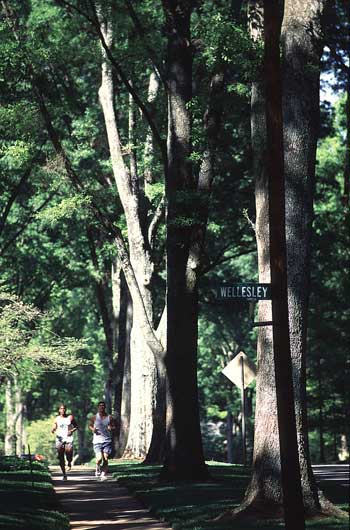
charlotte Charlotte, North Carolina street trees / Kenny Craft on Pinterest

The science is increasingly clear: trees are central to healthy, livable cities. New studies are only adding to this understanding. For example, recent research published in the prestigious journal Nature found that having 10 more trees on your block, on average, improves the perception of your own health in ways comparable to an increase in annual income of $10,000 or being 7 years younger. However, according to Cene Ketcham, a graduate student in urban forestry at Virginia Tech, the benefits of urban trees rarely fan out equally across a city.

“We know trees have a lot of benefits. And if we know that having trees in our cities is important for our health, the converse must also be true — a lack of trees hurts your health,” Ketcham said at a conference organized by Casey Trees in Washington, D.C.

View original post 678 more words

Zen for Rhinos

GarryRogers's avatarGarryRogers Nature Conservation

Vietnam is the country responsible for the most demand in rhino horn.

75% of Vietnam is Buddhist.

Recently the International Buddhist Confederation (IBC) announced they would actively promote guidelines and awareness toward the illegal and immoral use of rhino horn.

According to the IBC newsletter, “We should move from Compassion to Action…putting forth the need for a pioneering Buddhist initiative that translates Buddha’s teachings of compassion and wisdom into action for the good of all sentient beings.”

Vietnam’s Buddhist leadership has agreed to launch a comprehensive public outreach campaign against the use of rhino horn on the grounds that it is steeped in violence towards animals, biodiversity and human beings (poachers, rangers, and the victims of illegal trafficking in drugs, arms and people).

It’s consumption therefore is unacceptable for any Buddhist and has to stop.  Sourced through Scoop.it from: fightforrhinos.com

View original post

Decoded octopus genome reveals secrets to complex intelligence

GarryRogers's avatarGarryRogers Nature Conservation

“The elusive octopus genome has finally been untangled, which should allow scientists to discover answers to long-mysterious questions about the animal’s alienlike physiology: How does it camouflage itself so expertly? How does it control—and regenerate—those eight flexible arms and thousands of suckers? And, most vexing: How did a relative of the snail get to be so incredibly smart—able to learn quickly, solve puzzles and even use tools?

“The findings, published today in Nature, reveal a vast, unexplored landscape full of novel genes, unlikely rearrangements—and some evolutionary solutions that look remarkably similar to those found in humans. (Scientific American is part of Nature Publishing Group.)

With the largest-known genome in the invertebrate world—similar in size to that of a house cat (2.7 billion base pairs) and with more genes (33,000) than humans (20,000 to 25,000)—the octopus sequence has long been known to be large and confusing. Even without a genetic map…

View original post 68 more words

The myth of sport hunting as a solution to conservation

Exposing the Big Game's avatarExposing the Big Game

An open letter to Mozambique by Josphat Ngonyo,  founder,  Africa Network for Animal Welfare

On behalf of Africa Network forAanimal Welfare (ANAW), a network of organizations and individuals interested in promoting humane treatment of animals in Africa while working with communities and governments, I write to you Sir, with the aim of engaging with you, on the most recent development in your country, the World Bank’s International Development Association (IDA) approving $40 million grant to your country, to fund conservation efforts that include strengthening the country’s program of selling the rights to hunt wild animals.

I write to your government to request you to reconsider this grant in light of the unmistakable negative effects this would have on wildlife conservation in Mozambique and the rest of Africa at large.

Read more:

View original post

What Can We Do For the Gentle Giant?

Organikos's avatarOrganikos

A herd of elephants by the river at Periyar Tiger Reserve, Thekkady, India. PHOTO: Rosanna Abrachan A herd of elephants by the river at Periyar Tiger Reserve, Thekkady, India. PHOTO: Rosanna Abrachan

Predation of elephants has increased in recent years, with as many as 100,000 African elephants being killed between 2010 and 2012, according to an elephant researcher at Colorado State University. Nearly 60 percent of Tanzania’s elephant population has been wiped out in the past six years, the report indicated. Increased demand in Asia, where a single tusk can fetch up to $200,000, has fueled the increase in poaching. August 12 marked the fourth annual World Elephant Day, a day to “bring attention to the urgent plight of Asian and African elephants,” according to a Web site about the annual event. There may be fewer than 400,000 African and fewer than 40,000 Asian elephants remaining in the wild, the Website says.

View original post 558 more words

White humpback whale off Queensland, Australia

petrel41's avatarDear Kitty. Some blog

This 10 August 2015 video is called Awesome footage of rare white whale off the coast of Australia | Mashable.

From daily The Independent in Britain:

Rare albinohumpback whale spotted off the coast of Queensland in Australia

It was spotted on Monday

Hardeep Matharu

Tuesday 11 August 2015

A rare albino humpback whale has been spotted off the coast of Australia.

The mammal, migrating from the Antarctic to warmer waters in the north, was spotted by tourists who had paid charter boats in Queensland, in Australia’s Gold Coast, on Monday.

Aerial footage taken by news cameras captured the moment the huge, unusual animal emerged from under the surface.

The sighting caused speculation as to whether the whale was in fact Migaloo, a world-famous albino humpback which was first seen in 1991 and is known to be one of the three white whales which live in the waters of…

View original post 184 more words

A win for Idaho wolves‏

Exposing the Big Game's avatarExposing the Big Game

From Defenders.org

The Idaho Fish and Game Department has announced that no wolves will be killed in the federally-protected Frank Church-River of No Return Wilderness during the winter of 2015-16.

The announcement comes after a lawsuit brought by Defenders and other conservation groups to stop the killing of wolves to boost elk populations in federally-protected wilderness lands like Frank Church Wilderness.

The Frank Church Wilderness is the largest national forest wilderness area in the Lower 48 States and a core habitat for gray wolves in the western United States. I know you share my view that wilderness should be managed as wilderness, not as a game farm for favored hunters and commercial outfitters.

The state has previously planned to kill up to 60 percent of the wolves living in Frank Church, in large part to artificially inflate elk numbers for hunters. Those wolves can breathe easier for another winter after…

View original post 57 more words

Economics of Trophy Hunting in Africa Are Overrated and Overstated

Exposing the Big Game's avatarExposing the Big Game

http://www.ifaw.org/united-states/news/new-report-economics-trophy-hunting-africa-are-overrated-and-overstated

New Report: Economics of Trophy Hunting in Africa Are Overrated and Overstated
Tuesday, June 18, 2013
Washington, DC

A new report released today analyzes literature on the economics of trophy hunting and reveals that African countries and rural communities derive very little benefit from trophy hunting revenue. The study, authored by Economists at Large—commissioned by the International Fund for Animal Welfare (IFAW www.ifaw.org), The Humane Society of the United States, Humane Society International and Born Free USA/Born Free Foundation—comes amid consideration to grant the African lion protection under the U.S. Endangered Species Act (ESA).

“The suggestion that trophy hunting plays a significant role in African economic development is misguided,” said economist Rod Campbell, lead author of the study.  “Revenues constitute only a fraction of a percent of GDP and almost none of that ever reaches rural communities.”

As a portion of any national economy, trophy hunting revenue never accounts for more than 0.27 percent of…

View original post 803 more words