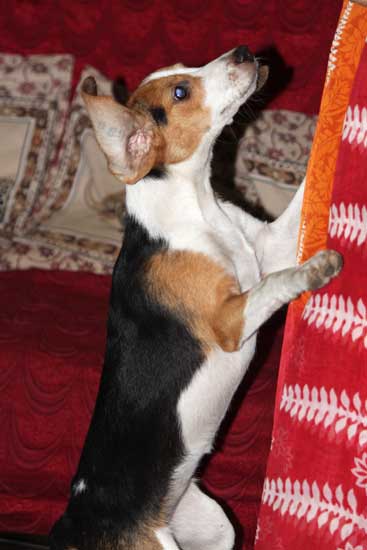
India, Chennai: Bailing out Moksha, Mukti, and all their friends, Part Two

Mukti looking for a treat; the lab number can be seen in her ear

This is Part Two; to read Part One first, click here.

While the marathon of talks was ongoing, Blue Cross was taking steps to get ready to receive the puppies.  Laboratory-bred puppies would have no immunity to real-world conditions, so great care must be taken not to expose them to any germs commonly carried by dogs.  For this reason, they couldn’t be kept on the grounds of a shelter, neither at Blue Cross nor at PFA Chennai. Even transportation for them would have to be in sanitized vehicles.

Blue Cross runs a 24 hour a day regular ambulance service for injured street dogs, with nearly a dozen ambulances on hand.  They took the two largest ambulances out of service for two weeks to fumigate them, disinfect them, and scrub them from top to toe.  Then they repainted the insides of the ambulances.  No germ was left alive.

At 4pm on Friday, Dawn Williams, representative of Blue Cross, went to the Quarantine Station, with papers in hand – the letter from ADVINUS, plus the notification from the Ministry of Environment and Forests authorizing the puppies to be handed over to the AWBI.

This was still not enough, however.  He was informed that since Customs had sent the puppies to the Quarantine Station, only Customs could get them released.

Dr. Krishna called the Chief Customs Officer for the whole of India, who was in a meeting in Delhi.  By 7pm, he had given his okay, and by 8pm, Dawn Williams was back at the Quarantine Station with the additional papers.  Everything seemed fine then, except that it was after dark, and it would be best to come back in the morning.

The indefatigable Dawn Williams returned at 8 am the next morning, which was Saturday, with the two ambulances to get the puppies. At 9:45 am, someone showed up, but nothing further happened, and at noon, he was still waiting.

At one pm, the Quarantine Officer appeared, and announced that he would need permission from the Minister of Agriculture to release the puppies.

Dr. Krishna made another round of 100 phone calls, trying to reach someone —  anyone who could do something. At last, in desperation, he called Mr. Doulat Jain, a former Vice Chairman of the AWBI.  An industrialist who is still a member of the AWBI, he was kind enough to contact the Agriculture Minister of India, who then instructed that the puppies be released.  By then, it was 5 pm on Saturday afternoon.

At 7pm, the puppies were at long last turned over to Dawn Williams. 25 of the puppies were immediately given to Dr. Shiranee Periera of People for Animals, Chennai, who adopted all of them out, on the spot, to pre-screened families. This took place just outside the doors of the Quarantine Office.

The other 45, under the auspices of Blue Cross, were loaded into the immaculate ambulances and made their way to the home of Dr. Nanditha and Dr. Chinny Krishna.

At 7:30 pm, the puppies arrived on a comfortably cool South India January evening, where they were kept in an enclosed garden that had been carefully cleaned and disinfected, outside one of the compound buildings.

Soon 100 people, buzzing with excitement converged on the scene, all anxious to get a glimpse of the puppies. There were forty-five pre-screened, qualified families. All had to have a family vet, and had to commit to getting their adopted puppies vaccinated and spayed or neutered.

Between 7:30 and 10pm that evening 28 puppies were adopted.  No adoption fees were charged, but  about half the families gave donations to Blue Cross.

The following night, Sunday, the 17 remaining puppies found homes. It was a happy occasion for both people and puppies.

Despite the joy of this truly happy event, Dr. Nanditha and Dr. Chinny Krishna noted that some of the 45 puppies could not bark.  They seemed to have been debarked.  Also, they were not normal size and seemed to have been bred intentionally to be dwarf beagles.

Moksha, Mukti, and all the others, have large numbers tattooed in their ears.  The numbers are an 8, followed by 6 digits.  Even if one assumes that the 8 is a batch number, that still means that the number of beagle puppies bred in the lab they came from is in the six figures.

The beagle pups were six months old by this time. They all, of course, needed housetraining.  Despite having been kept caged the entire time, Dr. Chinny Krishna says that every dog was “so friendly.”  These 70 innocent beagle puppies will now be blessed with a chance to have long, happy lives, and Moksha and Mukti can play with Ruffles.

Following the great love and care she was given, Mukti’s spinal problem vanished, as if it had never been.

This was a bright spot in a lengthy battle. The struggle continues in the long fight to arrive at a moment when all animals everywhere in the world are free from the threat of being used in laboratories.

To visit the website of Blue Cross of India, click here.

Photo: Sharon St Joan

India: Chennai: Bailing out Moksha, Mukti and all their friends, Part One

Moksha and Mukti
Moksha and Mukti

Moksha and Mukti almost missed the chance to spend their days playing tug of war with Ruffles, a gigantic yellow lab.  Ruffles is incredibly gentle with them.  They like to play with slippers, which is forbidden, but never mind.  The slippers end up on the sofa or outside in the garden.

The two adorable puppies arrived as part of a batch of 70 rescued beagle puppies. 45 went to the home of Dr. Nanditha and Dr. Chinny Krishna to be adopted out to carefully screened, loving homes.  All were healthy except that Mukti had a worrying spinal problem, and Moksha was rather skinny, so, naturally, these were the two that Dr. Nanditha Krishna decided to keep.

In November of 2012, a PETA representative had seen the 70 beagle puppies at the Customs Office in Chennai and had informed the CPCSEA (Committee for the Purpose of Control and Supervision of Experiments on Animals) out of concern for the puppies.

In response, one of the CPCSEA committee members, Dr. Chinny Krishna, who is also Vice-Chairman of the Animal Welfare Board of India, looked into the circumstances of the puppies and how they came to be held by Customs.

Marshall BioResources, an American company in China, had bred the beagles and shipped them to India to be used for laboratory experiments.  They had been shipped on Cathay Pacific, although the airline had voluntarily undertaken not to ship any animals destined for laboratories.  The puppies had been mislabeled as “pets.”

There was a larger legal issue as well. It turned out that the CPCSEA had previously given ADVINUS labs, in Bangalore, permission to use 430 beagles in lab tests. ADVINUS is a toxicology testing lab that does contract laboratory testing for foreign companies – mostly pharmaceutical and agrochemical testing.

As a government body whose function is to regulate the use of animals in laboratories; the CPCSEA has no authority to prohibit testing; its powers are limited to ensuring that all guidelines are followed.

The question at hand was, did ADVINUS import the puppies legally?

Although ADVINUS, a member of the group of TATA companies, did have permission to use 430 beagles in testing, apparently those tests had already been completed.  It seemed that the 70 beagles were imported afterwards, and that would mean they were imported illegally.

When Dr. Krishna learned about the plight of the beagles, who were stuck in the Quarantine Station, he called the Chairman of ADVINUS, who was in Mumbai, and told him, that it looked like “these animals have been brought here illegally.”

The ADVINUS Chairman then flew from Mumbai to Chennai, with another company officer.  Joined by their chief vet in Bangalore, the three from ADVINUS sat down for a meeting with Dr. Krishna, and Dr. Shiranee Periera, of People for Animals (PFA), also a CPCSEA member.

Known worldwide, the TATA group has an excellent reputation for being above board. The ADVINUS company Chairman insisted that the puppies had not entered India illegally and said that he would fight the charge.  However, he also expressed a wish not to have the puppies suffer any further distress and said he wanted to release them so that homes could be found for them.

Normally, the puppies would be quarantined for 45 days, but the 70 puppies had already been in quarantine for 60 days, kept in cages the whole time, two to a cage.  It must have felt to them like being in jail. ADVINUS wanted them released for adoption, even though this meant that the company  had spent about $25,000 to procure the puppies and would be charged for their time spent in quarantine.

ADVINUS provided papers, legally releasing the puppies to the Animal Welfare Board of India, with the arrangement that they would then be consigned to the animal welfare organization, Blue Cross of India. The story wasn’t quite over yet though.  Getting an agreement for the puppies to be released was one thing, but actually obtaining their physical release was a different thing altogether. There were more hurdles to go.

Maneka Gandhi, well-known animal rights advocate who has held a number of ministerial posts in the government, and Dr. Chinny Krishna, spent a marathon of three weeks of intense negotiations for the actual, real transfer of the puppies out of Quarantine.

Talks took place with the TATA company, with the Quarantine people, with the Ministry of Agriculture, the Ministry of Finance (in charge of Customs and Excise), and the Ministry of Environment and Forests.  There were visits to Finance Committees, to Customs officials in both Delhi and Chennai, and requests to about 30 other officials.  It took a lot of work….

To be continued in Part Two; click here.     

Photo: Dr. Chinny Krishna

To visit the website of Blue Cross of India, click here.  

Tanzania: Rescuing Fele

Fele-resized   935186_512742548761507_1737376886_n

Fele is just six weeks old, and he’s already passed all his courses in cuteness! Rescued from the street by TAWESCO, in Tanzania, he wasn’t doing too well and had a bad cold, with a fever and lots of sneezing and coughing.  With lots of good vet care, he should be all better in another six weeks, then he’ll get his rabies vaccine, and be neutered and de-wormed and will be looking for his forever home.

TAWESCO, founded several years ago by Dr. Thomas Kahema, does an amazing job helping the animals in Tanzania.  Their programs include Street Animal Health (veterinary care and spay/neuter), Working Donkey Welfare, Humane Education in Schools and Communities, and Advocacy.

Photo: Courtesy of TAWESCO

To visit the Facebook page of TAWESCO, click here. (Caution: Some photos are graphic.)

INDIA, Ghaziabad: Victory – no elephants and camels to be at temple celebration

395px-Mahavir


Animal advocate Gaurav Jain extends his thanks all the many volunteers from FIAPO, Facebook, and other groups for their phone calls, emails, and other efforts on behalf of elephants and camels who were to appear at a temple event.


The organizing committee of the Vasundhra Jain Mandir Temple, in Ghaziabad, near Delhi, has announced that they are cancelling plans to use elephants and camels during the celebration of Mahavir Jayanti on April 23, 2013.


Mahavir Jayanti is one of the most important Jain religious holidays, marking the birth of Mahavira, the great enlightened being of the Jain religion who lived in the sixth century BC.  Mahavira instilled in his followers great respect and reverence for all animals.


Thanks to Gaurav Jain for this news and to everyone who spoke up for the animals for great work ensuring that the elephants and camels will also have a chance to spend a restful, peaceful day.


Photo:  Dayodaya / Wikimedia Commons / “This file is licensed under the Creative Commons Attribution-Share Alike 3.0 Unported license.” / Shri 1008 Mahavir Swami

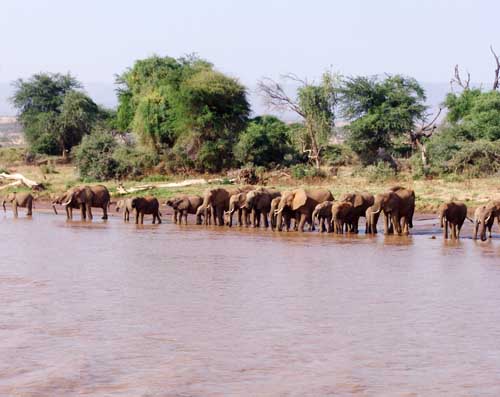
KENYA: Daphne Sheldrick’s “Love, Life, and Elephants”

rowofelesphShKenya2010SamburucroppedDSC04011


In an interview by Jim Fleming on Wisconsin Public Radio’s “To the best of our knowledge,” Daphne Sheldrick talks about her book, Love, Life, and Elephants.


She had known Eleanor since she was a two year old orphan and had successfully rehabilitated her back into a wild herd.  Occasionally, she went to visit Eleanor, who would come over, greeting her affectionately.  They would spend a few moments together, and then Eleanor would go back to her herd.  One day Daphne Sheldrick wanted to introduce Eleanor to one of her human friends.  They set off to find her, and thought they had spotted her by a waterhole.  She didn’t look quite the same, but she was standing there quite unafraid, so it had to be Eleanor.  When called, she came over.  Daphne Sheldrick stood next to her and put her hand up to touch her behind the ear, as she always did with Eleanor.


It was then that she realized her mistake.  The elephant was startled and lashed out, using the same amount of force she would have used with another elephant, sending Daphne Sheldrick sprawling on the ground.  A moment later she felt the elephant trying to pick her up with her tusks.  With her knowledge of elephants, she knew the elephant would already have killed her if that was her intention.  Instead, she was trying to help her.  Daphne Sheldrick had a broken leg.  The elephant gently touched her with her trunk, trying to help, but seeing that there was nothing she could do, after a few minutes, she turned and walked away.


Daphne Sheldrick discovered later that this elephant, who she called Kathryn, was Eleanor’s best friend, and apparently the two must have had a talk with each other about Daphne Sheldrick, because Kathryn, a wild elephant, had immediately trusted her and even came when called. Kathryn only lashed out when she was unexpectedly startled, and then she was sorry, not having intended to cause any harm.


Daphne Sheldrick’s book, Love, Life, and Elephants recounts stories of a lifetime of profound experiences with elephants and other wild animals.  Of the elephants, she says they are very similar emotionally to humans.  She is convinced that they communicate telepathically, citing the story of Eleanor and Kathryn, but says that they are “very much nicer than humans.”


David Sheldrick, when he was alive was the founder warden of Tsavo National Park, which is the size of Michigan and which holds the largest population of wild elephants in Kenya.  Daphne Sheldrick worked in the park with her husband, and together they began to care for and rehabilitate orphaned wildlife.  After David Sheldrick’s death in 1977, she continued this work and founded The David Sheldrick Wildlife Trust, in memory of her husband.  Courtesy of the Kenyan government, she has lived and worked in the Nairobi National Park since that time, caring for wildlife, with a dedicated staff, at the Orphan’s Nursery.


To hear this Wisconsin Public Radio interview with Daphne Shelton online, click here.


To visit the website of the David Sheldrick Wildlife Trust, click here.


Photo:  Sharon St Joan / wild elephants at Samburu National Park,  Kenya

Chennai, India: Kids’ imaginative animal art

LeaveWildlifeAlone two cropped

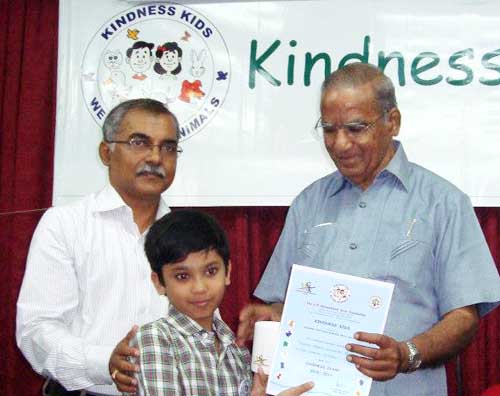
On March 2, 2013,  the C.P. Ramaswami Aiyar Foundation held an awards ceremony for their environmental program Kindness Kids.  Shri Dulichandji, Chairman, Karuna International, the Chief Guest, gave away prizes to the winners of contests.

“Leave Wild Animals Alone” was the theme of one of the artwork contests. Deer, peacocks, water birds, and other animals are happier and safer when not disturbed by humans.  They can live in the forest by a peaceful river.

Sadhakar one of kindness kidscropped

Kindness Kids reaches children in several Indian states, fostering kindness and compassion for animals and the environment.

To view Kindness Kids Facebook page, click here.  

EGYPT: Students spend Sunday with Pyramids horses

feeding horses,resized,edited

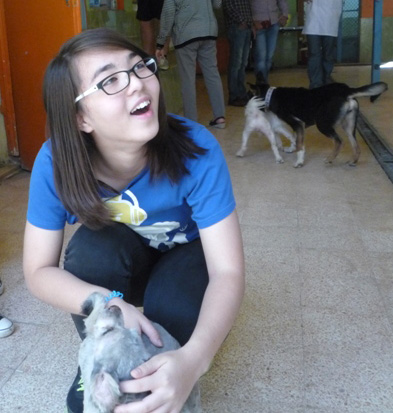
Students from the Cairo American College arrived on Sunday March 24 at ESAF’s Shabramont Shelter (Egyptian Society of Animal Friends) to volunteer as part of the college’s “week without walls” program.


Several students joined the weekly mobile clinic for the horses in the Pyramids area, handing out food and providing care to 75 horses —  treating wounds, deworming, and assisting with dental care.


Some of the students stayed behind at the shelter to watch the presentation “Alternatives to Animals in Experiments and Education”, part of ESAF’s program to promote alternatives to animal testing.


Returning from the Pyramids clinic, the students devoted the rest of the day to doing some painting and maintenance work, along with grooming and playing with the animals.


girl and dog two


That evening, the ESAF vet and the GIZA Veterinary Department continued their work inspecting GIZA pet shops. During recent inspections, they found exotic animals being kept illegally.  Following their report to the Director of the GIZA Veterinary Department, action was taken regarding the exotic animals.


To visit ESAF’S Facebook page, Click here. 


 Photos: © ESAF

INDIA: Hospet, Karnataka: Determined to rescue a camel


Manju Bod rescued camel resized


For two years, Manju Bond tried desperately to rescue camels from being slaughtered during the Bakrid festival, but failed. On the third year, 2012, as the time of Bakrid drew near, he was more determined than ever to save at least one  camel from a miserable fate.


During the Moslem Bakrid Festival, there is a tradition of slaughtering animals.


Unlike cows, sheep, and goats, camels are slaughtered only during Bakrid.


The town of Hospet in southern India, where Manju Bond lives, serves as a gateway to the UNESCO World Heritage site of Hampi, a place of ancient temples in a setting of giant, otherworldly boulders.


The Bakrid festival follows the lunar calendar, and last year, it was held in October as usual. Ahead of time, Manju set about gathering support from his animal welfare friends and searching for places where a camel might be concealed, before being slaughtered.


Camels are brought to the area just a couple of weeks before Bakrid; kept in hiding, given feed and water, and killed the night before the festival. Usually, they slaughter the camel at midnight when most people are asleep.


Finding the place where a camel was hidden was going to require getting people to talk. With a few drinks and a congenial atmosphere, this might be accomplished.


He offered drinks to a few likely-looking people, and the more they drank, the more they talked. He learned that around ten wealthy people had gotten together to purchase a camel from a far-away city. They had transported the camel and had kept him hidden in an isolated garbage area.


Just hours before the camel was to be slaughtered, Manju now had all the information he needed. Armed with knowledge of the location and other details, he was able to work out a rescue plan.


As soon as he knew that the camel would be slaughtered at midnight, Manju went looking for the camel and found him, all decorated for the festival, tethered inside a fenced area.


Manju was moved to tears seeing the camel who was about to be slaughtered. At least 500 people were looking forward to having the camel for dinner the next night.


He ran back to notify the animal people he knew, only to hear that, fearing retaliation and violence, they weren’t willing to join him in his efforts to free the camel. Finally, he tracked down the senior police officer in the area, and pleaded with him to rescue the camel —  while some of his friends got on the phone to the police superintendant, urgently calling for police support.


Manju took the police to the site where the defenseless camel was tethered. They freed him and led him away.


Transported to the police station, the rescued camel spent the night there in safety.


Now the camel has a new life at a goshala (a cow sanctuary), where he will be out of danger and cared for for the rest of his life.


Manju Bond, with single-minded focus, has so far rescued from slaughter and found sanctuary for eleven cows, two buffaloes, one other camel in addition to this one, and one pig.  He’s also rescued 25 homeless cats.  All saved by the efforts of one person, with bravery and determination.


Photo: Courtesy of Manju Bond

To visit Manju Bond’s Facebook page, click here

Egypt: Workshop promotes alternatives to animal testing

Pic 50 workshop

By ESAF (Egyptian Society of Animal Friends)

This is an excerpt from ESAF’s report on the workshop.


The Second Egyptian Seminar on Alternatives to Animal Experiments in Education and Training was organized by ESAF (the Egyptian Society of Animal Friends) in association with the Biological and Geological Departments of the Faculty of Education at Ain Shams University.


The workshop brought together teachers, students, researchers, representatives of the General Organization of Veterinary Services, animal activists,  campaigning organizations, media, and others to promote and help implement replacement alternatives across Egypt.


These were some of the topics covered:

Animal Care in Arabic culture

Alternatives to Animal Dissection

The Role of Civil Societies and Media in Animal Care

The Role of Curricula in Developing Awareness about Endangered Animals

The Use of Cells and Tissue Cultures as Alternatives to Animal Experiments

Zoonoses

The Psychological, Educational, and Scientific Impact of Using Alternatives to Animal Experiments by Students

Legislation for Animal Care in Egyptian Law


There were lively discussions and debates, as one would expect (and hope for) at such a workshop.  It was wonderful to see so many young people so actively involved…

ESAF


To visit the Facebook page of ESAF, click here. (Some content may be disturbing.)


Photo: Courtesy of ESAF


The EU bans the sale of animal-tested cosmetics


????????????????????????????????????????

In a March 11, 2013 article the BBC reported that the EU has banned the sale of all animal-tested cosmetics. The ban was announced on Monday.


The 27 countries of the EU, in 2009, banned the testing on animals of cosmetics in their countries.  This ban goes further, and prohibits the sale in Europe of cosmetics tested on animals in other countries.


Products already being sold will not be affected.  All new cosmetic products, however, will not be able to be sold in the EU, if they have been tested on animals anywhere in the world.


Groups like BUAV in the UK, the European Coalition to End Animal Experiments (ECEAE), and Humane Society International (HSI), as well as others, have campaigned for many years to bring about this ban.


This is a significant step on the path to eliminating all animal testing.  It reflects and reinforces the view of many that all animal testing is inhumane and should be stopped.


To read the original article in the BBC online edition, click here  


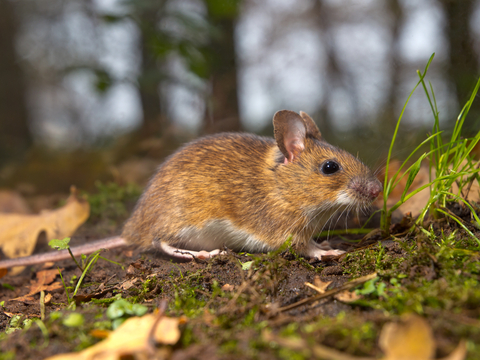
Photo: © Creativenature1 | Dreamstime.com / A mouse in the woods.