This Sunday, April 15, 2012, Let’s Live together will hold their 21st Puppy Adoption Camp, at the Great Indian Dog Show, starting at 3 pm, in Bangalore. (The address is given below.)
This lovely pup and fourteen others will be looking for their forever homes.
Let’s Live Together rescues motherless puppies from the streets of Bangalore, places them with foster parents – then, while the puppies are being nurtured and nourished, finds them loving homes. All puppies are required to be spayed/neutered.
They conduct adoption camps all over the city, and their Adoption Center is open on Sundays from 10 am to 4pm.
Their project “Life on the street” features captivating photos of the puppies and shows the lives of street dogs in Bangalore. The photos are taken by Achala Paani, talented photographer and Founder Trustee of Let’s Live Together. They promote the “adopt, don’t shop” message.
And finally, Happy Birthday to Let’s Live Together which will turn three years old on April 13, 2012!
For more information, to visit their website, click here.
California Senator John Burton in an op-ed piece in the April 10, 2012, L.A. Times describes the efforts taken by the fois gras industry to fight the enforcement of the California law banning foie gras.
Foie gras is a food product, considered a “delicacy” though there’s nothing delicate about it, made from the livers of geese. It’s production is extremely inhumane and causes great suffering to the geese.
The citizens of California passed a law in 2004 against this very cruel practice, and the law will begin to take effect in July 2012. Senator John Burton wrote and promoted the bill. This law is very important and outlaws this kind of cruelty to geese by banning the sale and production of fois gras in California.
The law has already been passed, which is good!
The industry which profits from the inhumane treatment of geese is now opposing having the law take effect, despite the very long seven and a half year delay they were given.
You can read about the industry’s efforts to stop the law’s enforcement here. (Caution: the details of fois gras production are graphic.)
You can send a letter supporting the article by Senator John Burton and the ban on fois gras to the Editor of the L.A. Times here.
Thanks to Karen Dawn for this news! To visit the website of DawnWatch, an animal advocacy media watch, and sign up for alerts, click here.
At this link, you can write on behalf of sea otters, so they can swim freely in waters off the California coast, instead of having a no-otter zone where they’re not allowed to swim!
Wouldn’t it make more sense to have a no-people zone in the ocean?
Friends of the Sea Otter (FSO) is an advocacy group dedicated to actively working with state and federal agencies to maintain the current protections for sea otters as well as to increase and broaden these preservation efforts.
The Egyptian Society of Animal Friends (ESAF) is hosting the Kiwi Care Team from New Zealand; fifteen vets, farriers, and equine dentists who are doing a terrific job, fixing up teeth, hooves, and patching up injuries for the Pyramids animals.
ESAF just held a big celebration to mark their tenth anniversary. Congratulations to them for all they’ve accomplished and for all their dedicated work for the animals!
Over the past year, throughout all the challenges of the Arab Spring, they’ve done a magnificent job overcoming hurdles to continue to provide food and vet care to the many horses, camels, and donkeys who generally give rides to tourists, but who’ve had a difficult few months because of the lack of tourists during these unsettled times. The equine owners have been thankful for all the help given to their animals.
Robert Blumberg, who had a hand in founding ESAF, offered a special tribute that closed with these words:
“There are many animals that neither you nor I will ever see but whose lives have been improved by ESAF’s actions. While there is still much to be done, have faith that you are doing the right things!”
Happy 10th Birthday ESAF!
For the Facebook page of the Kiwi Care Club, click here.
It was an event like no other: 75 spoilt-rotten canines. 75 proud owners. One question: how did you meet your dog? The annual Blue Cross Dog Show saw some of the best rescue stories come to life in front of an excited audience of 300 at C.P. Arts Centre on Sunday, February 19, in Chennai. The Indian animal welfare situation is at a crucial point in history – now, more than ever, people are choosing to adopt their companion animals from the streets and animal shelters. Powerful grassroots movements are mushrooming across the country, appealing to people to boycott breeders and pet stores.
The Blue Cross Dog Show has the primary goal of reinforcing the adage: ‘adopt, don’t shop’ and uses real-life fairytale endings (such as the ones showcased at the event) as an example to society at large.
All participating canines were awarded ‘Proud to be Indian’ medals, as part of the Blue Cross’ mission to encourage adopting local breeds that can handle India’s tropical climate. Additionally, there were several prize categories that were determinedly quirky and unique – the dog that kisses the owner most in sixty seconds, the dog with the rarest spots, the dog with the waggiest tail. Unlike other dog shows that force dogs to ‘perform’ unnatural tricks, go through races and obstacle courses, the Blue Cross Dog Show insisted that the dogs and owners merely needed to show up and be themselves – and of course, tell their story.
Ravichandra with his rescued puppy, Black Beauty
The audience hooted and cheered loudly when they heard phrases like ‘from the slum’ or ‘picked up from a railway track’, knowing that those erstwhile street puppies wouldn’t have stood a chance had it not been for the large-hearted folk who picked them up and made them members of the family. All the dogs were true survivors – some had been victims of hit-and-run accidents when their rescuers found them and adopted them, others had been nursed back to normalcy after suffering severe health problems or starvation. The one thing they all had in common was that their scars were a thing of the past. Today, their coats glisten with health, their excited tongues are on overdrive and their eyes shine with mischief – the naughtiest dog award winner looked on with a sly grin as his owner described how he ripped through an expensive computer cable during his chew stage. “I spent a lot of money on that mishap, but it was worth it and I love him”, said the owner, ruffling the pooch’s furry forehead affectionately. It was a moment that summed up the true bond between man and dog – one that cannot be shaken by a troublesome teething period and one that doesn’t depend on superficial labels such as pedigree or parentage.
A photo-shopped dog (with bits and pieces from multiple dog breeds) graced the Dog Show poster as a mascot for the concept. In accordance with the rules, every dog that participated was a non-pedigree one – and was either of native origin or of mixed-breed parentage. Top news media including the Times of India, The Hindu, New Indian Express, NDTV and Tamil news media such as Puthiya Thalaimurai, Dina Thanthi and others lapped up the stories and dedicated space or time to the show in their papers or television channels. It was a proud moment for these rescuers whose acts of kindness were highlighted for the world to see. As for the organizers and volunteers at Blue Cross of India, it was a moment of affirmation – the Blue Cross Dog Show isn’t just about handing out trophies to a handful of good Samaritans – it’s about creating a microcosm of what we want the world to be someday: a compassionate and generous place where every homeless dog finds a safe haven for life.
In a resounding victory for the animals, the Bombay High Court has directed the State Government to end all bullock cart races in Maharashtra, the Sakaal Times reports in a March 18, 2012, article by Prasad Joshi, “Bullock Cart races brought to halt.”
This victory is the result of the determined efforts of a number of animal groups and individuals, going back over many years. The suit was brought by Gargi Gogai, a Mumbai animal advocate. Among many others who played a key role were Anil Kataria, President of the SPCA, Ahmednagar, as well as animal activists Ajay Marathe, and Manoj Oswal.
The Animal Welfare Board of India and senior advocate, Anjali Sharma, laid out the case for the animals with a letter to the authorities.
The judge’s recent ruling requires district officials and the police to enforce the ban on all bullock cart races in Maharashtra.
Despite thousands of years of revering the cow and the bull as sacred animals, and despite the reverence that most Indians today feel towards these animals, some public events have continued to be held which are distinctly cruel. One of these has been bullock cart racing, in which the bulls pull a cart, racing along in the heat of the day.
Animal races, like any animal-related sport, are never kind. There are unseen cruelties, hidden from public view. A quick look at any of several videos posted on Youtube of bullock cart races will show clearly that the animals are pushed and pulled this way and that and treated very roughly by their handlers.
But on top of this rough treatment, the bulls are also being tortured in ways hidden from the camera.
Bulls will not naturally run, they are not greyhounds or horses, they’re laid-back animals who really like standing around in fields, so to make them run, they must be made to feel pain by a variety of means. This is an extremely cruel sport, in which the animals suffer by being tormented.
After many years of hard work by animal advocates to have these races banned, there seems to be a light shining at the end of the tunnel.
Rescued bulls at Blue Cross of India
Last summer saw a milestone reached with the landmark issuing of the Notification by the Ministry of the Environment and Forests on July 11, 2011, banning leopards, tigers, lions, bears, monkeys, and bulls, as performing animals.
However, everything then took a step backwards on September 11, 2011, when the Maharashtra State Government announced that actually the ban did not mean all bulls, and that neutered, castrated bulls weren’t really bulls and could still be used in races.
The Animal Welfare Board of India, on the other hand, endorsed the broad, inclusive meaning of “bulls” as designating all bulls, both neutered and non-neutered, maintaining that Bullock cart racing is entirely illegal.
The latest ruling, by the Bombay High Court, has cast aside the faulty distinction between neutered and non-neutered bulls.
The Bombay High court, in their decision signed by Chief Justice Ranjit More, J., has ruled that in fact all bulls really are bulls, whether neutered or not, and that the court order bans all bullock cart races, games, exhibits, and training of bulls. No bulls can be used as performing animals. Any bull owner who allows his bull to race in a bullock cart race is in violation of the provisions of the Animal Protection Act, 1960. The Court also requested that the State of Maharashtra increase the penalty, calling the current fine “miniscule,” so this is a major victory for the bulls. It definitively outlaws bullock cart racing in the State of Maharashtra and sets a precedent for similar events in the rest of India.
Rescued bulls
This major ruling in Mumbai follows an earlier ban of bullock cart races in the State of Punjab.
Kila Raipur, in Punjab, is a well-known village where the three-day Rural Olympics take place every year. They include contests and tests of strength. Unfortunately, they have also included bullock cart racing.
This year though, the bullock court races were stopped in Punjab. Early in February 2012 as the Rural Olympics were about to get underway in Kila Raipur, the state authorities, pursuant to last year’s Notification banning bulls and five other species from being used as performing animals, halted the races, not allowing them to go forward.
A letter from the Animal Welfare Board of India was taken to Punjab to the Haryana High Court, Chandigarh, a day before the games were to start.
The Court then ordered the District Magistrate Ludhiana to issue a decision. Having reviewed the AWBI letter, the Government Notification banning use of bulls as performing animals, and the Expert Opinion of the Animal Husbandry Department, the District Magistrate ruled that bullock cart races are illegal, and so the case in Punjab was settled out of court.
On April 23, 2012, the Madurai bench, in Tamil Nadu, will hear the jallikattu case, and it is hoped that the bullock racing case will serve as a precedent. (Jalikattu is another cruel sport, in which bulls are pursued and tormented by crowds of young men.)
Years of work and perseverance on the part of the Indian animal movement are at last paying off, and the bulls are being freed from the suffering inherent in these kinds of brutal sports.
To view the March 18, 2012 Sakaal Times by Prasad Joshi, “Bullock Cart races brought to halt,” click here.
To visit the website of the Animal Welfare Board of India, click here.
Photos: Sharon St Joan / These particular bulls were not used in bullock cart races. They were rescued from illegal transport by Blue Cross of India.
Lori Colt, Communications Director of WildEarth Guardians photographed these two charming coyotes near her home in Santa Fe, New Mexico. WildEarth Guardians does a spectacular job defending and protecting wildlife and their habitat in the American West.
Senate Bill 245, which would fund the killing of thousands of beautiful coyotes like these, has passed the Utah legislature and is now on the governor’s desk. For more information and to write to Governor Herbert, click here.
Note: Sadly, this bill has passed. Please see the comment at the end.
To help Utah’s coyotes, please ask Utah representatives to vote “No” on Senate Bill 245, the “Mule Deer Protection Act.” This bill would allocate $750,000 so that a $50 bounty can be paid to hunters and trappers for each coyote killed. The previous bounty was $20.
The bounty is being increased in order to “protect mule deer.” Senate Bill 245 will come up for a vote in the Utah House “in the next 36 hours” according to the website of Wild Earth Guardians. It has already been passed in the Utah Senate.
Very few coyotes kill mule deer; they generally kill much smaller prey. So this will cause great suffering to the coyotes, without helping the mule deer. The reason for “protecting the mule deer” is so that there will be more deer available for hunters to kill.
Killing any innocent animals and placing a bounty on the head of a wild animal who has a natural right to life is wrong. But in any case, this bill will help no one—neither humans nor animals.
If you are a Utah resident, please take action at the site of Wild Earth Guardians:
Praveen Raj spotted the Intermediate Egret above at the Lake Pulicat Bird Sanctuary, near Tada. The second largest brackish lake or lagoon in India, it straddles the Andhra Pradesh/Tamil Nadu border. The Pulicat Lake Bird Lovers Society is one of the organizations working to promote environmental awareness and protection for the lake which is under threat from the run-off from farms and factories.
Egrets and herons are very closely related and belong to the same family. Egrets are generally white, often with black feet and legs and yellow bills, while herons exhibit a greater variety of colors. Herons seek higher perches, and egrets prefer to stand in shallow water.
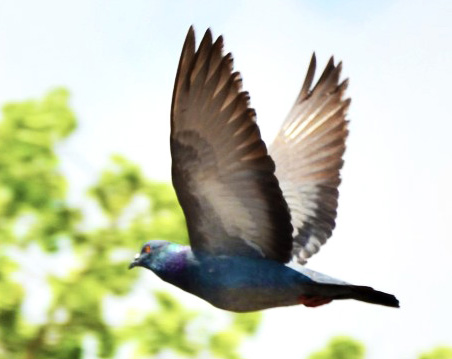
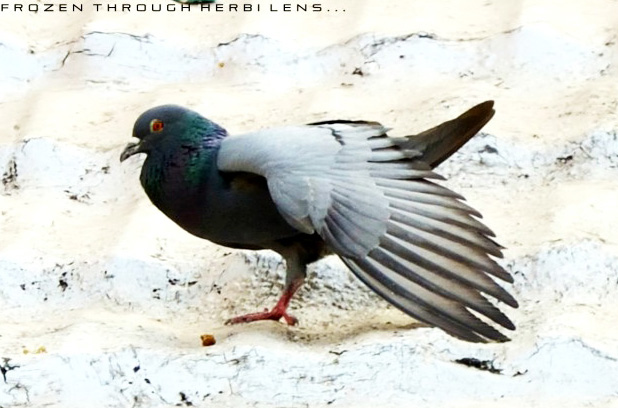
The pigeons and the egret in the third photo above were seen in Chennai, as was the rooster.
To learn more about the lake on a website put up by the Pulicat Lake Bird Lovers Society, click here.
To view more photos on Praveen Raj’s Facebook page, click here.
Photos: Courtesy of Praveen Raj, frozen through herbi lens.
A handsome cat - his ear will be tatooed too to show that he's been neutered.
Another Spay Day took place at Castel Volturno, in southern Italy on February 24, 2012, as part of World Spay Day. Dr. Dorothea Friz, Founder of Lega Pro Animale, reports that 57 care takers caught 159 cats (109 females and 50 males), and they were all spayed/neutered in one day. A few of the clever cats thought twice about entering the traps; as soon as they can be caught, surgery will be done for them too.
Lega Pro Animale has conducted a highly successful TNR program for cats in southern Italy since 1986, greatly improving the well-being of the cats there.
To visit the website of Lega Pro Animale, click here.





 Art, animals, and the earth