Lawsuit Launched to Protect Endangered Species From Fracking in Michigan

Earth First! Journal Sonoran Office's avatarEarth First! Newswire

Risky Oil and Gas Production Threatens Rare Butterflies, Bats in Allegan State Game Area

by the Center for Biological Diversity

fracking-in-michiganGRAND RAPIDS, Mich.— The Center for Biological Diversity launched federal litigation today challenging the Bureau of Land Management for failing to protect endangered species like the Karner blue butterfly and Indiana bat by properly assessing the risks posed to them by fracking on public land being leased for oil and gas production in a game reserve in southwestern Michigan.

On Sept. 12 the federal government plans to auction off more than 27,000 acres of publicly owned mineral rights in the Allegan State Game Reserve but has not analyzed the harm fracking and drilling could do to all the area’s rare and protected species.  

View original post 458 more words

Animal News from Lebanon: Update – September 4, 2013, helping people and animals

65554

In the current crisis, Animals Lebanon is helping refugees from Syria and their animals, as well as an influx of animals from people leaving Lebanon. A brief update – for an earlier update, click here. – Editor


By Jason Meier

Animals Lebanon

Beirut


Update – September 4, 2013


…We are in a very tough situation and know we are really going to need help…


Now we have a woman from Syria who evacuated with her six cats. She and the cats are staying with us until we can get her and them a plane ticket, hopefully on Saturday.


We also have a whole new zoo to empty. I was here the day before the 2006 war and visited zoos in the south. So many of those animals died because they could not be reached, or others were given too much food at the end of the war. I don’t want to be in a position where the same thing happens to these animals. Two lions, two tigers, three macaws, and two crocodiles. The rest are local wildlife that can be placed here…


To visit the website of Animals Lebanon or to help with a donation, click here.


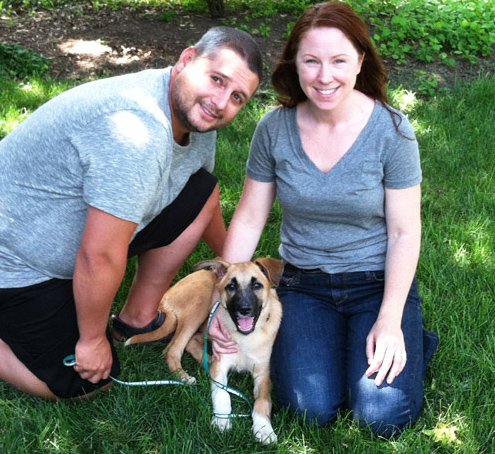
Photo: Courtesy of Animals Lebanon / Nacho was tied up his whole life and abused by people, until he was rescued by Animals Lebanon. Despite this history, he remained a very gentle dog, and he is now happily adopted in the US!

Animal news from Lebanon: Update – September 3, 2013 – Preparing for what may come

191871

In 2006, during the War in Lebanon, while bombs were falling on nearby buildings, the people of what is now Animals Lebanon were courageously feeding community cats in bomb-damaged buildings and rescuing as many animals as they could. Now they are preparing for whatever events may come in a worsening situation. — Editor


By Jason Meier

Animals Lebanon

Beirut

Update – September 3, 2013

Dear All,

Lebanon and this region has steadily become less safe over the last two years, and much more so in the last six months. The Prime Minister resigned in March which causes the Council of Ministers to collapse, and there has been no progress at forming a new Council of Ministers. Parliamentary elections were not held as an electoral law could not be agreed, and in June Parliament gave itself an extension until November 2014.

There have been three major car bombs in the last few weeks, and major clashes in parts of most major cities – some going on for days. Just last week a car bomb was diffused by police only a kilometer from our office. In the last few days some airlines have changed their schedules to avoid night flight and minimize time aircraft are on the ground.

When the President of the US spoke recently the streets were empty, people are following every word and trying to understand what to do… We are looking at it as we have one week to get ready and prepared for as many outcomes as possible.

Tyson-big

As happened in the 2006 war, there are already more difficulties in sourcing animal food and supplies, an increase of cats and dogs being left behind as people leave the country, changes in fundraising, and we expect the possibility of animals trapped in zoos or pet shops that are not being fed or cared for, and concerns for the safety of everyone involved.

There are four staff including myself. They all have family in other parts of the country so can move to other areas temporarily if necessary. All have valid passports and there are countries they can travel to without needing a visa beforehand.

We are currently caring for approximately 40 cats and ten dogs, all located in Beirut. We are working to identify empty buildings or land that we could relocate to outside of Beirut if necessary. This would require costs of approximately $5,000 to construct or modify a space to make it suitable to house these animals.

We have a six to twelve month supply of all items necessary for the care of these 50 animals including food, litter, bedding, medication, water.

60 transport cages have been bought and put in storage, we are trying to find more. These would be for movement of animals within Lebanon, or to fly these animals abroad, or to provide to the public if they are exporting a cat or dog.

An ‘export guidelines for cats and dogs’ has been finalized in English and Arabic for distribution. Last week we answered 17 requests for help to export cats and dogs.

There are also a number of wild animals we are working to rescue-

– one Nile crocodile, approximately 1.5 meters, loose in Beirut river, no sanctuary secured

– two adult lions (one male, one female) and two adult tigers (sex unknown), kept at private zoo in the Chouf mountains outside of Beirut, no sanctuary secured

– six Hamadryas baboons, kept at zoo in south, accepted by Princess Alia Foundation in Jordan but have not been able to arrange a vet to do the necessary vaccines and tests

We have been backing up all of our files on external hard drives for storage outside of Lebanon with two of our major supporters.

…I am hoping we have thought through and prepared as much as possible….Either way our work and what is possible has changed…

Thanks,

Jason

To visit the website of Animals Lebanon or to help with a donation, click here.


Photos: Courtesy of Animals Lebanon

Top photo: Clara was abandoned at a young age and rescued by Animals Lebanon. She is now happily adopted in Lebanon.

Second photo: Tyson is one of Eva’s six puppies.  Eva was shot and blinded while pregnant, and was rescued by Animals Lebanon.  Tyson is now happily adopted in the U.S.


Lebanon: Hazel and Aiden’s new journey

aiden-ba-w


By Animals Lebanon


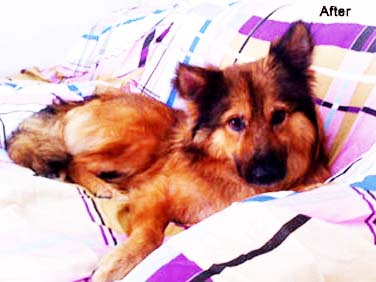
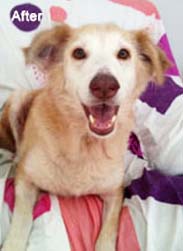
It took four days to catch them and four months to bring them back to health.


Hazel and Aiden lived miserably on the street – covered with mange, emaciated, abused by people – and lived underground in an abandoned basement for shelter.


After several attempts over four days we succeeded in safely catching them. They needed to be taken to the vet immediately.


After four months of mange treatment, we started the rehabilitation training. Their social skills were zero and their fears were just too many.


Working with Debbie Jacobs, a certified dog trainer from the US we were able to bring these two precious dog back to trusting people.

hazel-ba-w


“Hazel came around much faster then Aiden,” said Maggie Shaarawi, vice president of Animals Lebanon.


“Over nine months Hazel and Aiden received positive reinforcement training and it certainly worked. Finally seeing Aiden stand proudly with a wagging tail was so rewarding to me.”


August 22nd was Hazel and Aiden’s big day. They were ready to leave Animals Lebanon and start a new journey in the states. Thanks to two great groups in the U.S., As good As Gold Dog Rescue and Hightails Hideway, Hazel and Aiden have a new beginning were they await their forever homes.


We need your help – Donate now for their care and trip to a new life, and help make sure more animals just like Hazel and Aiden get the care they need.


To visit Animals Lebanon’s website, click here.


Photos: Courtesy of Animals Lebanon


Updates from the Buffalo Field Campaign

The Buffalo Field Campaign protects the buffalo in and around Yellowstone…

EF! J Collective Everglades Office's avatarEarth First! Newswire

Public comments needed for year-round wild bison habitat in Montana, and BFC Roadshow announced!

from Buffalo Field Campaign

BullsRoam_BFCseay2011-1The Buffalo Field Campaign (BFC) is the only group working in the field, everyday, to stop the slaughter and harassment of Yellowstone’s wild buffalo. Volunteers from around the world defend buffalo on their traditional winter habitat and advocate for their protection. Our daily patrols stand with the buffalo on the ground they choose to be on, and document every move made against them. Volunteersspend all day, from sunrise until sunset, watching and documenting actions taken against the buffalo. We run patrols from cars, skis and snowshoes to protect buffalo outside the park. Tactics range from video documentation to nonviolent civil disobedience.

TAKE ACTION: Comments Due September 13 on Year-Round Habitat

The public comment period is currently open on Montana’s proposal for some year-round bison habitat in both the Hebgen and Gardiner…

View original post 211 more words

The magic of trees and stained glass art

3936228
Totem mandala – Wolf
1946579
The Goddess Cybele and her Lions. There is no lettering on the original art work.


9936177
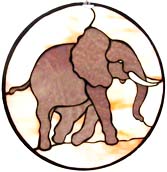
African elephant. 10″ circle.


Laura J. Merrill spent twenty-two years designing and creating work in stained glass – both large works and smaller suncatchers, mandalas, and boxes. The animals and mythical figures invoke magical and spiritual levels beyond.


Most of the stained glass work has been sold over the years, but a few remain.  When they are all gone, there will be no more.


Laura is now writing a series of books about trees, Secret Voices from the Forest.


To see more of Laura’s beautiful artwork, click here.


To learn more about or purchase Volume One of Secret Voices from the Forest, click here.

Egypt: Update – the animals at the Giza Zoo and the Pyramids

OLYMPUS DIGITAL CAMERA
The Egyptian Society of Animal Friends (ESAF) has been providing ongoing vet care and feeding to the Pyramids horses – an earlier photo.

The animals at the Giza Zoo

Yesterday, August 14, violent action took place to clear protests in the streets of Cairo. The Giza Zoo is located right in the area where the crackdown occurred. The very sad toll of human deaths and injuries on both sides was huge. It appears that, at least for the moment, all the zoo animals are alive and uninjured.

Vier Photen, the international organization based in Austria that does so much to help animals in disasters, in many countries, has responded generously to a request from The Egyptian Society of Animal Friends (ESAF) to provide help to the Giza Zoo, which is having great trouble feeding and caring for the zoo animals. Because of the unrest, there are no visitors to the zoo and therefore no income with which to feed the animals.

Dina Zulficar, a dynamic animal advocate in Cairo who has aided the Giza Zoo animals for many years (with education, activism, organizing support for them, and enriching their habitats), has provided ongoing reports on the plight of the zoo animals.  The Zoo is located right in the area where the protests have been taking place, and there has been a great fear that the animals would be injured or killed by the tear gas and the fighting. During the violent crackdown by the army on the protestors, it looked for a time as if the worst fears were materializing.

Heroes at the Giza Zoo

Animals in a zoo have no way to escape tear gas or gunfire. They are trapped. The lungs of birds are especially susceptible to impurities of any kind in the air, and of course, this includes tear gas and smoke.

Thanks in large measure to the bravery and dedication of Dr. Fatma Tammam, Central Zoo Director, and her staff, who went early in the morning to feed all the zoo animals and birds and who have been overseeing the welfare of the animals, at the moment, the animals appear to be safe.

During the crackdown on Wednesday, there was a fire in a palm tree and another tree, but it was contained. Police and 15 protestors battled outside the walls of the zoo. At the time of Dr. Tamman’s most recent report, relayed by Dina Zulficar, all the Giza Zoo animals were alive and none were injured, which is remarkable.  Dr. Tamman extended her thanks to all those who expressed their concern for the zoo animals.  The road to the zoo has now been re-opened.


ESAF feeds the pyramids animals

Since the very beginning of the unrest in Egypt two years ago ESAF, the Egyptian Society for Animal Friends, has been providing regular assistance to the horses, donkeys, and camels at the Pyramids.  These animals in normal times are used to carry tourists, and even in the best of times, their lives are not easy.  During times of civil unrest, their owners have no income because there are no tourists, and they have no means to feed the animals or provide vet care for them.

ESAF, working with other organizations, both international and Egyptian, has faithfully provided help to these animals – feed and regular vet care.

On August 9, before yesterday’s crackdown, Ahmed El Sherbiny, Chairperson of ESAF, reported on their recent work with the animals.  The ESAF team spent four days at Nazlet El Samman, giving vet care and feeding to 526 animals.

Then on Wednesday, August 7, at Kafr El Gabal, the neighborhood near the Pyramids where the camel owners live and where they camels are kept, they spent one day feeding and treating 94 horses and camels.

The camel feeding and vet care was sponsored by Janet Thomas of Animal Aid Abroad (AAA).

During this past month, ESAF has given food and vet care to 1,857 horses and donkeys, as well as 94 camels.

Ahmed El Sherbiny expressed his heartfelt thanks to SPANA (Society for the Protection of Animals Abroad), AAA, HSI (Humane Society International), Wereld Asielen, and Sue Evans and her UK group.

There are a number of excellent animal welfare groups in Egypt, all of whom are doing their best to help animals at this very difficult time.

Thanks to these kind and heroic efforts, Egyptian animals are being saved and helped.  However, the circumstances are immensely trying and the future is uncertain. Our thoughts and prayers are with all the people and animals of Egypt.


Photo: Courtesy of ESAF, this was taken during an earlier program for the Pyramids animals in 2012.


These are the Facebook pages for Dina Zulficar, ESAF, and Vier Photen:


Dina Zulficar:  https://www.facebook.com/dina.zulfikar.5


ESAF: https://www.facebook.com/groups/7321605630/


Vier Pfoten: https://www.facebook.com/vier.pfoten.9?fref=ts


India: A grim reality — and a big victory in the fight to free animals from laboratories, part two

471px-Ganesh_sits_affectionately_with_his_vahana,_Mushika_another_version


Continued from part one…

To read part one first, click here


 A wave of support


With Humane Society International (HSI) spearheading the campaign Be Cruelty Free, many groups and individuals joined the effort to ban cosmetics testing on animals, including Maneka Gandhi, Blue Cross of India, the C.P.R. Environmental Education Centre (CPREEC), and a host of others, including celebrities and politicians.


On May 3, 2012, a human-sized mouse, holding a pink heart with the words, “Ban Cosmetic Testing on Animals” met, as part of a delegation of animal protection groups, with Minister Jayanthi Natarajan, Ministry of Environment and Forests, to thank the minister for making India the first country in the world to ban the use of  research on live animals in education and to ask her support for the cosmetics testing ban.


Dr. Chinny Krishna, member of the CPCSEA, wrote a letter, on behalf of HSI, CPREEC, and Blue Cross, to three ministries, including the Bureau of Indian Standards, which falls under the Ministry of Consumer Affairs, presenting the case against animal cosmetics testing on the grounds that it is both cruel and entirely unnecessary.


Many thousands of people signed petitions and wrote letters to both the Bureau of Indian Standards and to the Drug Controller of India. Ms. Alokparna Sengupta, the HSI Campaign Manager for Be Cruelty Free, also served as a member of the Bureau of Indian Standards.
500px-Rabbit_in_montana


In November of 2012, HSI, CPREEC, and Blue Cross held a conference in Chennai, where Wayne Pacelle, CEO of the Humane Society of the United States (HSUS), spoke out passionately against cosmetics testing on animals.


In the early weeks of December, on behalf of HSI, Dr. Chinny Krishna, drafted a suggested amendment to the Drugs and Cosmetics Act, for a meeting that Maneka Gandhi was about to have with the Drug Controller General of India.


During December, the initiative to ban cosmetics testing picked up significant parliamentarian support. Legislators Ms. Debasree Roy, a well-known actress from West Bengal, and Shri Ramalinga Reddy, from Karnataka, wrote letters to the relevant ministries in support of the ban.


In January, a press conference was held in Kolkata, hosted jointly by HSI and the Animal Welfare Board of India (AWBI). Ms. Debasree Roy, attired as a white rabbit, spoke eloquently on the need to spare animals from any further suffering in cosmetics testing.


In the spring of 2013, at least ten elected representatives took part in HSI’s Be Cruelty Free campaign.  MP Baijayant ‘Jay’ Panda, from Odisha, called for the end of cosmetics testing on animals as soon as possible, lending his support to the use of alternative testing methods, now readily available, which are both cheap and effective. MP Suresh Kumar Shetkar, from Andhra Pradesh, made a similar appeal for the ending of archaic cosmetics testing on animals.

500px-Syrian_hamster_filling_his_cheek_pouches_with_Dandelion_leaves


At the beginning of the year, Israel had banned the import of cosmetics tested on animals, following an earlier ban on conducting such testing within Israel.  In March, the EU followed suit with a similar ban, having also earlier banned cosmetics testing on animals within the EU.  Throughout 2012, HSI conducted a sustained, dynamic, global campaign with initiatives in the U.S., Brazil, Australia, South Korea, and other countries.


Victory


On June 28, 2013, the Bureau of Indian Standards modified the rules of the Drug Control Act, eliminating animal testing for cosmetics and requiring non-animal testing instead. At last, the use of animals in India for cosmetics testing was banned.


The wording of the ban was supported by Dr. Chinny Krishna, member of CPCSEA, Mrs. Norma Alvarez, Chairperson of the Federation of Indian Animal Protection Organisations (FIAPO) and member of CPCSEA, and by leading Indian toxicology scientists and many Indian citizens.  In her role as HSI Campaign Manager, Ms. Alokparna Sengupta had provided the driving force behind the successful campaign.


With this major milestone, many thousands of animals have been spared suffering, mostly small animals; rabbits, mice, and guinea pigs.  Up until this time, companies had still been conducting testing.  In many cases, these were unnecessary, repetitive experiments, re-testing ingredients that had already been tested previously, for the sole purpose of being sure that companies could not be held liable in law suits. Now this kind of testing can no longer be done in India.


It is still possible to buy cosmetic products in India that have been tested on animals in other countries, but this ban is a huge leap forward in the struggle to ban all animal testing in India.  Like so many of India’s very enlightened animal laws, this establishes a model for the rest of the world to follow.


Dr. Chinny Krishna said, “With this ban now in effect, people using cosmetics that are made in India can be assured that these products were produced without any cruelty to animals.”


Thanks to all who played a role in this groundbreaking legislation. May the time soon come when no animals anywhere will be used in laboratories.


Top photo:

http://www.columbia.edu/itc/mealac/pritchett/00routesdata/0400_0499/pantheon/vahanas/vahanas.html /
Author Ravi Varna Studio  / Wikimedia Commons / “This work is in the public domain in India because its term of copyright has expired. This file may not be in the public domain outside India. The creator and year of publication are essential information and must be provided.” / “Ganesh sits affectionately with his vahana, Mushika [a mouse] (carved and painted ivory plaque, later 1900′s).” 


Second photo: 

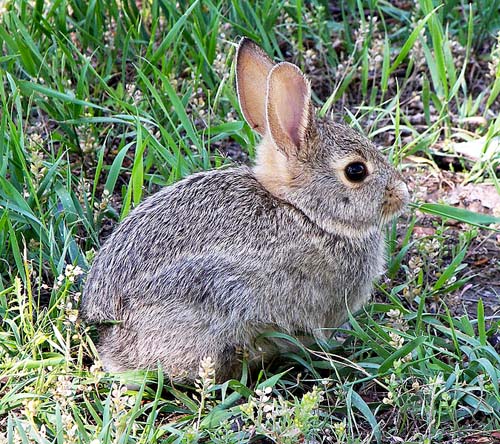
Attribution: Larry D. Moore / This file is licensed under the Creative Commons Attribution-Share Alike 3.0 Unported license. / Wikimedia Commons / A cottontail in the wild in Montana.


Third photo:

Author: Peter Maas / / “This file is licensed under the Creative Commons Attribution-Share Alike 2.5 Generic license.” / Wikimedia Commons / A Syrian hamster filling his cheek pouches with Dandelion leaves.