A New Map of the World’s Ecosystems

Unknown's avatarTHE DIRT

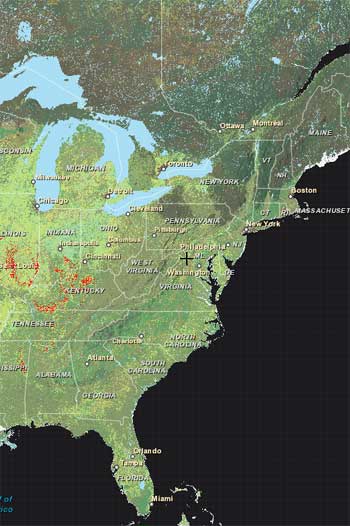
map1 Ecological Tapestry of the World / ESRI and USGS

A new, free, web-based tool from the US Geological Survey (USGS) and ESRI allows us to gain a better understanding of the ecological character of any place in the world. As the team explains, the web site can be used by everyone — from local government officials and planners to landscape architects and conservationists — to visualize the world’s complex ecological patterns. This also means in the future the tool can be used to map the impacts of climate change and development on ecosystems over time.

According to Randy Vaughan, ESRI, an enormous amount of science (and data) went into creating the tool. “The globe was divided in cells at a base resolution of 250 meters.” Each cell was then assigned input layers of data that “drive ecological processes.”

When users search for any place in the world, they see a…

View original post 355 more words

California’s Only Wolverine Spotted In Sierra Nevada

GarryRogers's avatarGarryRogers Nature Conservation

RENO, Nev. (AP) — A wolverine appears to be thriving in the northern Sierra Nevada seven years after being confirmed as the first one in California since 1922, researchers said.  More than two dozen documented sightings of the solitary predator…  Source: www.huffingtonpost.com

GR:  With only a few hundred individuals in the lower 48 states, the North American wolverine is a perfect candidate for protection under the Endangered Species Act.  Why did efforts to protect the species fail?  Could it be that protection of such a wide-ranging animal would be inconvenient from a human point of view?  It appears that we only protect species when it is convenient, that is, it does not interfere with resource harvest, growth, and development (i.e. progress).

View original post

Why 2015 Should be a Good Year for Wildlife

Good news from Europe…

GarryRogers's avatarGarryRogers Nature Conservation

(Photo: David Fettes/Getty Images)

“There’s always plenty of reason to get depressed about the prospects for wildlife at the start of the New Year.  Environmentalists were, for instance, unable to stop last weekend’s predator hunting derby by Idaho’s abundant population of anti-wolf idiots.  But there’s good news, too: They didn’t kill any.  (In fact, it took the sound and fury of 125 hunters to shoot just 30 coyotes).

Better still, a study published last month in the journal Science reported that even if the Idaho effete tremble at the idea of living with their native predators, Europe is handling them just fine.  In fact, the continent that gave us “Little Red Riding Hood” and “the Big Bad Wolf,” is now home to twice as many wolves as the contiguous United States, despite being half the size and more than twice as densely populated.

Source: strangebehaviors.wordpress.com

View original post

A glimmer of environmental hope on Keystone XL

Robert A. Vella's avatarThe Secular Jurist

By Robert A. Vella

Yesterday, the U.S. House of Representatives voted to approve the contentious Keystone XL pipeline project.  The Senate will take up the bill next week where it is expected to have bipartisan support and be approved without much difficulty.  President Obama has said he would veto the bill.  Congressional Republicans have been working to secure enough votes from Democrats in order to override a presidential veto, it necessary.

Daily Kos reported that 28 Democrats in the House voted for the measure with two more not in attendance who probably would have also voted to approve it.  The final count was 266-153 with 1 Republican voting ‘present,’ 3 others who didn’t vote, and none who voted ‘no.’  12 members were not in attendance (4 Republicans, 8 Democrats).

Assuming that no one would switch their vote in an attempt to override a veto (admittedly a big “if”), Republicans would…

View original post 48 more words

Entangled seal saved by sailors

petrel41's avatarDear Kitty. Some blog

A sailor cuts the entangled seal's rope, photo by Bert Meerstra

Translated from Ecomare museum on Texel island in the Netherlands:

Seal freed from rope – 09-01-15

It was a resolute action by the crew of the ship Krukel. They managed to free a young harbour seal of a rope which had got stuck around its neck. Despite the fact that the rope was pretty tight the seal was not injured, allowing them to release it immediately after cutting the rope. This time things went well but unfortunately waste at sea frequently produces problems for wild animals.

View original post 1 more word

Lions in the Serengeti

Jet Eliot's avatarJet Eliot

Serengeti at Sunrise Serengeti at Sunrise

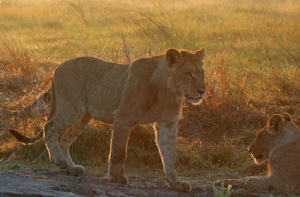
The Serengeti ecosystem of Africa is one of the best places on earth for observing wild lion populations.  It spans approximately 12,000 square miles in Tanzania and Kenya. For more info about the Serengeti, click here.

Serengeti Serengeti

As one of my favorite places in the world, I have had the fortunate opportunity to visit here several times.  (The truth is, I love it so much that I shaped many years of my life around earning and saving so that I could keep returning.)   All the lion photos presented here were taken in Tanzania.

The cubs resting atop a rock were enjoying the elevated safety offered by a kopje.  A kopje (pronounced “copy”) is a granite outcropping in the middle of the grasslands, where many of the mammals like to rest.  You can read an earlier post I wrote about kopjes by clicking here.

Serengeti Sunrise Serengeti Sunrise

View original post 230 more words

U.S. Interior Department: Still All About Fossil Fuels

Jeremy Nichols's avatarClimateWest

Even as scientists are confirming that it’s time to keep fossil fuels in the ground, the U.S. Department of the Interior continues to open the door for extensive coal, oil, and gas development on our public lands, fueling unchecked carbon pollution at belligerently reckless rates.

The latest step backward occurred earlier this week as Interior’s Bureau of Land Management just gave itself a big pat on the back for approving thousands of new drilling permits and offered to lease nearly 6 million acres of public lands to the oil and gas industry for fracking.

The Bureau was so zealous, they gloat that they offered drilling permits and leasing opportunities “in excess of industry demand.”  

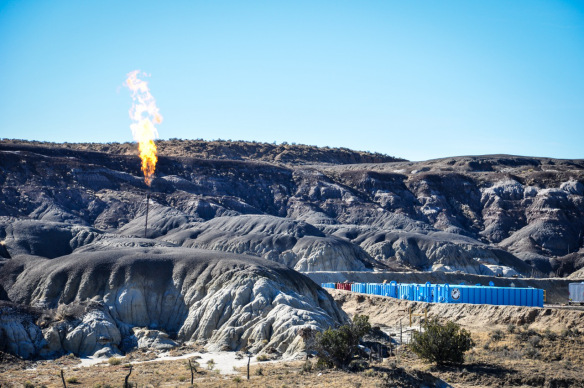
Flaring on well in Lybrook badlandsFlaring, where the oil and gas industry purposefully burns off natural gas while producing oil, is the ultimate waste. Here, flaring at a fracking site on public lands in northwestern New Mexico was condoned…

View original post 641 more words

Finnish owls’ lives, new book

petrel41's avatarDear Kitty. Some blog

This video says about itself:

TENGMALM´S OWL, Finland

TENGMALM´S OWL, Aegolius funereus, Helmipöllö, Ylämaa Leino, 28.5.2009

From British Birds:

Moult, ageing and sexing of Finnish owls

Published on 05 January 2015 in Book reviews

By Heimo Mikkola and Jouni Lamminmäki

The Ornithological Society of Suomenselkä, Saarijärvi, 2014; pbk, 96pp; photographs and line-drawings

ISBN 978-951-98263-1-8 Subbuteo code M24340 £17.50

Until now, accurate data on the moult of European owls has been somewhat fragmented. This handbook brings together all current knowledge available on the moult, age and sex determination of the 13 species of European owl. The book begins with a useful glossary of terms and abbreviations used in the tables and throughout the text. It is followed by a general overview of moult and its use in ageing and sexing, and aspects such as the process and sequences of moult, how moult varies between species…

View original post 235 more words

Water rail in Sweden, video