‘Anti-fracking is terrorism’, British police says

petrel41's avatarDear Kitty. Some blog

This video from the USA says about itself:

6 May 2013

Fracking endangers national parks.

Apparently companies mining for energy don’t have to be within the boundaries of a National Park to cause harm to it.

Fracking — the practice of hydraulic shale fracturing to extract natural gas — has become popular around several parks and its effects upon them are being increasingly noticed.

According to a report put together by the National Parks Conservation Association, a watchdog group, North Dakota’s Theodore Roosevelt National Park is particularly vulnerable.

Known for its stargazing opportunities, the night sky has been compromised by both the light coming from surrounding fracking sites and an increase in noise pollution. It’s suspected that water pollution will soon follow.

The opening of multitudes of natural gas extraction sites has also created job opportunities, causing the area to experience a population boom. Due to a shortage in…

View original post 464 more words

A fascinating presentation: “A History of Western Wild Carnivores”


editedkirkrobinson1947

By Sharon St Joan


A chance encounter with a big male grizzly bear required quick thinking and some gentle words of persuasion to escape alive. Cougars from one region of Utah have blue eyes and those from other regions don’t. How the jaws and teeth of carnivores actually work. How, sadly, only a few hundred wolverines are left. And a beautifully clear explanation of trophic cascades – the reasons why the eco-system really needs for top predators to be protected, instead of being killed.


Kirk Robinson, Executive Director of the Western Wildlife Conservancy, showed slides of magnificent wild animals from all over the American West and Canada too, explaining their natural history and the vital role that they play in nature.


On December 3, 2016, he spoke to a packed, attentive crowd at the Best Friends Visitors Center, in Kanab, Utah, as part of Wild Kane County’s series of wildlife programs.


In case you missed this terrific talk, if the angels of technology are with us, we’ll soon have a video posted on Youtube that you can watch.


Photo: Gary Kalpakoff


Good great egret news

Five Years Of Protection From Drilling

Organikos's avatarOrganikos

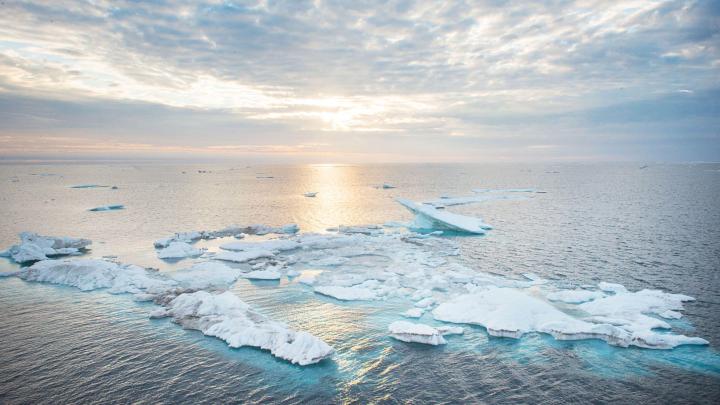
web_eho_6328-editMelting sea ice in the Chukchi Sea, one of the areas included in the ban.Photo:Esther Horvath

Thanks to Audubon Magazine for their coverage of this news:

U.S. Offshore Drilling Banned Along Arctic and Atlantic Coasts for Next Five Years

A new federal leasing plan released today outlines where energy companies can look for oil while protecting vital bird habitat.

by Martha Harbison

After months of deliberations, the Bureau of Ocean Management announced its final five-year plan for offshore energy-exploration leases today. In that plan, no drilling leases would be available in U.S.-held Arctic and Atlantic waters from 2017 to 2022, meaning that no new drilling could happen in those areas until at least 2022. 

View original post 296 more words

Saving bats in Fiji

petrel41's avatarDear Kitty. Some blog

This video says about itself:

24 April 2011

Here we have a fruit bat enjoying a ripe papaya in the backyard of the house in Savusavu. A bat is a mammal and there are lots of them here in Fiji.

From BirdLife:

What does the Bat say??…..SAVE ME

By Steve Cranwell and Sialesi Rasalato, 30 Oct 2016

Bats are the only remaining native mammals that survive the gruelling impacts of mother-nature, developments, poaching and invasive alien species predation in Fiji and likewise in most Pacific countries. Studies reveal that there are six species of bats in Fiji, three of which are cave dwelling; Fijian Blossom bat (Notopteris macdonaldi), Pacific Sheath-tailed bat (Emballonura semicaudata), the Fijian Free-tailed bat (Tadarida bregullae), and three are tree dwelling; Samoan Flying fox (Pteropus samoensis), Pacific Flying fox or the Insular Flying fox (Pteropus tonganus ) and the Fiji Flying fox (

View original post 564 more words

Bluethroat on video

Iridescence & Pretty, Shiny Natural Things

Organikos's avatarOrganikos

lead_960-5 Matthew Jacobs

The Atlantic’s science writers are back in the saddle, leading the way with the best stories recently:

Why Do These Plants Have Metallic Blue Leaves?

Ooh, shiny

ED YONG

Roses are red but violets aren’t blue. They’re mostly violet. The peacock begonia, however, is blue—and not just a boring matte shade, but a shiny metallic one. Its leaves are typically dark green in color, but if you look at them from the right angle, they take on a metallic blue sheen. “It’s like green silk, shot through with a deep royal blue,” says Heather Whitney from the University of Bristol.

And she thinks she knows why.

View original post 339 more words

Birds of Australia, Part 1 of 2

Jet Eliot's avatarJet Eliot

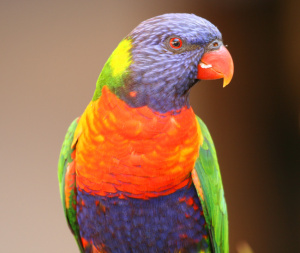
Rainbow Lorikeet, Australia Rainbow Lorikeet, Australia

Some of the world’s most colorful birds live in Australia, a continent boasting over 800 bird species.

For anyone new to this curious land–whether they’re a birder or not–seeing brightly-colored parrots and birds as big as humans is a fun adventure.

This week I present a two-part series on the birds of Australia, highlighting photos and anecdotes of some of my favorite birds.

Sulphur-crested Cockatoo Sulphur-crested Cockatoo

Here is a list of Australia’s birds, impressive with so many exotic species.

Do I have a favorite? Oh yes.

My favorite Australian bird siting:  the southern cassowary.

Southern Cassowary, male, Australia Southern Cassowary, male, Australia

Listed as threatened and declining, this was a true thrill. The bird was taller and heavier than me, and took an aggressive approach when we unknowingly came close to what we suspected was his nest.

Never have I been so threatened by a bird.

Emu greets us at Mareeba Wetlands Emu greets us at Mareeba…

View original post 124 more words

Remote Living, Well Done

Organikos's avatarOrganikos

980x (8).jpgEdinburgh of the Seven Seas, Tristan da Cunha, South Atlantic Ocean michael clarke stuff / Wikipedia

Thanks to EcoWatch for keeping us posted on the greenish news from the bottom edge of the planet:

World’s Most Remote Village Is About to Become Self-Sufficient World’s Most Remote Village Is About to Become Self-Sufficient 

The most remote village on Earth, located on Tristan da Cunha in the South Atlantic Ocean, is about to get a 21st century upgrade thanks to an international design competition aimed at creating a more sustainable future for the farming and fishing community.

View original post 162 more words

Solar Rising

Organikos's avatarOrganikos

4000 A road divides solar panels at the Ivanpah Solar Electric Generating System in the Mojave Desert, Nevada. Photograph: Bloomberg/Bloomberg via Getty Images

Those of us who live near the Kochi Airport in Kerala, India feel pretty proud of our 100% solar-powered access to the outside world; but this story tells us to expect even more in the USA soon:

US energy shakeup continues as solar capacity set to triple

Solar expected to almost triple in less than three years by 2017 as coal continues to fall, solidifying gas as country’s chief electricity source, reports Climate Central

Bobby Magill for Climate Central, part of the Guardian Environment Network

Solar power capacity in the US will have nearly tripled in size in less than three years by 2017 amid an energy shakeup that has seen natural gas solidify its position as the country’s chief source of electricity and coal power continue to…

View original post 355 more words