Author: sharonstjoan
Poet, writer, and advocate for wildlife, wild lands, and the earth. President, Forest Voices of India - a U.S.-based group which aids charities in India that further education, culture, the well-being of women, children, and animals, and the restoration of sacred groves.
websites:
https://wordpress.com/view/forestvoicesofindia.com
https://wordpress.com/view/echoesinthemist.com
https://wordpress.com/view/wildvoices.world
book: Glimpses of Kanchi
https://www.amazon.com/Glimpses-Kanchi-Sharon-St-Joan/dp/1982901179/ref=sr_1_1?keywords=Glimpses+of+Kanchi&qid=1581769003&sr=8-1

 Intently listening
Killdeer plovers in Florida, USA

This video from the USA says about itself:
22 December 2016
Killdeer running and hunting insects (Charadrius vociferus). They remind me of little roadrunners and although they are technically shorebirds in the Plover family they really like to spend their time running in open grassy and dirt areas. …
Fall migrants swell the Florida population July through November, and spring migration occurs primarily in March and April. The Killdeer is the most common and widely distributed shorebird in Florida. The absence of the species from most of mainland Monroe County is to be expected, as mangroves and saw grass are not preferred breeding habitats.
Related articles


View original post 34 more words
Solar Road In Normandy!!!!


When we think of Normandy, apples and oysters come to mind. Calvados, too. We are happy those traditions endure but even happier to see the roads there as a hotbed of innovation: World’s first solar panel road opens in Normandy village Route in Tourouvre-au-Perche cost €5m to construct and will be used by about 2,000 […]
A call for Wisconsin wolf advocates to step forward to protect an endangered species
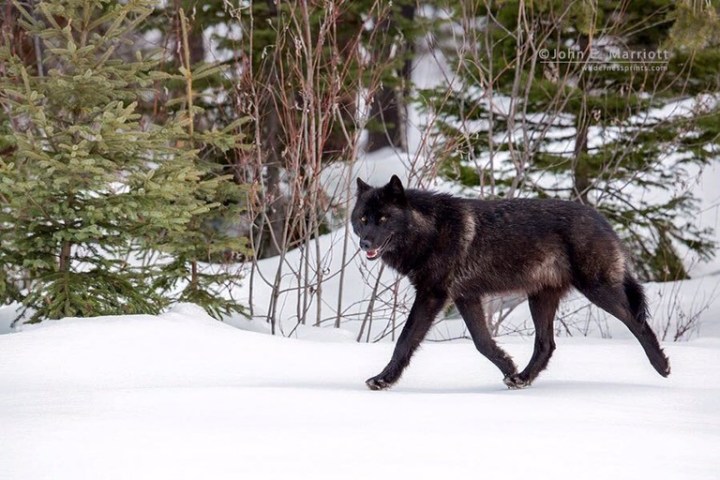

 The theft of Wisconsin’s natural resources must not be tolerated. Wisconsin has a long rich history of public owned water, land and wildlife. This is a call for Wisconsin wolf advocates to step forward to protect an endangered species because the current administration, Wisconsin’s governor, has called for a hunt on its wolves. Killing an endangered species is not how to manage them. Email wolvesdouglasco@gmail.com to find out how you can get involved.
Wolves of Douglas County Wisconsin continues to work for education, awareness & advocacy for the benefit of Wisconsin’s wild wolf. WODCW advocates for wolves to be kept on the Endangered Species list. In the case that wolves are taken off the ESL: WODCW works for transparency at the state level of wolf management that includes all stakeholders. WODCW will work legislatively to stop trophy hunting of Wisconsin’s wolves. WODCW will promote non lethal wolf management. WODCW is…
View original post 43 more words
Obama Administration Protects U.S. Waterways From Coal Industry

Earthjustice News Release
Obama Administration Finalizes Action to Protect U.S. Waterways and Communities from Destruction by Coal Industry
Washington, D.C. —Today, the Department of the Interior’s Office of Surface Mining Reclamation and Enforcement released its final Stream Protection Rule, a modest update to the rules intended to protect our Nation’s water resources from damage by destructive coal mining practices, including mountaintop removal mining in Appalachia. Action to strengthen these protections is long overdue, and more work still remains to be done. Over the last thirty years, a combination of weak rules and poor enforcement has allowed mountaintop removal operations to destroy an estimated 2,000 miles of streams in Appalachia, and pollute even more. This destructive practice has also been linked to such harmful health problems as birth defects and cancer, putting countless communities at unnecessary risk.
View original post 235 more words
California Plan To Save Wolves
Center for Biological Diversity News Release
California Wolf Plan Sets Road Map for Conserving Small Population
Two Breeding Pairs for Two Straight Years Could Trigger Reduced Protections
SAN FRANCISCO— The California Department of Fish and Wildlife has released its final plan to guide conservation and management of a small population of gray wolves well into the future. One of the strengths of the plan, which was released late Tuesday, is its emphasis on nonlethal methods to deter conflicts with livestock. But it would also seek to reduce wolves’ federal protection status from “endangered” to “threatened” when the population reaches a threshold of only two breeding pairs for two consecutive years — far fewer than what independent scientists say is needed for a secure population.
View original post 803 more words
Solar Now Produces a Better Energy Return on Investment Than Oil

The future is not good for oil, no matter which way you look at it. — Motherboard
*****
Solar — it’s not just a clean power source producing zero emissions and almost no local water impact, it’s also now one of the best choices on the basis of how much energy you get back for your investment. And with climate change impacts rising, solar’s further potential to take some of the edge off the harm that’s coming down the pipe makes speeding its adoption a clear no-brainer.
In 2016, according a trends analysis based on this report by the Royal Society of London, the energy return on energy investment (EROEI) for oil appears to have fallen below a ratio of 15 to 1 globally. In places like the United States, where extraction efforts increasingly rely on unconventional techniques like fracking, that EROEI has fallen to 10 or 11…
View original post 751 more words
Bird of the Day: Silver-eared Mesia


Mexico Protects Islands Off Baja California’s Pacific Coast
The San Diego Union reported
Mexican President Enrique Peña Nieto established a new marine biosphere reserve on Monday covering a broad area that includes the Coronado Islands near the U.S. border and Todos Santos Island, site of a famed surfing spot off the coast of Ensenada.
Read story at Mexico protects islands off Baja California’s Pacific Coast – The San Diego Union-Tribune
Saving penguins in Argentina
This video from Argentina says about itself:
The comeback of the Magellanic penguins
24 May 2016
During these months this Peninsula is home to birds that have adapted to green life better than anyone: the penguins.
From BirdLife:
Protecting the penguins of Patagonia
By Esteban Frere, 12 Dec 2016
“It is with some consternation that seabird biologists return to colonies they haven’t visited for many years. The hand of man has seen many colonies around the world dwindle or even vanish.” Fortunately, for some species a little conservation goes a long way.
Esteban Frere, South America Coordinator for BirdLife’s Marine Programme, started his career as a biologist by studying the Magellanic PenguinSpheniscus magellanicus. He recently returned to Patagonia to help survey some of the colonies there.
Magellanic penguins are probably not the penguins most people think of when they hear the word ‘penguin’. They may…
View original post 597 more words
 Art, animals, and the earth