African governments against poisoning vultures

Good news – sort of…

petrel41's avatarDear Kitty. Some blog

This 2015 video is a documentary about African vultures.

From BirdLife:

African governments commit to preventing poisoning of wildlife

By Shaun Hurrell, 3 June 2016

Moved by the plight of their continent’s endangered vultures and what this could mean for people, African Ministers gave their support to BirdLife’s vulture campaign last week in Nairobi at the UN Environment Assembly. This was further cemented by the approval of a new resolution on wildlife crime and trade that means African governments can now take action to prevent the poisoning of vultures.

It’s hard to think of a context in which you would use the word ‘poison’ without shuddering.

The thought of a murderous act, a tainted and corrupt ideology, or a toxic concoction itself – or even a malicious blend of all three – surely leaves no human feeling good.

But today we celebrate a use of the word in…

View original post 1,055 more words
Which animals kill humans?

Birds in Libya, new book

petrel41's avatarDear Kitty. Some blog

This 2014 video is about the birds of Libya.

From BirdLife:

New book release from Libya brings joy to ornithologists

By Obaka Torto, 29 May 2016

Bird conservation and identification in Libya has reached a new milestone with the release of a new guide titled ‘Birds of Libya’. This book is an annotated checklist of the 350 bird species recorded in Libya.

There is information on the geography and climate, a comprehensive list of all the recorded bird species of wild origin, a biogeographical analysis of the breeding species and the place of Libya in the Mediterranean and Palearctic–Afrotropical migration systems. The annotated checklist also provides data on the species’ status, phenology, distribution, habitat, nesting and the origin of migrants and winter visitors.

In recent times, Libya has progressed in the field of bird conservation. One of the major challenges to bird conservation in…

View original post 428 more words

Remembering Dian Fossey–Commentary by Captain Paul Watson

Exposing the Big Game's avatarExposing the Big Game

1546263_10152866804715932_4014807999575359152_n

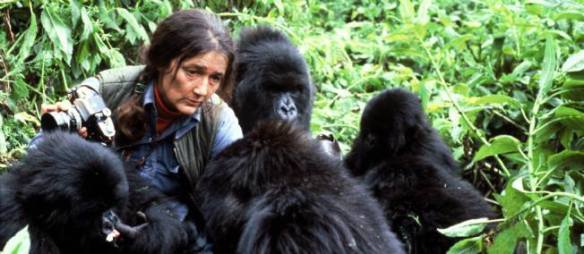
DIAN FOSSEY
January 16th, 1932 – December 26th, 1985

WE SHOULD NEVER FORGET

Commentary by Captain Paul Watson

Twenty-nine year ago today Dian Fossey was murdered at her camp in Volcanoes National Park in Rwanda. She was 53.

Fossey was one of the foremost primatologists in the world while she was alive and along with Jane Goodall and Birutė Galdikas, the group of the three most prominent prominent researchers on primates (Fossey on gorillas; Goodall on chimpanzees; and Galdikas on orangutans) sent by Louis Leakey to study great apes in their natural environments.

On three occasions, Fossey wrote that she witnessed the aftermath of the capture of infant gorillas at the behest of the park conservators for zoos; since gorillas will fight to the death to protect their young, the kidnappings would often result in up to 10 adult gorillas’ deaths. Through the Digit Fund, Fossey financed patrols to…

View original post 881 more words

Jeff Corwin Speaks Out on Harambe’s Death – “Zoo’s Aren’t Your Babysitters”

Nabeki's avatarHowling For Justice

Here’s beautiful Harambe when he first entered his enclosure at the Cincinnati Zoo, which turned out to be fatal for him 😦   R.I.P

May 30, 2016

It’s the responsibility of parents to be vigilant when caring for their small children. Harambe, the critically endangered lowland gorilla, didn’t have to die!!

After Gorilla Death, Animal Expert Jeff Corwin Says Zoos ‘Aren’t Your Babysitter’

By Jack Phillips, Epoch Times

‘Take a break from the cell phone, the selfie stick and the texting’

Jeff Corwin, an animal and nature conservationist, who is the host and executive producer of TV programs “The Jeff Corwin Experience” and “Corwin’s Quest,” has spoken out after a gorilla was shot and killed at the Cincinnati Zoo.

A 4-year-old boy fell into the gorilla’s enclosure. Zoo officials said the gorilla, a 17-year-old named Harambe, was dragging the boy around. They opted to shoot and kill the great…

View original post 221 more words

Yellowstone wolf researcher Kira Cassidy highlights the value of what old individuals can teach us…

Yellowstone wolf researcher Kira Cassidy highlights the value of what old individuals can teach us…

Rachel Tilseth's avatarWolves of Douglas County Wisconsin Film Company

Aging in the wild: lessons from animals about the value of growing old – Kira Cassidy – TEDxBozeman

What do wolves and societal attitudes toward elderly humans have in common? Kira Cassidy relates her research on Yellowstone wolves with other wildlife studies focused on understanding the value of older individuals in group-living species. Cassidy explains how these studies highlight the value of what old individuals can teach us: where we’ve gone wrong, what we might be missing, and what we can do to fix it. Kira Cassidy was raised in Illinois where she developed a deep respect for wildlife and the outdoors through a childhood of (purposely) getting lost in the forest, raising three baby raccoons, and gardening for subsistence with her family. Kira holds her M.S. degree from the University of Minnesota, with projects focusing on territoriality and aggression between packs of gray wolves. Now working as a Research…

View original post 123 more words

Reforesting the Amazon

Organikos's avatarOrganikos

NEW VENTURE: Deniston Mariano Dutra and his son Matheus Correia Dutra harvest cacao seeds. After giving up on cattle, the family replanted their farm with these indigenous trees. © Kevin Arnold via TNC

We care deeply about Amazonia, and Brazil is the country with the most deforestation in the river region, specifically from cattle ranching. But good news is coming from The Nature Conservancy in the April/May issue, where, as the article’s subtitle reads, “After decades of turning forests into pastures and fields, Brazilian landowners have begun reversing the trend.” Julian Smith reports for the TNC Magazine:

Lazir Soares de Castro stands amid white and gray Nelore cattle on his ranch in São Félix do Xingu, a remote and sprawling county on Brazil’s northeastern Amazon frontier. Beyond a wooden fence, high grass and scrub brush fade into sporadic trees in the distance.

Still vital at 70, Soares describes…

View original post 935 more words