The magic of trees and stained glass art

3936228
Totem mandala – Wolf
1946579
The Goddess Cybele and her Lions. There is no lettering on the original art work.


9936177
African elephant. 10″ circle.


Laura J. Merrill spent twenty-two years designing and creating work in stained glass – both large works and smaller suncatchers, mandalas, and boxes. The animals and mythical figures invoke magical and spiritual levels beyond.


Most of the stained glass work has been sold over the years, but a few remain.  When they are all gone, there will be no more.


Laura is now writing a series of books about trees, Secret Voices from the Forest.


To see more of Laura’s beautiful artwork, click here.


To learn more about or purchase Volume One of Secret Voices from the Forest, click here.

WildEarth Guardians: Another victory for clean air, defeat for coal

cleanairZion'sIMG_5291

By Jeremy Nichols, Climate and Energy Program Director,
 WildEarth Guardians

It’s another victory for clean energy and our communities scored by WildEarth Guardians’ legal efforts.

This time, it’s a big one: a coal-fired power plant shut down.

That’s according to the terms of an agreement we reached with a utility in southeast Colorado, which in 2009 converted a natural gas-fired power plant to coal.

As the Denver weekly, Westword, put it, it’s a “stunning defeat for the beleaguered coal industry.”
The settlement resolves nearly four years of litigation over clean air violations at a troublesome coal-fired power plant in the eastern Colorado town of Lamar.

It also puts at ease the minds of residents and WildEarth Guardians’ members, Shirley and Charles Warren, who have had to deal with the coal-fired power plant threatening the air they breathe and the sanctity of their community.

Fortunately, we were able to strike a deal with the utility that both resolved the issues at the coal-fired power plant and gave them a chance to find a better way to power southeastern Colorado.

This is a major victory and a clear sign of the effectiveness of our tactics.  Most importantly, it’s a testament to the power of your support.  Thank you so much.

For our climate and our communities, here’s hoping for more success to come.

For Clean Skies,

Staff_Photo_Jeremy_Nichols_r.1

Jeremy Nichols

Climate and Energy Program Director

WildEarth Guardians

jnichols@wildearthguardians.org

To visit the website of WildEarth Guardians, click here

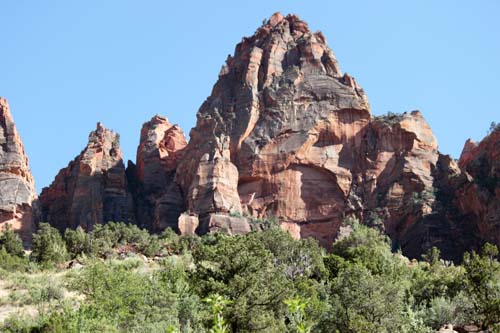
Top photo: © Sharon St Joan / Clean air, rocks and trees at Zion’s National Park, 2012.

Second photo: Courtesy of WildEarth Guardians / Jeremy Nichols.

INDIA: Last day for comments on India’s Meat Export Policy

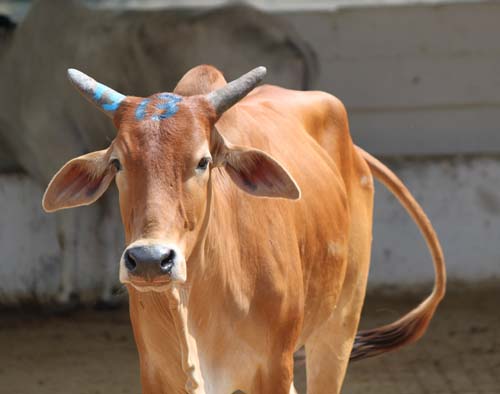
bulloneIMG_3744

Today is the last day to sign a petition to the Indian government requesting a review of the Meat Export Policy.

Information on how to do this is below.

India has a tradition going back thousands of years of reverence for all animals, especially cows and bulls.  That these animals are now being slaughtered and their meat being exported abroad is a radical departure from Indian tradition, and the policy of meat export from India must be reconsidered.

Many thousands of animals are being bred and slaughtered for the sole purpose of their meat being exported.

As well as legal slaughterhouses, there are thousands of illegal slaughterhouses being run in India.  These illegal slaughterhouses abide by no rules and no humane standards, so the level of cruelty is enormous.  There is also immense cruelty involved in the illegal transport of the animals on their way to being slaughtered.  These slaughterhouses and the cruel transport to them exist only because there is such a huge market for beef, much of it exported.

It takes ten times more water to raise one kilograms (2 ¼ pounds) of beef than it does to raise one kilogram of rice.  Parts of India are now suffering from a drought.  Raising beef is a waste of water that harms the Indian people.  Only a few individuals who are producing and selling beef benefit from meat export. Meat export is harmful, not only to the animals, but to the Indian people as well, who suffer from shortages of food and water.

To sign the petition:

Go to   http://www.ratnaworld.com/petition

Please also send a brief, polite email today to

rsc2pet@sansad.nic.in

Shri R.P. Tiwari,

Deputy Director

Rajya Sabha Secretariat.

Thank you!

To have a more in-depth understanding of this issue, below is the communication sent to Mr. Tiwari, the Deputy Director of Rajya Sabha Secretariat, by Blue Cross of India.  It explains with great clarity and logic the reasons why the Meat Export Policy needs to be reviewed.
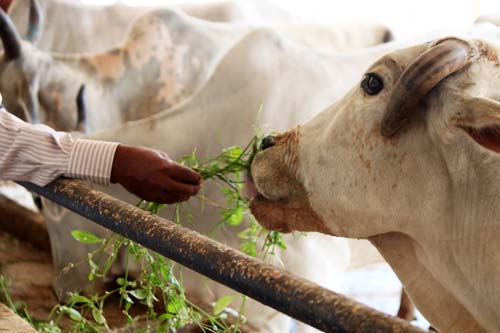
bulltwoIMG_3786

Communication from Blue Cross of India asking for a review of India’s Meat Export Policy

Sent by M. Shantilal Pandya, Chairman,Blue Cross of India 

The petitioner is sending in this plea in his capacity as  the Chairman of BLUE CROSS OF INDIA,  Chennai – one of India’s most active and largest animal welfare organisations which is in its Golden Jubilee Year and begs leave to file this petition praying for a revision of the “Meat Export Policy” of the Government of India urging an urgent change in the current policy.

While we are an animal welfare organisation, all of us on the Governing Body of the Blue Cross of India work for organisations doing work for human beings and to us it is not a question of animals or people; it is animals and people.

The petition is based on several valid grounds including environmental; economic; constitutional; legal;  and opposition by several statutory bodies including the National Commission on Cattle, Law Commission of India, and the Animal Welfare Board of India. It is also based on the inherently cruel nature of the business and how abhorrent it is to our millennia old culture of ahimsa. 

In a case presently being heard by the Hon’ble Supreme Court, Hansraj Bharadwaj vs Union of India and others, the Hon’ble Court directed the Animal Welfare Board of India to collect and present data regarding the number of licensed and unlicensed slaughter houses in the states of India. A reading of the list is most depressing: the number of unlicensed slaughter houses in India far outweighs the number of licensed ones! And we are acutely aware that this list is incomplete – in Chennai, according to the Tamil Nadu government’s answer, there are two unlicensed slaughter houses in Chennai as against one licensed slaughter house. The petitioner avers that there are over a dozen unlicensed slaughter houses in Adyar (one postal division of Chennai)  alone!

In Orissa, there are 51 licensed slaughter houses versus 2073 unlicensed ones as per reports received from the Orissa government. In other words, the unlicensed ones outnumber the licensed ones by a factor of more than forty to one!

Arunachal Pradesh and  Andaman and Nicobar have reported that there are no licensed or unlicensed slaughter houses in both the areas – starnge that non-vegetarian items are freely available in both places!!

In all states which have responded, there is good reason to believe that the number of licensed slaughter houses is accurately reported – the number of unlicensed ones reported by the states is only a small fraction of those that exist.

It is further stated by the petitioner that virtually every rule in the Slaughter House Rules of 2001 under the Prevention of Cruelty to Animal Act of 1960 is broken by virtually every one of the licensed slaughter houses in India. Every rule in the Transportation of Animals Rules is also routinely flouted and authorities concerned turn a blind eye to this. 

  The attention of the Hon’ble Members of the Petitions Committee is drawn to the FAO report, Livestock’s Long Shadow; The World Water Development Report of 2003; Brahma Chellaney’s Water – Asia’s New Battleground; Vrinda Narain’s Water as a Fundamental Right – A Perpespective from India; Sharad K. Jain’s Sustainable Water Management in India Considering Likely Climate and Other Changes; Vandana Shiva’s The Transcript,  her Stolen Harvest; and her other writings;   Praveen Sharma’s Water – The Hidden Export and other sources which will be referred to in this petition.

 Environmental reasons for stopping the export of meat from India:


It is an indisputable fact that the conversion of animal feed to meat in any form is a very low efficiency process with a conversion factor of between 6:1 and 12:1. In other words, between 6 and 12 kilograms of corn or soy beans are required to produce one kilogram of meat.

In addition, it takes ten times more water to raise a kilogram of beef than it does to raise one kilogram of a water-intensive crop like rice.

The country’s natural resources are being rapidly depleted because of the meat export business and it is estimated that 16,000 cubic meters of water is required for every tonne of beef exported. India is one of the leading exporters of “virtual water” in the world! And this, when millions of our countrymen have limited access to potable water!

 Water is a public and material resource, fundamental to life and meant for the common good as mandated by the Public Trust Doctrine, which is part of the law of our land and as directed by Articles 21 and 39(b) of our Constitution.

Economic reasons for stopping the export of meat from India:

Agriculture or Agricide? This is a question that must be answered by this Hon’ble Committee.

No indigenous culture – not China and not India – has ever fed grain to animals. Animal have eaten what humans could not eat.

The economic viability of intensive animal agriculture in India given the grain and water requirements is non-existent. The business goes on only because no economic price is placed on the vast quantities of water required and the subsidies on the animal feeds. Land that can profitably be used for growing food for humans is used to grow feed for animals at great expense to the unknowing and un-informed public.

In many places, fertile rice fields are being destroyed to put up sheds housing upwards of 50,000 chickens each, destroying agricultural land and causing pollution to such an extent that the lands will be rendered unproductive for crops for years to come even after the factory farms are stopped.

The public health costs of the meat industry are astronomical. New and lethal diseases being born from factory farms including zoonotic ones like bird flu and swine flu have been an added burden on our public health system.

The financial gains of the meat export industry are centered in the hands of an “elite” few. In addition, these people are given subsidies to set up slaughter houses and tax-benefits for exporting the country’s cattle wealth. The nation’s food security is threatened because renewable energy and renewable sources of fertilizer from rural farm animals are being destroyed.

Animals are a primary source of fertilizer and draught power, especially in rural areas. According to Dr. Vandana Shiva, in the case of one export-oriented slaughter house alone, meat exports earned $45 million, whereas the estimated contribution of the slaughtered animals to the economy if they had been allowed to live was $230 million.

Constitutional grounds for stopping the export of meat from India:

The petitioner submits that the State is duty bound to follow the Directive Principles and the Fundamental Duty as enunciated in Article 51-A of our Constitution.

We are, therefore, constitutionally bound to show compassion to living creatures. It is reprehensible to most of us that cattle are condemned as “old and useless” to enable them to be slaughtered when the ruling by the Hon’ble Supreme Court in State of Gujarat Vs Mirzapur (October 26, 2005) stated that bovine cattle remain ‘milch and draught’ even if they are so-called ‘old and useless’.

The above ruling also emphasised the fact that the State is also a citizen and it is therefore required to honour the Constitutional mandate of Article 51-A.

Cattle that have served us for milch and draught for their entire “useful” life cannot be slaughtered under horrendous conditions to be exported just for the sake of what is rightly called “filthy lucre”.


National Commissions and Statutory bodies opposing the export of meat from India:

The National Cattle Commission under the Chairmanship of Justice Lodha and  the Animal Welfare Board of India – a statutory body set up by an Act of Parliament – both have recommended that the export of meat from India should be stopped.

The inherently cruel nature of the meat export industry:

The father of our Nation, Mahatma Gandhi, stated: “The greatness of a nation and its social progress can be judged by the way its animals are treated.”

That each and every animal that is slaughtered dies with a great deal of pain and suffering cannot be disputed.

The cruelty is inherent in the raising, transportation and in the actual slaughter process.

Virtually every rule under the Prevention of Cruelty to Animals Act (59 of 1960) is violated in the process.

Should the country that was the birth place of Ahimsa continue to kill and export animals knowing that they are subject to the most heinous of atrocities?

Photos: Sharon St Joan / Bulls rescued by Blue Cross of India in 2012, from being illegally transported to slaughter.  

Uttarakhund: help still needed for flood-stranded mules, donkeys, and horses

PFA Dehradun flood relief team treating one of the horses

On June 16, enormous floods cascaded through Uttarakhand in northern India, sweeping away thousands of people and devastating the beautiful countryside in the foothills of the Himalayas.

Several of India’s most holy temples are found there, including Kedarnath, which was left still standing, but severely impacted with many feet of mud, and many deaths in and around the temple.

Among the casualties in the area are thousands of mules, donkeys, and horses who carried pilgrims up the steep mountains to the sacred sites.  Many animals died in the floods and others, sadly, have died since in the flood’s aftermath, as they sought food and safety higher up on the precarious mountain slopes. However, thousands of mules and other equines remain stranded, in urgent need of help, on the far side of the rivers, including the Alaknanda River.

All the bridges on this section of the river were destroyed in the floods. The animals need to be led to safety across temporary bridges, and there is an immediate need for helicopters to air-drop fodder to them. Some animal fodder has been provided, but only a fraction of what is needed.

Several animal organizations are helping, including Humane Society International, PFA Uttarakhand, PAL Thane, PFA Dehradun, Animal Ashram, Help Animals India, and others.  The following information is from PFA Dehradun, one of the groups assisted by Help Animals India.

Horses carrying pilgrims on the route up to Kedarnath, before the floods

Recent news

Starting with the most recent news – on July 3, 2013, Manavi Bhatt, of PFA Dehradun, wrote that the government has now begun building a temporary bridge for the evacuation of the animals. Earlier, on June 26, the army had built an iron foot bridge at Lambagarh. PFA Dehradun had been asking the District Minister of Chamoli to deploy the army to build a bridge across the River Alaknanda near Hemkund Trek, a 15,000 foot high sacred site, with a glacial lake surrounded by seven mountains, where many animals remain stranded.

Two days earlier, on Monday, July 1, Manavi Bhatt wrote “The situation on the Hemkund Trek is getting more and more critical by the day.” 1500 animals are stranded at Hemkund Trek, including 350 that PFA volunteers found stranded in Pulana Village, where “not a single air-drop of animal fodder has been done there as of today.”

Nearby Ghangaria serves as a base camp for travelers going to Hemkund or to the Valley of Flowers.  There are animals stranded there too without food.

Kedaranath horses before the floods

Tons of animal fodder are lying at airports, but with bridges and roads washed out, logistics of getting it to the animals are difficult. Helicopters need to be requisitioned.

The area is filled with many rivers of rushing water and very steep terrain.  Most of the stranded pilgrims have been evacuated, though there remain the bodies of the dead to be collected, and there are villages higher up where people are still in need of help. Some of the local guides have stayed behind with their stranded animals.

On June 29, Manavi Bhatt wrote that PFA Dehradun volunteers Pankaj Pokhriyal, Jasbir Singh, and others were reporting from the scene of the disaster that evacuating the animals is essential. There are very large numbers of mules and horses, and the minimal amount of food that is reaching them cannot continue to be supplied. No food has reached the animals stranded higher up on the slopes. She expressed her thanks to Animal Ashram of Lucknow for transporting fodder, at their own expense, all the way from Lucknow (in Uttar Pradesh, just south of Uttarakand) to feed the animals.

Relief team

On July 26, a joint Team of Raahat Veterinary Hospital (PFA Dehradoon) AAGAAS Federation and PAL Thane, supported by Help Animals India, set out to conduct extended relief operations for the working animals in the Chamoli District, Uttarakhand. There had been a prior plan already in place to help the animals who work so hard going up and down the trails carrying the pilgrims, and an on-the-ground assessment had been done prior to the floods.

It’s not easy for someone who’s never been there to form a clear picture of where the sites are and of the situation.  All disaster are difficult, and this one is no exception.  Stressed and overwhelmed government authorities are trying to help the humans as a priority.  Animal groups are struggling heroically to help thousands of animals, with meager resources, not enough government help, difficult communications, dangerous rushing rivers, and the nearly insurmountable challenge of trying to get helicopters to air-drop fodder, and temporary bridges built to evacuate the mules, horses, and donkeys.

Help still needed

Help is still much needed, and animal groups continue to do exhausting work to get food and medical care to the animals.

To give a donation or sign a petition, here is the website of Help Animals India (caution – disturbing photos).       

To read this and other news, here is the Facebook page of PFA Dehradun (caution – disturbing photos).

Top photo: Courtesy of PFA Dehradun / Food relief team treating one of the horses. 

Second photo: anarupa_chowdhury / Wikimedia Commons / “This file is licensed under the Creative Commons Attribution 2.0 Generic License.”/ Horses on the route to Kedarnath, before the floods. 

Third photo: Samadolfo / Wikimedia Commons / This file is licensed under the Creative Commons Attribution-Share Alike 3.0 Unported license. / Horses on a hill near Kedarnath, before the floods, July 3, 2011.


Chennai, India: Kids’ imaginative animal art

LeaveWildlifeAlone two cropped

On March 2, 2013,  the C.P. Ramaswami Aiyar Foundation held an awards ceremony for their environmental program Kindness Kids.  Shri Dulichandji, Chairman, Karuna International, the Chief Guest, gave away prizes to the winners of contests.

“Leave Wild Animals Alone” was the theme of one of the artwork contests. Deer, peacocks, water birds, and other animals are happier and safer when not disturbed by humans.  They can live in the forest by a peaceful river.

Sadhakar one of kindness kidscropped

Kindness Kids reaches children in several Indian states, fostering kindness and compassion for animals and the environment.

To view Kindness Kids Facebook page, click here.  

INDIA, TAMIL NADU: A landmark ruling for cows

IMG_3819 rescued cows Blue Cross 2012 Feb


In a landmark decision, the High Court of Tamil Nadu ruled Thursday, February 7, 2013, that trucks in which cattle are being illegally transported through Tamil Nadu must be stopped and the cattle confiscated, that the care of the cattle seized is the responsibility of the police department, and that the trucks being used for transport are to be impounded while legal action is pending. The court case was filed by Radha Rajan.


For many years, cattle have been transported to slaughter in Kerala, one of only two Indian states in which cow slaughter is legal.  This sidesteps the intent of the ban on cow slaughter in all the other Indian states because the cattle are shipped to Kerala or West Bengal where it is legal to slaughter them. While the transport of cattle is not in itself against the law, overcrowding is illegal, and in many cases, as many as forty cows are being carried in trucks that are permitted to carry only six cattle.  This results in frequent injuries and severe suffering for the cows.


Cattle are regularly transported from states to the north such as Andhra Pradesh, to Kerala in the south, passing through Tamil Nadu.


For the police to have both the authority and the obligation to confiscate the cattle and impound the trucks will greatly impede the profitability of transporting cattle to slaughter – meaning that, over time, fewer and fewer cattle will have to endure the long, painful trips ending in slaughter, until the trade grinds to a complete halt.


Blue Cross of India, with the support of the Animal Welfare Board of India has led the way in a long legal battle over several years to protect cattle from inhumane, illegal transport.


Over the course of just this past year, since the beginning of 2012, Blue Cross has assisted police in the rescue of around four hundred cows from transport trucks.  The Tamil Nadu Police have done an excellent job of conscientiously enforcing the law and protecting the animals.


Goshalas, or cow sanctuaries, have been entrusted with giving sanctuary to the confiscated cows.  Blue Cross has, at this time, at its shelter 132 confiscated cows, and it is expected that all these animals will be able to be permanently placed and cared for in goshalas.  The system of goshalas has existed in India for thousands of years.  They were the world’s first animal shelters; many are run by the Jain community and many by Hindus.


Dr. Chinny Krishna, Vice-Chairman of the Animal Welfare Board of India, says of yesterday’s court ruling, “This will surely break the back of the cattle mafia…The judgment was a major victory for animals.”


Photo: Sharon St Joan / Rescued bulls at Blue Cross of India.

To visit the website of Blue Cross, click here.


RAINFORESTS: APP paper company will halt logging in natural forests

A rainforest in Thailand

On Tuesday, February 4, 2013, Asia Pulp and Paper (APP), the third largest paper company in the world, announced that, beginning immediately, it will no longer log trees from natural forests.  This is according to a February 5 article in The Guardian.

This follows a long campaign waged by environmentalists.

Aida Greenbury, APP’s managing director for sustainability said that it is time to take action against climate change.

This step will benefit the world’s rainforests and wildlife, including the Sumatran tiger and the orangutan.

In 2012, an investigation by Greenpeace led to the finding that endangered trees from the habitat of the Sumatran tiger had been used illegally in APP consumer products.  This led to a number of major clients, including Xerox, KFC UK, and Disney taking their business elsewhere.

The executive director of Greenpeace, John Sauven, called APP’s decision to halt logging in natural forests “highly significant.”  Sinar Mas, of which APP is a part, has interests in palm oil, as well as in pulp and paper. Palm oil plantations are a key contributor to the threat to Indonesian forests and the habitat of the severely endangered orangutan.

Scott Poynton, of Tropical Forest Trust, who helped negotiate the agreement with APP, expressed optimism that working together with the private sector in the future could result in reduced deforestation and greater hope for the world’s forests and wildlife.

Photo: © Yod Miansa-ard | Dreamstime.com


To read the original story in The Guardian, click here.


Thanks to SAI (Save Animals Initiative) Sanctuary Trust for letting us know about this encouraging news. To view their website, click here.


SCOTLAND: the atmospheric beauty of the Orkney Islands


Molly overlooking Hoy-edited


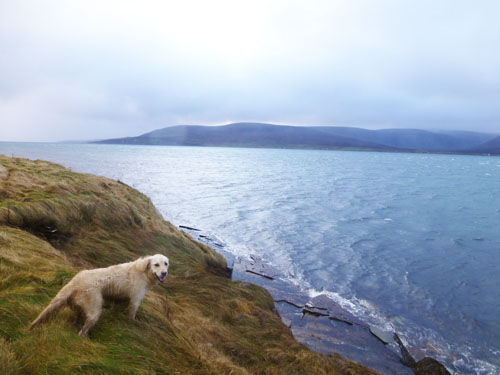
Molly, who looks like she’s having a good time, is standing on Graemsay Island, overlooking Hoy Sound.


Molly’s mom, Sue Anderson, a wildlife photographer and writer who lives on the Orkney Islands, writes:


“…I haven’t seen the otters since I returned and the seals don’t come ashore when the sea is rough. There is the most enormous colony of cormorants residing here; more than anyone has ever seen…


“…The weather here is wet and VERY windy at the moment, walking the dog takes hours, and we don’t get that far, battling against the wind takes ages! Still, the light when it’s gloomy can be very atmospheric.”


Apparently the cormorants keep their distance when Molly is around.


The Orkney Islands, at the northern tip of Scotland, have an immensely long history.


A hazelnut shell, which had been charred by a fire during Neolithic times, was recovered and dated to 6820-6660 BC.  An early permanent farm settlement dates from 3500 BC, around the time of the earliest pyramids in Egypt. Neolithic people lived in the village of Skara Brae around 3100 BC.


Probably the same enchanting, beautiful gloom pervaded the islands then, as it does now.


Wind blowing wave- edited


Photos: Sue Anderson


The book “Secret Voices of the Forest”

Quaking aspens near Aspen, Colorado


Did you know that quaking aspens are not separate trees, but are instead whole colonies of trees?  They are all connected underground through the same root system. The largest colony near Fishlake, Utah, may be 80,000 years old and covers more than 100 acres.


These aspens are lovely trees, fluttering in the breeze, a beautiful gold color in the fall.  Through a process called “phytoremediation,”  these and other plants can detoxify their surroundings by internal processes which transform harmful chemicals into less harmful ones.  Of course, it’s best if we don’t put harmful toxics into the air, water, and soil in the first place, but a lot of damage has already been done, and natural ways to help clean it up are a good idea.


One of the most remarkable aspects of Laura J. Merrill’s Secret Voices from the Forest is that it gives trees a voice, relating to them as conscious beings.


The book is organized according to eco-systems. Volume One: the West, the first of four volumes (the three others are yet to be published) highlights eleven species of trees, and a twelfth category, Old Growth Forests.  Each tree is described in detail, has a section in which the tree “speaks” to us, and then the birds, animals, and other plants that surround the tree also appear.


As well as enlightening, little-known scientific facts, and the inspirational words “spoken” by the trees themselves, also included are poems by Brian R. Mitchell.

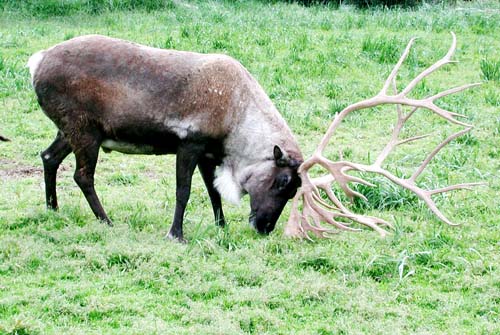
A male caribou in Alaska


Since Christmas is approaching, here is another fact that may have eluded you.  In caribou, the American name for reindeer, both the males and the females have antlers.  And, as we all know, Santa’s reindeer do have antlers.  However, male reindeer lose their antlers in the winter, so Dasher and his friends, though they all have male names, must really be female reindeer, who still have their antlers in the winter.  So, when you hear their hooves prancing across your roof on Christmas Eve, remind yourself that they are female reindeer, hard at work helping Santa deliver the gifts.


Along the Pacific Coast Ranges and the Great Basin can be found the Mountain Mahogany, and among this tree’s companions are kit foxes, very small cat-like foxes that can be observed sometimes at twilight darting across roads.  Another mountain mahogany companion is the Golden Yarrow that ancient people used to stop bleeding and that also attracts butterflies.  At the archeological site, Shanidar IV, in Iraq, dating from around 60,000 BC, yarrow was one of many herbs found there, as part of a Neanderthal flower burial.  So if you were wondering what Neanderthals were doing around 60,000 BC, they had already learned to use medicinal herbs.

Mountain Mahogany in Nevada


The Mountain Mahogany is part of the Rose family, which of course isn’t just roses, but also includes three thousand known species of herbs, shrubs, and trees, including a great many common fruits, like apples, pears, almonds, peaches, apricots, plums, cherries, strawberries, blackberries, and raspberries, as well as the flowers we know as roses.  Who would have guessed?


This beautifully designed and illustrated book is filled with fascinating lore about trees and the eco-systems that surround them, and how the plant and animal species interrelate with each other.


From time immemorial, in all places and at all times, trees have formed a bridge linking us, as humans, to the sacred. This has never been more true than in the present time, when even as trees and forests are under threat, and so many have already disappeared, this does not make the existence of trees less important, but more significant than ever.  Trees are key to all life, and if we wish to enable all plants and animals, and all of nature, to thrive on the earth, as well as ourselves, trees are a good place to start.


To order Secret Voices from the Forest, Volume One, the West from Amazon, click here.


Top photo: http://en.wikipedia.org/wiki/File:Maroon_Bells_Aspens.JPG / Wikimedia Commons / The Maroon Bells mountain near Aspen, Colorado, USA. Taken by Jesse Varner, Sep. 27, 2003. [1]


Second photo: Author: Laubenstein, Karen – U.S. Fish and Wildlife Service / “This image or recording is the work of a U.S. Fish and Wildlife Service employee, taken or made during the course of an employee’s official duties. As a work of the U.S. federal government, the image is in the public domain.” / http://en.wikipedia.org/wiki/File:Caribou_using_antlers.jpg / Wikimedia Commons / Caribou in Alaska using antlers [1]


Third photo: Author: Stan Shebs /  GNU Free Documentation License / / http://en.wikipedia.org/wiki/File:Cercocarpus_intricatus_13.jpg / Wikimedia Commons / Cercocarpus intricatus near the North Loop trail, Spring Mountains, southern Nevada (elev. about 2700 m)

New Zealand: Whanganui River granted personhood

On August 30, 2012, the New Zealand Herald, in an article by Kate Shuttleworth, reported that the Whanganui River has been granted legal status.  This is believed to be the first time anywhere in the world that a river has been given such status.  The iwi, who are Maori people, have signed an agreement with the government, which recognizes the river legally as a person.

According to a Wikipedia article, the word “iwi” does not really mean “tribe,”  its meaning is closer to “people,” and it refers to the social structure of the Maoris.

The Whanganui River, New Zealand’s third longest river, runs for 180 miles (290 kilometers) through the North Island.  The river has 200 rapids and is much appreciated by tourists for its white water.

Before the arrival of Europeans, many Maori villages were, and still are, located along the river, which has always held special importance for the Maori people. The Whanganui River iwi (the native people) have been in negotiations related to the river since 1873, seeking both their own rights and protection for the river.  Further details in the agreement are still to be worked out.

The principle agreed to is that the river is, in the eyes of the law, a legal person and will be represented in the future by two guardians, one from the iwi people and one from the government.

This development could set a precedent for establishing the “personhood” of natural entities in other countries, and that, clearly, would put efforts to protect them on a sounder footing.

Traditionally, in many countries, and perhaps in some way for many people in all countries, rivers and mountains are often thought of as having a spirit or a presence, as being a “person.”

Photo: James Shook / Wikimedia Commons / This file is licensed under the Creative Commons Attribution 2.5 Generic license. / Whanganui River

To read the article in the New Zealand Herald, click here.