Egypt: TNR for dogs and cats in Sharm El Sheikh

IMG_5751


By Ahmed El Sherbiny,

Chairperson of ESAF

Cairo, Egypt


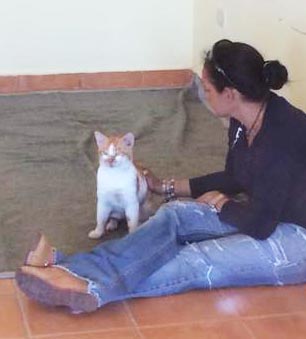
ESAF (the Egyptian Society for Animal Friends), working together with Vier Pfoten, the international animal organization based in Austria, Hauza Beach Resort, Sharm Safari Park, and Sharm Action for Animals are conducting a TNR program in Sharm El Sheikh that will run from November 29 through December 13, 2014.


The South Sinai Governor and the Sharm El Sheikh City Council are supporting this project.


We wish to express our heartfelt thanks to Vier Pfoten, Hauza Beach Resort, and Sharm Safari Park for their financial contribution, and to the SAFA group, particularly Diane Clement, Sally, and Roswitha for their efforts.


ESAF hopes to initiate more TNR projects in other governates in Egypt.


Photos: Courtesy of ESAF


To visit ESAF’s Facebook page, click here


IMG_5704-1IMG_5758 IMG_5776

Nepal and India: Saving animals from the Gadhimai sacrifice, part two


dawn report one 2-3 photooneedited


By Sharon St Joan


To read part one first, click here.


Opposition to the sacrifice grows


In the months running up to the time of the Gadhimai sacrifice, there has been a growing and very vocal opposition to the sacrifice, worldwide.


Baba Ramdev, a popular spiritual leader in India with a huge following, has spoken out against the sacrifice.


Dr. Chinny Krishna expressed his conviction that “this Gadhimai festival will be the last one to include any animals from India,” adding that “this year, there will be a major dent at least in the numbers of cattle.”


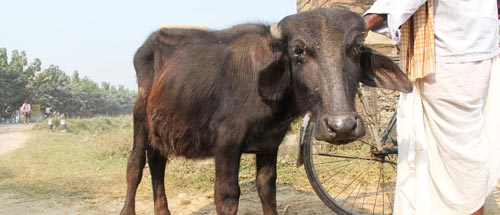
Buffalos, pigeons, goats, sheep, and chickens are also sacrificed. It is harder to catch and prevent the smaller ones from crossing the border.


two dawnreport one photo 1-1edited


On another level


There have been no shortage of contacts with the Chief Priest of the Gadhimai Temple and with the Nepalese government, and these continue.


Rudra Krishna, of Blue Cross, has written, “A team from HSI-India consisting of its Chair, Dr Nanditha Krishna, Alokparna Sengupta and N Jayasimha, Managing Director, are reaching Nepal on Monday Nov 24, along with Ms Gauri Maulekhi – Consultant to HSI (who has been in Nepal fighting this case for the last few months) in yet another attempt to persuade the temple authorities to abandon this killing. We wish them all the best and our prayers are with them and the hundreds of thousands of innocent animals.”


Nepalese animal advocates working “flat out”


The Animal Welfare Network Nepal (AWNN) has not rested over the past five years in their opposition to the sacrifice, spending time in the field, in the Bara District, where the Gadhimai Temple is, and also in meetings in Kathmandu.


They express their profound gratitude to those providing support, including Humane Society International, One Voice, Maneka Gandhi, Compassion in World Farming, Dr. Jane Goodall, Animal People, the Albert Schweizer Foundation, Jane Goodall Institute Australia, Philip Wollen and Geoff Knight.


dawnreport one- photoone -1-1


AWNN is working with the Department of Livestock in Nepal to set up an Exclusion Zone around the temple to prevent illegal entry of sick animals, those without permits, and those being transported illegally. They have also organized a large team of volunteers to help out along the border.


They have met with everyone possible; the Nepalese Prime Minister, the President, the Secretary of State, and representatives of the United Nations. They have been assured that there will be no government support from the Nepal government for the sacrifice. However, as of this moment, the sacrifice is expected to be allowed to go ahead.


Among a great many other measures they are putting into place, AWNN has organized Children’s Protests “with children asking for their right to grow up in a society free from violence and bloodshed.” AWNN is also setting up preparations to encourage alternate offerings to the Goddess of lotus flowers, and at Gadhimai Temple, a lotus flower garden is being created.


AWNN states, “Every single life we can save is a victory, and we will not stop until we have saved as many as we can.”


The future


With so many groups and individuals working so hard with such great courage and determination, there is a sense that the momentum is on the side of the light, not the darkness, and that the time is drawing near when it will no longer be possible for the cruelty of the Gadhimai Festival to continue in years to come.


Finally, a word for those in the U.S.


It is hard not to notice a certain irony in the fact that the days of the Gadhimai sacrifice, November 28 and 29, are preceded, by just one day, by Thanksgiving. When around 320 million Americans sit down to Thanksgiving dinner, for the vast majority, there will also be a sacrifice, the death of a bird. There is an unmistakable similarity. Turkeys suffer at length throughout their short lives, and they are killed in numbers of a far greater magnitude than all the animals at Gadhimai. Let us say a prayer for all these innocent animals, while we do all in our power to prevent the sacrifice of any animals, anywhere, for any purpose.


Photos: Courtesy of Blue Cross of India


To visit the website of Blue Cross of India, click here.


For the website of Humane Society International – India, click here.  


For the website of PFA-Uttarakhand, click here.    


For the website of Animal Welfare Network Nepal, click here.


Nepal and India: Saving animals from the Gadhimai sacrifice, part one

dawnreportone3photooneedited

By Sharon St Joan

In the late November cold, teams from Chennai and other Indian cities are camping out in the open along the Nepal/India border. They are there to stop as many animals as possible from crossing the border to become part of the horrifying scene of sacrifice during the Gadhimai Festival that takes place every five years, and which is due to happen on November 28 and 29, Friday and Saturday, of this week.

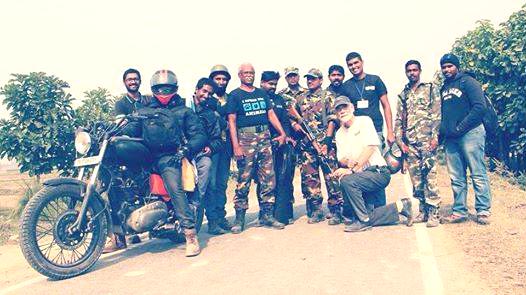
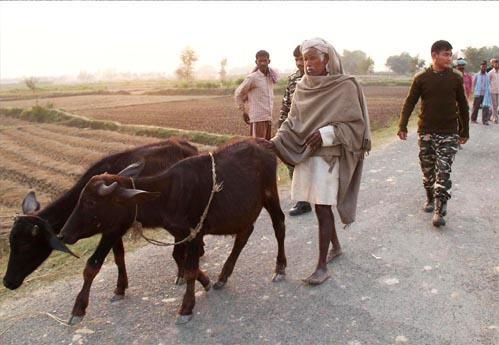
These brave volunteers work with the police and border authorities. The teams patrol between the police stations and border posts. They are not allowed to stop any cattle. Instead, they can observe and take photos and video, recording what they see. They report to the police any violations or any animals they see from India crossing the border. They will collect evidence.

In many places, the border crossings are three to five kilometers apart, so it can be easy for people smuggling animals to slip unseen past the border guards. The Nepal/India border is a remote area where conditions are harsh.

The police can confiscate or turn back animals being exported illegally. So far, hundreds of cattle have already been turned back from the border by the police, following tips from the animal advocates.

The Supreme Court of India intervenes


A suit related to Gadhimai was filed with the Supreme Court, in Delhi, by Gauri Mauleki, Trustee of PFA Uttarakhand (People for Animals – Uttarakhand) and Consultant to Humane Society International. On October 17, the Supreme Court issued a directive that all illegal movement of animals across the Indian border into Nepal, for the sacrifice at the Gadhimai festival, must be stopped by the police and the border patrol. Animals will not be allowed to be taken across the border.

Notices were sent out to federal authorities and to the border states of Bihar, Uttar Pradesh, Uttarakhand, and West Bengal to stop the flow of animals into Nepal. Around 70% of the animals sacrificed come from India so this is expected to greatly diminish the numbers of animals killed. Animal sacrifice is illegal in India.

In the past, although export of cattle and buffalo required a license, this requirement was simply ignored. Now, with the presence of so many volunteers assisting the police and documenting the movement of animals, the police cannot turn a blind eye, and action will be taken.

In issuing the ruling, Justice Kehar of the Supreme Court of India noted that the Gadhimai animal sacrifice is “demeaning and cruel.”

Brave volunteers

Major funding for this effort has been very generously donated by Kim Bartlett of Animal People News.

Dr. Chinny Krishna, Vice-Chairman of the Animal Welfare Board of India and Chairman Emeritus of Blue Cross of India, played a direct role in bringing together teams going to help along the border.

1601549_10152852597727170_8595662995661406447_n

Fourteen volunteers from Blue Cross of India have gone, including Dawn Williams, Blue Cross’s General Manager, who regularly leads rescue teams on daring and difficult rescues in Chennai. More volunteers will join them over the next few days. Altogether, 25 volunteers from Chennai are in the field, from Blue Cross and FIAPO, bringing eight motorcycles with them. All-wheel-drive vehicles have been hired in Bihar.

They traveled by train. It’s a long trip from Chennai – 2,000 kilometers (1,242 miles). TVS Motors donated two of the motorcycles.

When there was a snag getting the motorcycles on the same train as the volunteers, the office of Maneka Gandhi, of People for Animals, and a senior Minister in the Union Government, intervened, and all was soon resolved.

Because of the extremely primitive conditions along the border, the initial thought of Blue Cross was that only men should go. This was met by charges of sexism, so the decision was reviewed, and it was announced that women are welcome to participate. Three women from Hyderabad are taking part, and part of their expenses are being paid by Blue Cross.

Another team has been sent to the Uttar Pradesh/Nepal border.
 

dawnreport one photo five1-1edited

“A financial aspect”

Speaking about the horrifying sacrifice of around 500,000 animals, which takes place in Bara, Nepal, around 100 miles south of Kathmandu, Dr. Chinny Krishna commented, “There is always a financial aspect.” The remains of the sacrificed animals; cattle, buffaloes, goats, pigeons, chickens, and rats, are already contracted to be sold to a Chinese company.

The festival was started in modern times, about a hundred years ago, by a man who was a convicted felon. Today, his grandson is the chief priest of the Gadhimai temple. This is the largest single sacrifice of animals anywhere in the world. Virtually every temple in Nepal does some animal sacrifice. The only one that does not is Pashupatinath Temple in Kathmandu which was founded by Adi Shankara, one of the greatest of all Hindu saints, who lived in the eighth century BCE and who was a strict proponent of the Hindu vegetarian tradition. The priests of Pashupatinath come from the south of India and would never perform any animal sacrifice.

Animal sacrifice is no more a part of Hinduism than witch burning is a part of Christianity. There are fanatics in every religion who propagate false teachings of violence and hatred.

Continued in part two. For part two, click here.


Photos: Courtesy of Blue Cross of India


To visit the website of Blue Cross of India, click here.


For the website of Humane Society International – India, click here


For the website of PFA-Uttarakhand, click here.  


For the website of Animal Welfare Network Nepal, click here.

India bans the import of all cosmetics tested on animals


512px-Rabbit_in_montana


The October 5, 2014, article “Bunny-free beauty” by Sriya Narayanan and Preeti Zachariah in The Hindu reports that in November, India will become the third place in the world to ban the import of products tested on animals, joining Israel and the European Union.


In 2013, India banned the testing of cosmetics within India. Now the import of cosmetics that contain any ingredients tested on animals has also been banned.


This remarkable step will make India a cruelty-free zone with regard to cosmetics.


Dr. Chinny Krishna, Vice-Chairman of the Animal Welfare Board of India is quoted as noting that it is only fitting that India, the land of ahimsa (“do no harm”) is leading the way with this ban. He said, “Cosmetics testing is a frivolous thing – thousands of animal lives are lost because of it.”


Organizations like Humane Society International and PETA India have worked with great determination to bring about this ban, conveying the message that modern science now offers many compassionate alternatives that render animal testing superfluous, as well as being generally unreliable in its ability to predict how chemicals and various ingredients will affect humans.


Alokparna Sengupta of HSI, who has worked tirelessly for this cause, commented on the uncertainty and unpredictability of animal testing, which makes it pointless, especially considering the vast amount of suffering involved. She said, “We’re elated and proud of India’s progressive step.”


Dr. Chaitanya Koduri, policy advisor to PETA India, talked about the advantages of some of the non-animal testing methods. There are now skin tests that use reconstructed human skin.


The ban will be of benefit, of course, to the animals; rabbits, hamsters, mice, and others, who will no longer suffer and be killed, but also to humans, who will have safer and more precisely-tested cosmetics, free of any guilt attached to having caused the suffering of animals.


It is anticipated that the cosmetics testing ban will pave the way for more alternative testing to take place in the pharmaceutical industry, over time replacing cruel testing on animals.


Alokparna Sengupta described her rewarding experience with a rabbit, now released from being a lab rabbit, who is cautiously learning to trust and relate to a human.


Congratulations to India and to the Indian animal groups that have brought about this compassionate victory for animals.


To read the original article in the Times of India, click here.


Photo: Larry D. Moore CC BY -SA 3.0 / http://commons.wikimedia.org/wiki/File:Rabbit_in_montana.jpg

Mumbai joins the largest Global March ever for animals

GLOBAL MARCH COLLAGE


By Team Thane SPCA


Mumbai united with lakhs of people in 137 cities across the globe demanding action by  individuals, peoples, governments to end the vile trade in body parts of endangered species like elephants and rhinos.


The largest March for Animals of its kind ever, across the globe, the Global March for Elephants and Rhinos (GMFER) on 4th October 2014 aimed at raising awareness about the near – extinction status of elephants and rhinos and asking every government to play their part too, by increasing penalties for bribery, corruption and trafficking offenses, and by shutting down all retail outlets and ivory carving factories.


Elephants, Rhinos and such other large animals are “Keepers of our Forests”. Losing them would mean losing our forests, our rivers and an incredible ecological system. Illegal poaching these animals are increasingly being linked to funding of organised crime and armed militia groups, fuels conflict and poses environmental, development and security challenges. Our cultural need to own Ivory products or use horns of animals in medicines is leading these animals to extinction.


Thane SPCA was asked by the Global Organisers to host the event in Mumbai.


Mumbai marched through an area which has a lot of rich traders of ivory- which houses the Mantralaya, Hon’ble the High Court, State Police Headquarters, 5 Star Hotels – all in all a sensitive zone. To add to our woes, this was a long weekend of almost 5 days, the Eid coming up and the Code of Conduct stretch for the Legislative Assembly elections around the corner. So we were not given permission to March the entire way. Clad in eye catching red we started off with a gathering at Chowpatty, rode an open top BEST bus for 2 hours chanting Anti Poaching slogans, and ended with a silent march and demonstration at Chowpatty forming a human  chain.


Thane SPCA is humbled  that Marchers specially flew in from Bangalore, drove in from Pune, and joined us from the U.K and the U.S. We thank Raww India with who we partnered for this March.


We thank all organisers of all the 137 cities with whom we connected in spirit on this day and marched for a common cause.


We marched for the 672 elephants and the 18 rhinos who will be killed worldwide in the next one week for their tusks and their horns.


We marched for 100% TOTAL worldwide ivory and rhino horn BANS! We marched for strict enforcement, stiffer penalties and TO SHUT DOWN IVORY CARVING FACTORIES!


We Marched for Earth’s wild icons. We Marched for their survival. We Marched against extinction.


This year we were 60 of us, next year let us be 600 !


With warm regards,

Team Thane SPCA


To visit Thane SPCA’s website, click here

Photo: Courtesy of Thane SPCA


Egypt: Top Islamic authorities urge mercy towards animals

???????????????????????????????????????????????????????????????????????????????


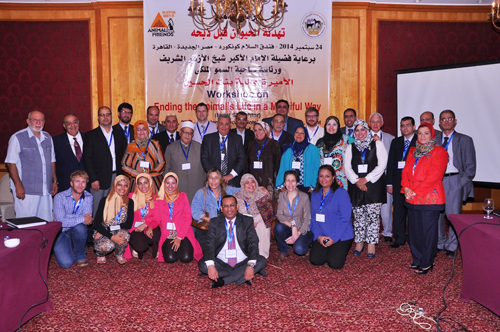
The letter below, by Ahmed El Sherbiny, gives a description of the workshop held recently in Cairo, “Ending the Animal’s Life in a Merciful Way.”


This is a controversial topic, and there can be a tendency among animal people simply to dismiss the issue by saying that the only real answer is not to slaughter animals in the first place. While this answer is certainly logical, and in a way true, it really does nothing to help the animals that are being slaughtered in countries where eating meat is not going to stop anytime in the near future.


Mona Khalil, Chairperson of ESMA
Mona Khalil, Chairperson of ESMA (Egyptian Society for Mercy to Animals)


For the cow, the sheep, the camel, or for any animal in a slaughterhouse, there is a very vast difference between a merciful death and an extremely painful one. The practical reality is that there are degrees of suffering – and less suffering, while it is in no way a satisfactory long-term solution – is, for the animal, vastly preferably to severe suffering.


Dina Zulficar, leading Egyptian animal advocate


So we need to be practical and advocate doing what is best for the animals themselves. Contrary to what is sometimes said, pursuing the goal of lessening suffering in slaughterhouses ought not to lead to complacency, instead it can raise awareness of the sad plight of animals used for food — and ultimately encourage a global movement away from the culture of eating meat. Both these goals need to happen simultaneously. They are complementary and not in conflict with each other.


Ahmed El Sherbiny, Chairperson of ESAF, EFAW, and MENAW, has once again, in a continuation of work initiated over the past several years, brought together Egyptian animal advocates and an outstanding array of Egyptian government officials, Moslem spiritual authorities, leaders in the international animal welfare movement, veterinarians, university professors, and others, to focus their attention on bringing significant change to the way animals are slaughtered.


croppedPic 7Dr Leopoldo, The OIE representatve presenting a presentation on Halal pre Slaughter.
Dr. Leopoldo, OIE representative, giving a presentation on Halal pre-slaughter


The Al Azhar center of learning in Cairo is the most universally respected and authoritative voice for the world’s Sunni Moslems. Al Azhar representatives attended the workshop, participated, and have endorsed the outcome. This represents a tremendous milestone, re-affirming the age-old Islamic tradition of mercy and compassion to all, both animals and people.


Pic 6


Letter from Ahmed El Sherbiny, organizer of the workshop, “Ending the Animal’s Life in a Merciful Way.”:


Dear Friends and Colleagues,


On Wednesday 24th of September, EFAW, The Egyptian Federation for Animal Welfare in association with ESAF, The Egyptian Society of Animal Friends held a workshop relating to “Ending The Animal’s Life in A Merciful Way.” The workshop was sponsored by the Al Azhar Institution, who assigned; Dr Nasser Farid Wasel, The Former Grand Mofty, and Dr. Abdullah El Nagar, the Dean of High Islamic studies, Member of Islamic Research League, Member of the International Fiqh Academy- Jeddah and Sheikh Fawzy El Zefzaf, the former Deputy of the Al Azhar Grand Sheikh.


Unfortunately, HRH Princess Alia Al Hussein did not attend due to security reasons, however she sent her best wishes for the workshop’s success.


Also Dr. Naser Farid, The Former Grand Mofty, was not able to participate due to medical reasons, Dr A. Nagar presented his message to the workshop.


The workshop was also attended by representatives of GOVS, The Egyptian Federation for Animal Welfare, Representatives from OIE, The International Health Organization, FAO, The Food and Agriculture Organization, CIWF, Compassion in World Farming, MLA,  liveCorp, NRC, National Research Centre and Individuals from Animal Welfare Activists, Faculty of Education, Ain Shams University and Veterinary Colleges, Cairo University.


A Lively debate took place and many issues were discussed relating to the Halal slaughter and stunning methods.


The Al Azhar representatives approved and endorsed the outcome of the workshop, this means the outcome carries religious weight to all Muslims all over the world.


We wish to apply these recommendations in the Islamic World slaughterhouses before the Sacrificing Muslim Feast to end the pre- slaughter cruelty to sacrificial animals.


Many thanks to MLA and LiveCorp for sponsoring this workshop.


Ahmed El Sherbiny

Attorney at Law

ESAF chairperson

EFAW chairperson

Menaw chairperson

+2 012 22111162

Cairo, Egypt


Top photo: © Charles Mccarthy / Dreamstime.com


Other photos: Courtesy of ESAF


We hope to have available the workshop’s recommendations and conclusions soon, and will post them when we do.


To visit ESAF’s Facebook page, click here. https://www.facebook.com/groups/7321605630/


Egypt: Carrots and extra care for camels and horses


OLYMPUS DIGITAL CAMERA


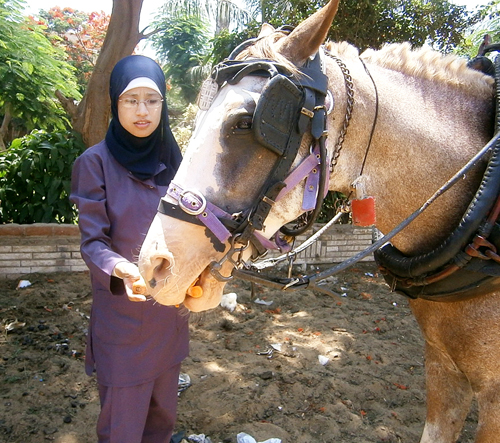
On Sunday, August 3, ESAF, the Egyptian Society of Animal Friends resumed their feeding program for the Pyramids animals, which they’ve been conducting for several years now.


The animals fed and given vet care during the month of August numbered around 1,600 horses. They went five times a week in August.


Since the program for this year started in February, they’ve fed and cared for 1,943 animals in February; 3,157 in March, 3,211 in April, in May and June, a total of 4,800 animals, in July 110 animals. The total so far in 2014 is 13,381 animals. These are horses, donkeys and camels, normally used to give rides to tourists visiting the Pyramids.


Because of civil unrest in Egypt over the past few years, there’s been a sharp decline in tourism, and, due to lack of revenue, the animals owners haven’t been able to adequately care for them, so ESAF has stepped in to help.


Ahmed El Sherbiny, Chairperson of ESAF, writes that the animals seem tired during August, having had to work longer hours during Ramadan. Despite this, they have generally observed an improvement in the animals’ condition over the course of the year.


They also handed out nose bands, fly masks, and educational brochures, as well as treating the animals’ hooves and teeth.


On May first, they added carrots to their diet, which provides more nutrition and is also a much-appreciated treat.


Tourism is still down, but there are signs of a possible turn for the better.


Soon, they’ll be altering the schedule to do twice weekly feeding for the Pyramids animals, and will be operating clinics two to three times a week to care for animals in the neighborhood near the ESAF shelter, where they have been much missed over the past couple of years during the time that ESAF has focused on the Pyramids area.


ESAF expresses their heartfelt thanks to SPANA, Animal Aid Abroad, Sue Evans and her UK group, and Mr. Richard Gabriel for their generous support of this project.


To visit ESAF’s Facebook page, click here.


 Photo: Courtesy of ESAF

Thane, India: Thane SPCA opens a new raptor center


Kite transfer3


By Thane SPCA


Many will remember the Raptor Hermitage Initiative taken up by Thane SPCA in the month of March 2014. We suggested that the Forest Department allow us to use the dilapidated cages within the Karnala Sanctuary for Raptors to rehabilitate before they take flight. They agreed only if we donate the funds to them!! We raised funds for this with much difficulty and made the cage brand new.

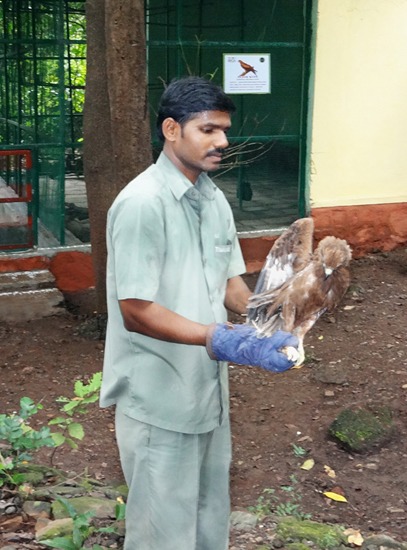
The revamped raptor cage was inaugurated on August 22, 2014 by Local MLA Vivek Patil in the presence of Addl Principal Chief Conservator of Forests and Conservator of Forests along with Team Thane SPCA. Twelve Black Kites were transferred from Thane SPCA Animal Hospital to this cage for rehabilitation till they will be fit to fly. One fresh water turtle has also been transferred to give company to the lonely turtle inside the turtle pond.

Thane SPCA has guided the Forest Officials about the caretaking of these birds. Thane SPCA and RAWW members will be following up closely with the Karnala forest officials about the upkeep of these birds for the next two to three months.

As and when the birds grow their flight feathers (which they have lost because of their injuries), they will be released in our presence and in the meanwhile the birds which are still under treatment at Thane SPCA and will need rehabilitation, will be again transferred there. This cycle will enable us to receive more birds for treatment and give more space for the injured birds at Thane SPCA.

The birds now have three tiers of perches and ample space to recuperate before their release.

There was some discussion about a Star Tortoise rehabilitation and the Addl PCCF has principally agreed to go ahead with it pending our submission of a Project Report. It will be submitted shortly.

We will be transferring more soft shelled turtles to the turtle pond at Karnala within the next two weeks. For their food, we have also introduced a pair of adult rohu-katla and some fingerlings which will breed there and the feeding cycle will be complete as nature intended. Planning to introduce some imported guppies also. Some water plants will also be introduced, for which we have requested the Go Green Nursery to help us out.


Photo: Courtesy of Thane SPCA


To visit the Facebook page of the Raptor hermitage, click here.


Banning jallikattu – and new visions for animal welfare, part two

two bulls blue crossIMG_3740


To read part one first, click here.  


In his Decision, at the end, Justice Radhakrishnan directs


– that the five freedoms be considered to be part of the Prevention of Cruelty to Animals Act and that they be safeguarded by the states.


– that no animal may be incited to fight against a human being or another animal.


– that the AWBI  (Animal Welfare Board of India) and Governments should undertake education related to humane treatment of animals.


– that it is expected that Parliament will elevate the rights of animals to constitutional ones, “as is done by many of the countries around the world.”


– that the Act that was passed by Tamil Nadu to allow jallikattu to continue is in opposition to the PCA Act, and is therefore null and void. This means that jallikattu and bullock cart races are definitively banned.


So ends the cruelty of jallikattu and bullock cart racing. Blue Cross of India has been opposing the inhumane “sport” of jallikattu for the past forty years.


The Supreme Court ruling lays out clearly the major points supporting the rights of animals: the five freedoms, the obligation of Indian citizens to treat animals with kindness, and importantly, that animals have their own innate nature, honor, and dignity – quite independent of any value they may have to humans.


This is a step far ahead of the perception of animals as property which still forms the foundation of animal law in a number of countries, including the U.S.


painting of Nandi IMG_7523


Positive changes stemming from this Supreme Court ruling


Justice Radhakrishnan has now retired, this being his last case. His career on the bench was marked by great fairness and significant decisions that re-affirmed the rights of all human beings, and also of animals.


The Supreme Court jallikattu ruling carries with it a ripple effect that has already begun to bring about changes to the standing of animals in the law. On August 8, 2014, AWBI met in Chennai and worked on fine-tuning the new Animal Welfare Bill to bring it into line with the Supreme Court ruling.


The Joint Secretary of the Ministry of Environment and Forests was present at the meeting. AWBI falls under the Ministry of Environment and Forests. This was the 41st general meeting, and all the members of the AWBI were there.


The new bill will mandate the setting up of a National Animal Welfare Authority which will take on the functions of the AWBI and will be accorded much more authority for enforcement. Enforcement has been a weak link in India’s animal protection system.


This new bill will have to be passed by both houses of parliament, and if it’s passed by only one, will have to go back to the first house again to be reconsidered. It’s a prolonged process.


One of the key measures in the new bill will be that animal law will extend not just to prevention of cruelty, but it will be spelled out that the five freedoms of the animal must be guaranteed.


The PCA Act of 1960


Animal laws in India are already among the most enlightened in the world. The Prevention of Cruelty to Animals Act was passed, in 1960, thanks largely to the work of Rukmini Devi Arundale, well known as a dancer and choreographer of Indian classical dance, as well as an animal advocate. The PCA Act set up the first Animal Welfare Board of India, and she became its first Chairperson.


The Committee for the Purpose of Control and Supervision of Experiments on Animals (CPCSEA) was set up at the request of the AWBI and has brought about reforms to ameliorate the situation of laboratory animals.


The Wildlife Protection Act of 1972 banned hunting throughout India and gave protective status to all wildlife.


Chinny w Shyama IMG_1450


Dr. S. Chinny Krishna has served on the Animal Welfare Board of India for several terms, and has been the Board’s Vice-Chairman from 2000 to 2003 and again since 2010. Along with many others, like Parliamentarian Maneka Gandhi, who have resolutely pursued the cause of animal welfare in India for many decades, Dr. Krishna has played a central role in creating the framework of Indian Animal Protection Laws, which set an example for the world in terms of their far-reaching scope and their recognition that animals have rights and intrinsic value.


This system of laws reflects the most ancient traditions of India, such as the spiritual principle of “ahimsa” or “do no harm.”


To visit the Facebook page of the Animal Welfare Board of India, click here


Photos: Sharon St Joan

Top photo: Two bulls (not jallikattu bulls) rescued by Blue Cross of India

Second photo: A painting of Nandi, the vahana of Shiva, in south India.

Third photo: Dr. S. Chinny Krishna with Shyama